
Reviewed · TANGO SHOWS
Private Underground Tango Immersion
Buenos Aires tango makes more sense when you see it in its natural setting. This experience begins with a private lesson, then takes you to a local milonga, where Rafael, Esther, or Andrea explain the quiet rules of the dance floor while you watch the evening unfold. It is less about a polished stage show and more about understanding how tango works among people who dance it regularly.
I like two things here. First, the lesson teaches more than steps: you work on the mechanics of moving with another person and learn why the ocho and closing steps matter. Second, your guides sit with you at the milonga, share Argentine wine, and help you notice details you would probably miss alone. The private format also makes the evening easy to tailor to beginners.
The main drawback is the late schedule. You meet at 9:30 p.m., and the night can run past midnight, sometimes as late as 1 or 2 a.m. One serious communication failure has also been reported, so confirm the meeting details and keep your guide’s contact information handy.
Key points to know before booking
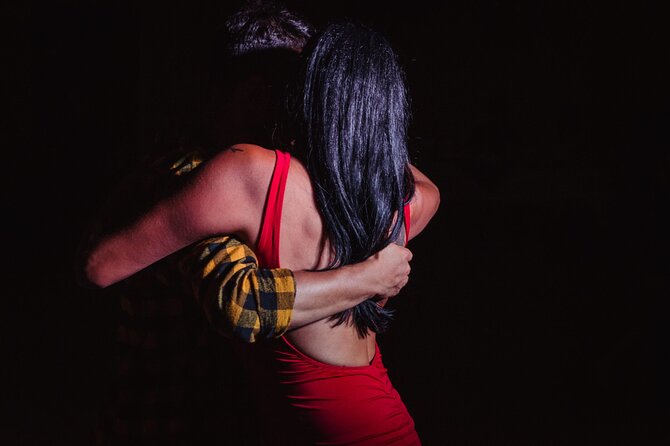
- A lesson comes first: You learn basic tango tools and social-dance mechanics before seeing them used at a milonga.
- The milonga is local in feel: You sit at your guides’ table rather than attending a standard dinner-and-show production.
- Rafael and his partners teach the social codes: Expect explanations of invitations, floor behavior, musical phrasing, and tango customs.
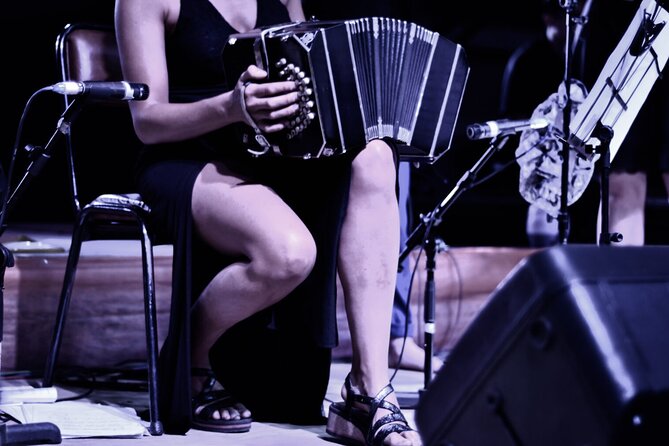
- Live music is possible: Depending on the night, you may see a tango orchestra, singer, or dance performance.
- The experience is private: Only your own group takes part, which helps if you are nervous about dancing.
- The late start matters: The meeting time is 9:30 p.m., and the evening may continue well beyond the advertised three hours.
Why this is different from a Buenos Aires tango show
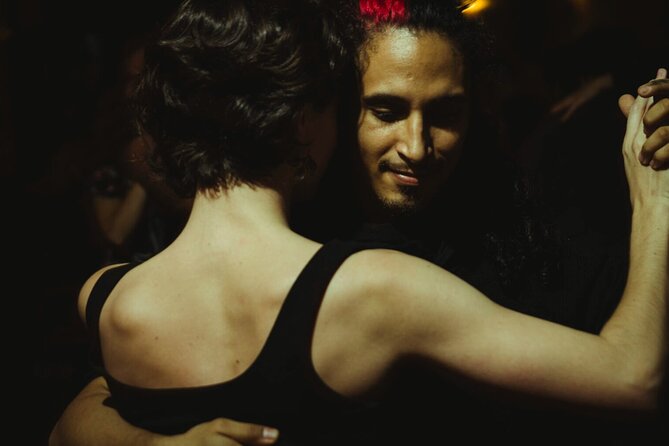
A stage tango show gives you sharp footwork, dramatic poses, costumes, and a fixed performance. This experience gives you a look at the social side of tango, where people come to dance for themselves. That difference is the main reason to choose it.
You do not simply sit in a theater and watch professionals from a distance. You first get a short working lesson, then go to a milonga and see how the movement, music, and etiquette fit together. The lesson gives your eyes something to look for. You may notice how couples travel around the floor, how they pause, or how a dancer responds to the music rather than simply repeating a memorized routine.
I would choose this for anyone who wants context as well as entertainment. If you only want a polished spectacle with dinner, this is not the best match. If you want to understand why tango still matters in Buenos Aires, the format makes good sense.
Other tango nights in Buenos Aires:
- Buenos Aires: Piazzolla Tango Show with Optional Dinner
★ 4.4 · 2,122 reviews - Buenos Aires: Tango Show at Tango Porteño & Optional Dinner
★ 4.6 · 981 reviews - Buenos Aires: Madero Tango Show with Optional Dinner
★ 4.3 · 748 reviews
The private lesson at 9:30 p.m.
The evening starts at Honduras 3700 in Buenos Aires. The exact meeting details are supplied after booking, and the stated start time is 9:30 p.m. That hour reflects local nightlife, but it may feel surprisingly late if you are still adjusting to Argentina’s schedule.
The lesson focuses on the basic tools and mechanics needed to improvise with another dancer in a social setting. That wording matters. You are not being trained for a stage routine. You are learning how to walk, change direction, connect movements, and respond to a partner within a shared dance space.
Beginners should feel comfortable here. Several accounts describe patient instruction for people who had never danced tango, or who considered themselves poor dancers. Couples with uneven experience can also benefit, since the teaching can address different starting points.
You may work on an ocho, closing steps, and other basic movements. The goal is not mastery in one hour. The goal is to give you enough understanding to recognize the structure of tango and perhaps try a few steps at the milonga later.
I especially like that the teaching includes the names and origins of movements. Learning the vocabulary helps you remember what you practiced, and it gives the dance a human and cultural frame rather than reducing it to a list of foot positions.
The setting is intimate, according to the descriptions of the experience. That can be an advantage for shy dancers because you are not performing in front of a large class. It also gives you room to ask direct questions. Rafael, often called Rafa, is described as a professional dancer and teacher, while Esther and Andrea are also identified as patient instructors and tango guides.
Learning the codes behind the dance
Tango has social rules that are not obvious from a stage performance. At the milonga, your guides explain what dancers are watching for, how they interact, and how the floor works. These customs are often called the codes of tango.
You may hear about how dancers invite one another, how they move with the line of dance, and why the mood of a song affects the way people dance. The point is not to memorize every rule. It is to stop seeing the milonga as a room full of random couples and start reading it as a social event.
This is where Rafael and his partners add real value. A first-time visitor can sit near the dance floor and see lovely movement, but without help, it is hard to know what is traditional, what is personal style, and what is simply happening at that moment. Your guide can explain those distinctions as they occur.
The conversation also goes beyond technique. The evening includes discussion of tango culture and the lived experience of local dancers. That makes the activity feel more personal than a standard guided lecture. You are encouraged to ask about the dance, Buenos Aires, and the people who keep the tradition active.
Riding from the lesson to the milonga
Transportation from the lesson to the milonga is included. This is a small but useful feature, especially at night and in an unfamiliar part of the city. You do not have to work out the transfer while carrying yourself, a jacket, and perhaps new tango shoes.
The activity ends back at the original meeting point. Since the stated duration is about three hours but several accounts describe staying until midnight, 1 a.m., or even 2 a.m., treat the schedule as approximate. A live orchestra or a dance performance can extend the night, and you may not want to leave just as the most interesting part begins.
I would avoid booking this on an evening when you have an early flight or a fixed late-night plan. The experience begins late and has a social rhythm. It is better suited to a night when you can relax and let the evening unfold.
A few more things to do in Buenos Aires worth a look
- Buenos Aires Private City Tour with Local Guide
★ 5.0 · 308 reviews - Buenos Aires: Private Tango Lesson
★ 4.9 · 244 reviews - Buenos Aires: Personalized 2 to 8-Hour Private Walking Tour
★ 4.7 · 149 reviews - Private Arrival Transfer: Ezeiza Airport to Buenos Aires Hotels
★ 4.0 · 136 reviews
Sitting at a local table
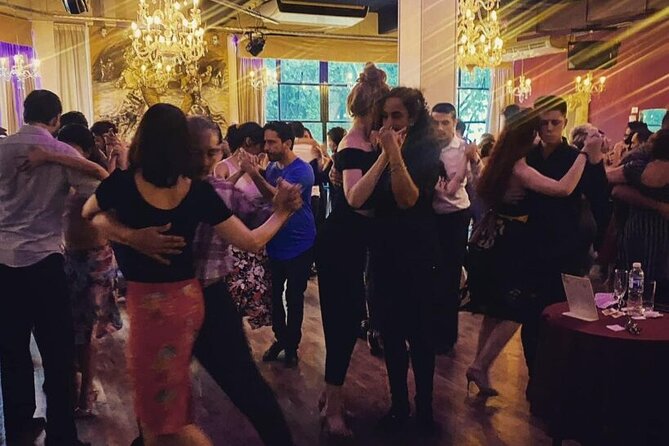
At the milonga, you are welcomed at your guides’ table. This is one of the strongest parts of the experience because it gives you a base from which to watch. You can sip Argentine wine, talk with your hosts, and study the room without feeling that you must immediately take to the floor.
Wine is included, along with fees, taxes, and the transfer. Alcohol is available only to people 18 and older. Tips are not included, so plan to tip separately if you feel the service merits it.
A table also changes the mood. Instead of arriving alone, trying to understand the room, and wondering where to sit, you enter with local help. Some accounts describe tables close to the dance floor, and one evening included a singer, orchestra, and professional performers. The exact program depends on the date, so consider live music or a show a possibility, not a promise.
You may be able to dance during the visit, but the focus is not a guaranteed private performance or a formal dance audition. The lesson prepares you to understand and perhaps try the social setting. If you are nervous, you can spend most of the time watching and asking questions.
Live orchestras, singers, and dance performances
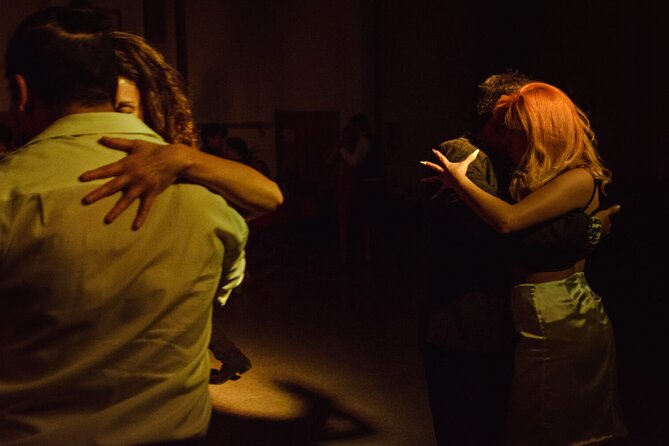
The evening may include a live tango orchestra or a dance performance. This can make a big difference because tango changes when played by a full ensemble in a room filled with dancers. You hear how the music supports pauses, walks, and sudden changes in energy.
Some dates have included a singer, a professional dance company, or acclaimed performers. One account describes seeing a world champion tango couple, while another notes that Rafael himself performed during the night. Those are memorable possibilities, but they should not be treated as standard features on every booking.
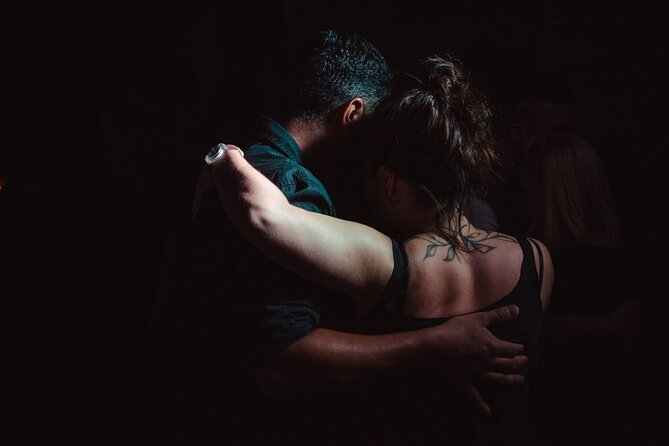
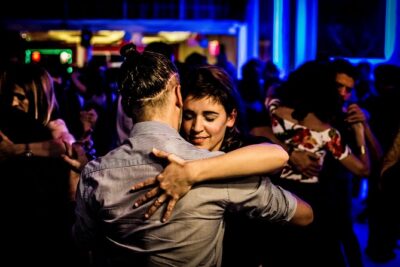
Even without a performance, the room itself is the attraction. You watch local dancers respond to music in real time, rather than seeing only a rehearsed number designed for visitors. The guides help you connect what you learned in the lesson with what happens on the floor.
This is also why I would schedule a stage tango show on a different night if you have time. The two experiences complement each other. A show gives you spectacle; a milonga gives you social context and a closer view of ordinary tango life.
The value of the $330 price
At $330 per person, this is an expensive three-hour evening. You are paying far more than the cost of a group class or a ticket to a basic dance event. The price needs to be judged by what is bundled into the experience.
You receive a private lesson, personal instruction, transportation to the milonga, an English-speaking guide, wine, entry-related fees and taxes, and a hosted visit to a local venue. The guide also provides interpretation of tango customs and stays with you rather than simply dropping you at the door.
For a couple or small private group, that may be worthwhile. The private format lets your guide adjust the lesson to your ability, answer your own questions, and make the night feel less intimidating. It is especially useful if you have only one evening for tango and do not want to spend it guessing how a local milonga works.
The value is weaker if you already dance tango regularly, speak Spanish well, and feel comfortable attending milongas on your own. In that case, you may prefer to pay for a class and arrange your own evening. This experience is aimed more at curious newcomers, beginners, and people who want a local introduction without having to manage the details themselves.
The price also includes only alcoholic beverages as the stated drink inclusion. Do not assume that a full meal is part of the evening. Food and additional personal purchases are not listed as included.
Who will enjoy this most
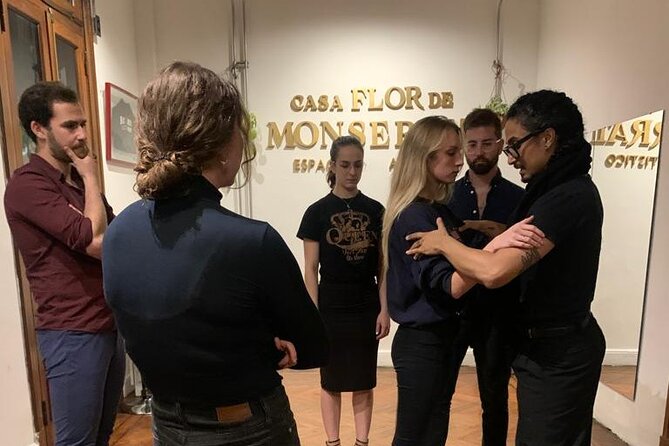
I would recommend it most strongly to:
- First-time tango students who want a gentle introduction.
- Couples who want a shared evening rather than separate sightseeing stops.
- Solo visitors who would feel unsure entering a milonga alone.
- Families with older teenagers or adults, provided everyone can handle the late hour.
- Experienced dancers who want conversation and local context, not just more practice.
- Anyone who has already seen a stage show and wants to understand the social dance tradition.
The private setup can work well for mixed-ability groups. One person may have taken lessons at home while another has never danced. Your guides can help both without making the beginner feel exposed.
Age itself does not appear to be the main issue. One account describes a 78-year-old participant enjoying the night and dancing. The practical questions are stamina, comfort with a late start, and the ability to take part in an evening that may run past midnight.
Practical details that matter
Confirmation is provided at booking, and the exact meeting point information is given after you reserve. The listed starting address is Honduras 3700, C1174, Buenos Aires, with the activity returning there at the end.
The location is near public transportation. Since the meeting is late, I would still arrange your return before the lesson begins. The activity includes transport from the lesson to the milonga, but you should confirm your plan for getting home after the final return.
Most people can take part, and the activity is private to your group. No special dance background is required. Wear something that lets you move comfortably, and bring patience rather than the expectation of mastering tango in one session.
The cancellation rule is simple: cancel at least 24 hours before the local start time for a full refund. Cancellations or changes inside that window are not refunded or accepted.
One important caution: communication matters on a late-night activity. A single reported problem involved a guide failing to arrive and not contacting the group until the next day. That appears to be an exception among otherwise very positive experiences, but I would still save the guide’s WhatsApp details, confirm the date and meeting point, and avoid waiting without a clear way to reach someone.
Should you book this tango night?
Book it if you want tango explained from the inside, prefer a small private setting, and like the idea of watching local dancers with a guide at your table. The strongest parts are the patient beginner lesson, the explanation of milonga customs, and the chance to see live music or dancing in a setting you might not find comfortably on your own.
Skip it if you need an early night, want a polished theater production, or mainly care about advanced dance instruction. At $330 per person, this is not a bargain class. It is a hosted cultural night with personal teaching and local access.
For the right person, it can become the evening that turns tango from a beautiful performance into a living social tradition. Just confirm the arrangements, leave your schedule open after midnight, and arrive ready to watch closely before you try a few steps yourself.
FAQ
Where does the experience begin?
It begins at Honduras 3700, C1174, in Buenos Aires. The exact meeting point details are provided after booking.
What time does the activity start?
The listed start time is 9:30 p.m.
How long does the experience last?
The stated duration is approximately three hours. The evening may run later, with some accounts describing returns around midnight, 1 a.m., or 2 a.m.
Is transportation included?
Yes. Transportation from the tango lesson to the milonga is included. The activity ends back at the original meeting point.
Is the tango lesson suitable for beginners?
Yes. The lesson covers fundamental tools and mechanics for social improvisation, and no previous tango experience is required.
What happens at the milonga?
You sit at your guides’ table, drink Argentine wine, learn about tango customs, talk with your guides, and watch local dancing. Depending on the date, there may also be a live orchestra or dance performance.
Who leads the experience?
The named guides include Rafael, often called Rafa, along with tango partners such as Esther and Andrea. The English-speaking guide is also fluent in Spanish and Japanese.
Is this a private activity?
Yes. Only your own group participates in the private tour.
What is the cancellation policy?
You can cancel at least 24 hours before the local start time for a full refund. Cancellations or changes made within 24 hours are not accepted and are not refunded.
Just added in Buenos Aires
- Tango Show at El Querandi with optional Dinner★ 4.2 · 3 reviews
- Wine Tasting in Buenos Aires★ 4.2 · 4 reviews
- Walking Tour: Buenos Aires bookstores★ 4.3 · 12 reviews
- Velez Sarsfield Football Match★ 5.0 · 3 reviews
- Tour Buenos Aires in one day on Electric Scooters★ 5.0 · 33 reviews
- Sailing with Wine Tasting in Buenos Aires★ 5.0 · 50 reviews
- Experience The Essence of Buenos Aires in San Telmo★ 5.0 · 51 reviews
- Teatro Colon Guided Tour Admission Ticket★ 4.0 · 208 reviews
Tango Shows, compared.
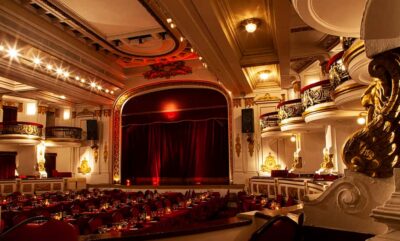
Tango Porteño: The Best Tango Night in Buenos Aires
Read our review →
Palacio Tango: Tango Show at the Piazzolla Theater
Read our review →
Browse the lists this tour appears in