
Reviewed · FOOTBALL STADIUM TOURS
AllMaradona Buenos Aires: Maradona House Museum and Stadium
Maradona’s story feels most personal in La Paternal, where you can visit the home he owned with his family and the stadium where his professional career began. I like the combination of La Casa de D10S and the Diego Armando Maradona Stadium, and I like that the tour stays small, with no more than 10 people. The hotel pickup also saves you the trouble of arranging transport across Buenos Aires.
The main drawback is the price: at $138 per person, this is not a casual sightseeing stop. It makes the most sense if Maradona, Argentine football, or local sports culture matters to you. The three-hour visit is focused and useful, but it does not include food or drinks.
Key points at a glance
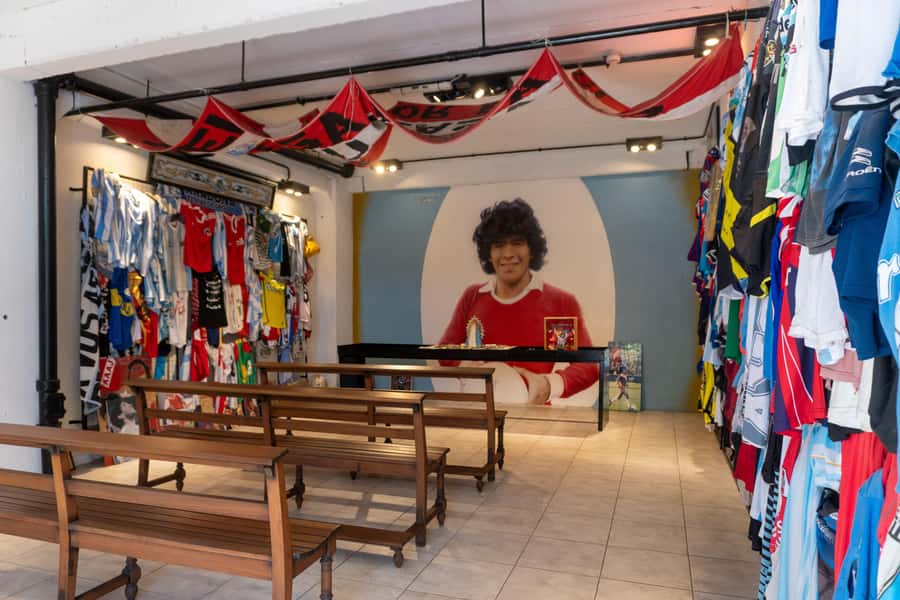
- Maradona’s first owned home: See the house Argentinos Juniors gave him for his 18th birthday, where he lived with his family from 1978 to 1980.
- A stadium tied to his first professional steps: Tour the ground where Maradona made his debut with Argentinos Juniors at age 15.
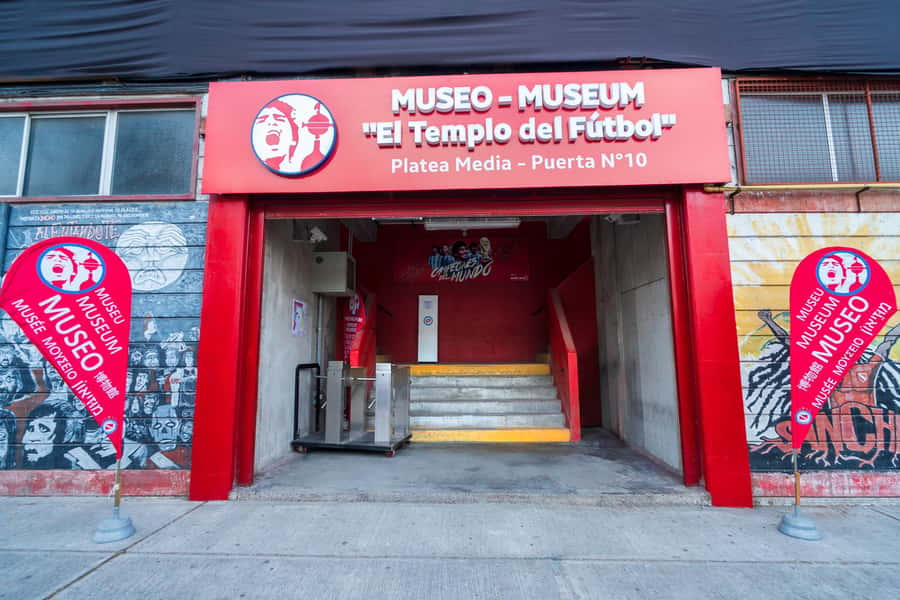
- The fan-built El Templo del Fútbol: Visit a museum created through voluntary work by club members and supporters.
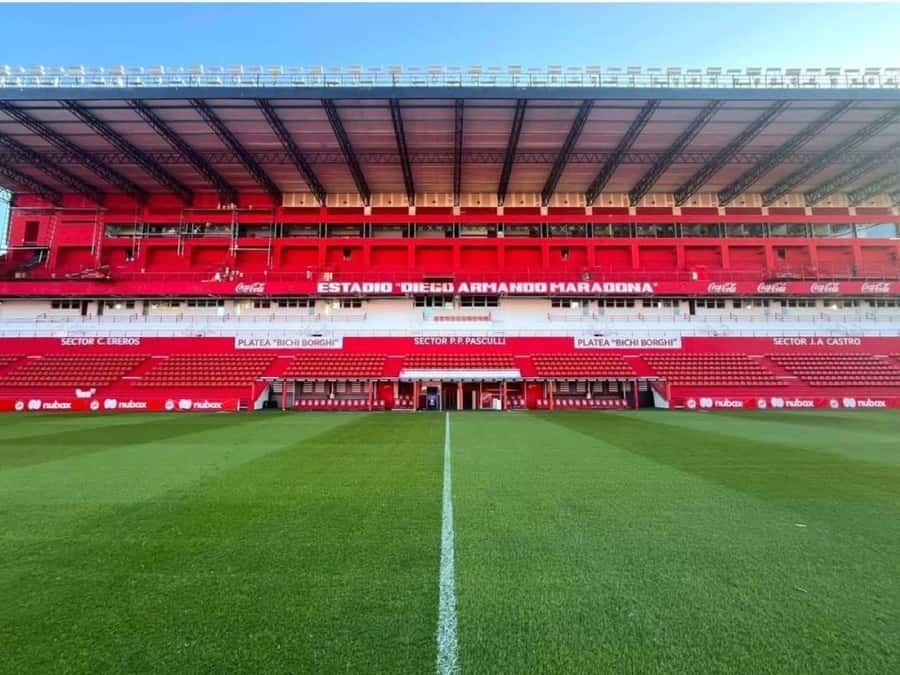
- Access beyond the stands: The route includes the pitch, dressing rooms, central hall, press room, and stadium seating.
- A small group with bilingual support: The tour is offered in English and Spanish, with groups limited to 10 people.
- Personal guiding matters here: Fernando Ponce is praised for excellent English, warmth, and detailed football knowledge.
Why La Paternal matters to Maradona’s story
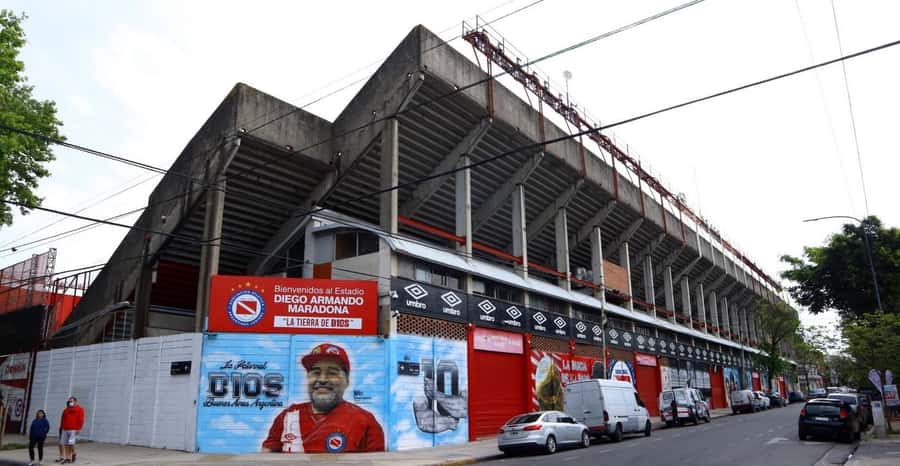
Many Buenos Aires football tours focus on famous stadiums and big match days. This one takes you to La Paternal, a neighborhood tied to Maradona before he became a global icon.
You walk the same streets associated with his early football years. That setting gives the tour a more grounded feel. You are not only looking at trophies or photographs. You are connecting a young player’s daily surroundings with the club that helped launch his career.
Argentinos Juniors gave Maradona his first owned home for his 18th birthday. He lived there with his family from 1978 to 1980, during his time as an Argentinos Juniors player. The house was later recovered and recognized by the City Parliament as a historic place connected with Maradona.
I find this part especially valuable because a home tells a different story from a stadium. A stadium shows public achievement. A family house points to the private life behind the football legend. The contrast helps you understand the scale of Maradona’s rise.
More football in Buenos Aires:
- Buenos Aires: Tickets to Boca Juniors Museum & Stadium
★ 4.5 · 581 reviews - Buenos Aires: Boca Juniors and River Plate Football Tour
★ 4.3 · 82 reviews - Buenos Aires: River Plate and Boca Juniors Museum Tour
★ 4.5 · 72 reviews
Starting with hotel pickup in Buenos Aires
The tour includes pickup and drop-off at the door of your hotel in Buenos Aires. That is a useful part of the package, since the stadium and house are in Buenos Aires Province and you do not need to work out the route yourself.
The entire experience lasts about three hours. Transport time is included in that overall visit, though the exact pickup schedule depends on the starting time and your hotel location. Check the available departure times before booking, especially if you have another appointment later in the day.
A bilingual guide accompanies the group in English or Spanish. Fernando Ponce receives especially strong praise for clear English, thoughtful service, and his ability to explain both Maradona’s story and the wider football setting. Fernando Jaime is also named in connection with the tour.
The group limit is 10 people. That is large enough to create a little energy but small enough for you to ask questions without shouting across a coach. It also suits a subject that benefits from conversation, since the guide can explain why each location matters rather than simply point at objects.
Touring the Diego Armando Maradona Stadium
The stadium visit lasts about 90 minutes and forms the main part of the tour. Its official name connects it directly with the player who made his professional debut there for Argentinos Juniors.
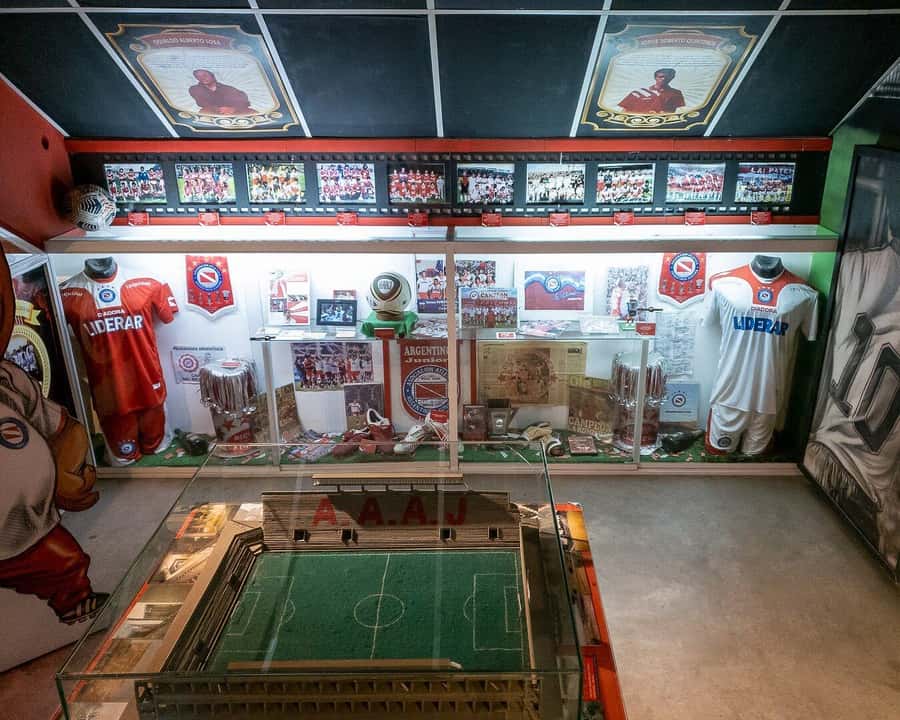
The stadium is not just a backdrop for Maradona memorabilia. The tour takes you through several working and historic areas:
- The playing field
- The changing rooms
- The central hall
- The press room
- The stands
Seeing these spaces together gives you a better sense of how a football club functions. The pitch is the public stage, but the changing rooms and central hall show the less visible side of match day. The press room adds another angle, linking the club’s internal life with the public story told about its players.
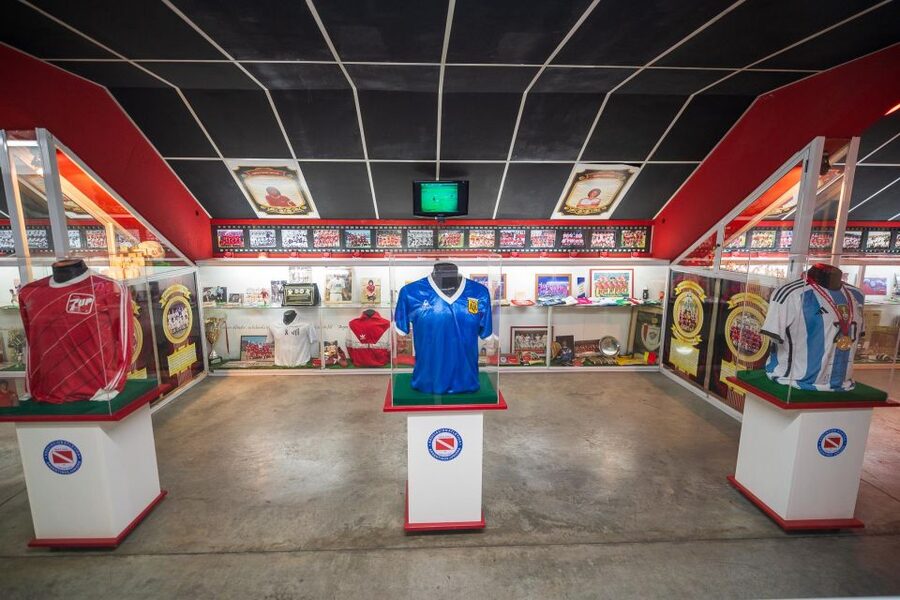
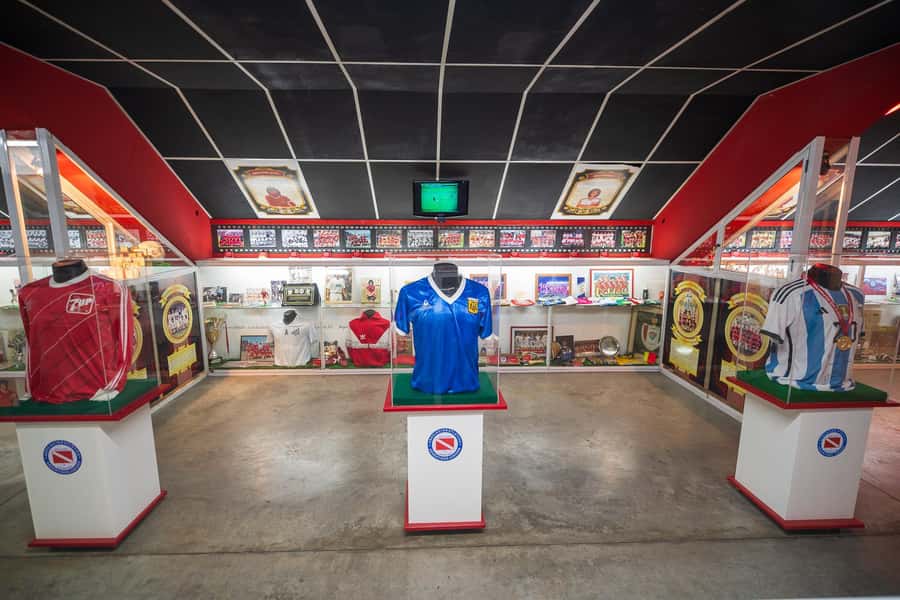
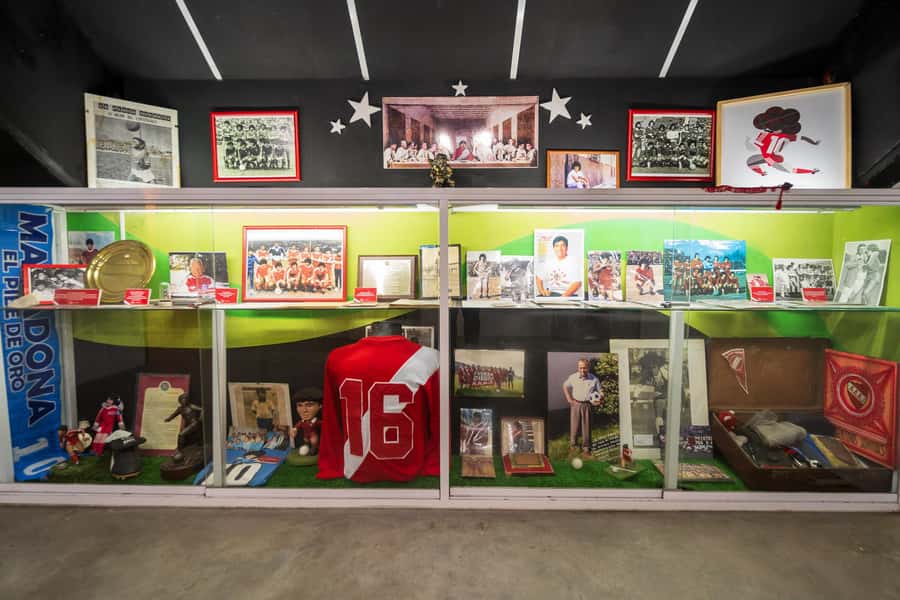
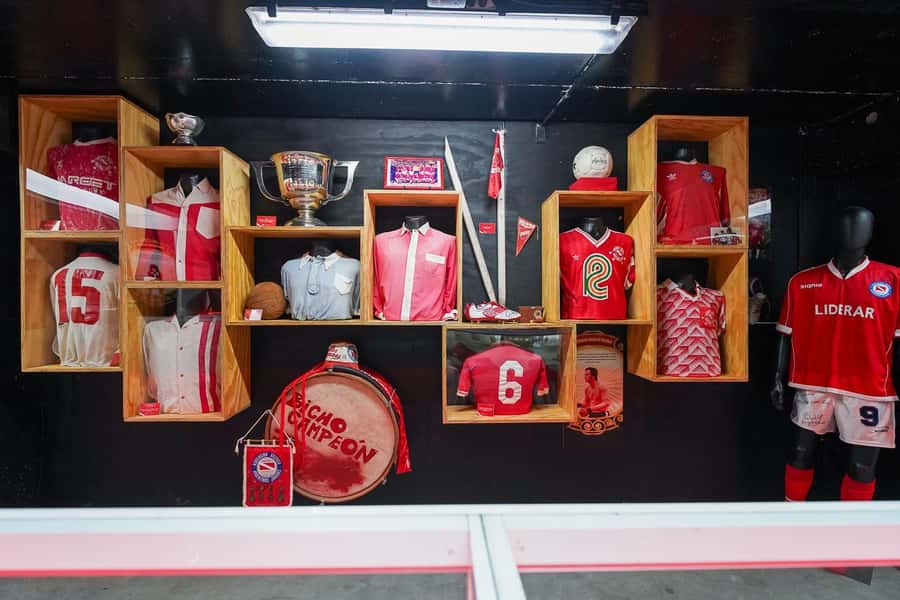
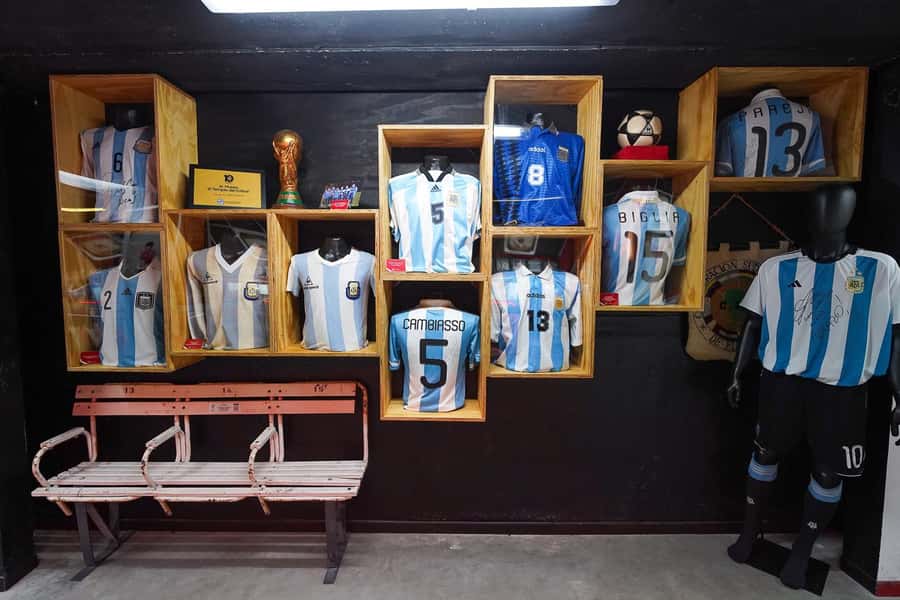
You also visit El Templo del Fútbol, the stadium museum. Its unusual feature is that club supporters and members built it through voluntary work. That gives the museum a personal, community-made character rather than the polished feel of a large national institution.
I would expect the museum to appeal most to people who enjoy football culture as much as football statistics. A fan-built collection can carry the emotional weight of a club’s memory. At the same time, you should not expect a huge museum with the scale of a major capital-city attraction. Its value comes from the connection to Argentinos Juniors and Maradona’s early years.
Seeing where Maradona lived with his family
La Casa de D10S is a guided visit lasting about 50 minutes. This is Maradona’s first owned home, connected with the period from 1978 to 1980.
The house was given to Maradona by Argentinos Juniors for his 18th birthday. It was later recovered, valued, and recognized as a historic site by the City Parliament. Those details matter because the home is not presented simply as a celebrity address. It marks a specific moment when a young footballer was moving from promising talent toward national and international fame.
You can expect the guide to place the house within that early career story. The visit is likely to feel more intimate than the stadium tour, even though the two stops are closely linked. At the stadium, you see where Maradona performed. At the house, you see where he and his family lived during the years when his professional path was taking shape.
The house visit also helps keep the tour from becoming a standard sports museum outing. You are following a life story through real places, not only through displays. If you have little interest in football but enjoy social history, this may still add meaning to the experience.
A few more things to do in Buenos Aires worth a look
- Buenos Aires: Hop-On Hop-Off Bus and Football Museums
★ 4.3 · 39 reviews
What makes the guides important
The guide can make or break a football-history tour. Here, the strongest praise centers on Fernando, who is described as professional, attentive, friendly, and highly fluent in English.
That combination matters. Maradona’s story is full of context, emotion, and local detail. A guide who only lists dates will leave you with a thin portrait. A guide who understands the football culture around Argentinos Juniors can explain why a small stadium and neighborhood house carry such weight.
You should also expect the experience to work well for mixed-language groups. Spanish and English are both offered, so you can book even if your Spanish is limited. The guide’s role is especially useful at the fan-built museum, where the significance of an item may not be obvious without explanation.
The repeated praise for Fernando also points to a practical strength: personal care. One account highlights his willingness to accommodate the group, while others describe him as a major part of a well-organized visit. That does not guarantee a particular guide on your date, but Fernando is clearly one of the people associated with the experience.
Is $138 a fair price?
The price is $138 per person. That is high for a three-hour activity, so you should judge it as a guided transport-and-access package rather than a museum ticket.
The price includes:
- Hotel pickup and drop-off
- Entrance to El Templo del Fútbol
- The stadium tour
- Entrance to La Casa de D10S
- A bilingual English and Spanish guide
- A small group of no more than 10 people
If you tried to visit both sites independently, you would need to arrange transport, confirm admission, and find enough information to make sense of the locations. The package removes that work and links the two places into one clear story.
I would consider the price worthwhile for a committed Maradona fan, a football historian, or someone who wants a guided look at Argentine sports culture rather than a quick photo stop. If you are only mildly curious about Maradona, the cost may feel steep for three hours.
There is no food or drink included. That is not a serious issue, since the experience is short, but you should eat before pickup or plan a meal afterward. The tour is built around the sites, not around a full day of sightseeing.
Who should book this experience?
This tour fits you best if Maradona is one of the main reasons you want to explore Buenos Aires. It also works well for football fans who want to see the roots of a player’s career instead of only visiting the city’s biggest attractions.
I would recommend it for:
- Maradona supporters
- Fans of Argentinos Juniors
- Football-focused visitors
- Families with a strong interest in Argentine sport
- English-speaking visitors who want a guided experience
- Anyone curious about the link between a football club and its neighborhood
It may be less suitable if you want a broad introduction to Buenos Aires. The tour does not cover the city’s major historic districts, food scene, art museums, or wider cultural attractions. Its focus is narrow by design.
The walking component through La Paternal also means you should be comfortable moving between the locations as directed by the guide. The available information does not specify accessibility arrangements, so contact the provider if you need particular assistance.
Booking details that affect your plans
The activity lasts three hours, with starting times available according to the date you choose. Hotel pickup is included from Buenos Aires, and the provider returns you to the city afterward.
You can cancel up to 24 hours before the start for a full refund. The reserve-now, pay-later option lets you hold a place without paying immediately, which is useful if your Buenos Aires plans are still shifting.
The tour has skip-the-ticket-line access, but the exact pickup time remains important. Keep your hotel details accurate when booking and leave some breathing room before your next activity. A stadium visit with a small group is easier when you are not watching the clock.
The final call: book it for the story, not just the name
I would book this tour if you want to understand Maradona through the places that shaped his early career. The combination of his family home, Argentinos Juniors stadium, fan-built museum, and neighborhood setting gives you more than a collection of football photographs.
The strongest reasons to go are the personal scale of La Casa de D10S, the access to stadium areas beyond the stands, and the chance to hear the story in English or Spanish from a guide such as Fernando. The main reason to hesitate is the $138 price for a three-hour visit.
If Maradona is central to your Buenos Aires plans, the cost buys convenience, context, transport, and access to locations that are difficult to appreciate on your own. If you are only looking for a general city tour, spend your money elsewhere. For a serious football fan, this is a focused and meaningful half-day.
FAQ
How long does the Maradona House Museum and Stadium tour last?
The experience lasts three hours, including the visits to the stadium and La Casa de D10S, along with hotel pickup and drop-off.
Where does the tour begin?
Pickup is provided at the door of your hotel in Buenos Aires.
What language is the tour offered in?
The tour is available with a live guide in English or Spanish.
How many people are in the group?
The tour is a small-group experience limited to 10 participants.
What is included in the price?
The $138 price includes hotel pickup and drop-off, entrance to El Templo del Fútbol, the stadium and museum tour, entrance to La Casa de D10S, and a bilingual guide.
Is food included?
No. Food and drinks are not included.
What will I see at the Diego Armando Maradona Stadium?
The tour includes the playing field, changing rooms, central hall, press room, stands, and El Templo del Fútbol museum.
What is La Casa de D10S?
La Casa de D10S is Maradona’s first owned home. He lived there with his family from 1978 to 1980, and Argentinos Juniors gave him the home for his 18th birthday.
Can I cancel the tour?
Yes. You can cancel up to 24 hours before the activity for a full refund. You can also reserve now and pay later.
Just added in Buenos Aires
- Buenos Aires: Speakeasy & Mixology Bar Tour with Cocktails★ 5.0 · 5 reviews
- Premium Empanadas Cooking Class & Wine Tasting Experience★ 4.9 · 35 reviews
- Buenos Aires: Small-Group Wine Tasting★ 4.8 · 18 reviews
- Buenos Aires: Rojo Tango Show with Optional Dinner★ 3.4 · 3 reviews
- Buenos Aires: Santa Susana Ranch Day Tour, BBQ & Shows★ 4.6 · 32 reviews
- Buenos Aires:Small Group Tour AM & Sunset Open Bar Cruise PM★ 4.5 · 15 reviews
- Buenos Aires: Private Photo Tour for Ammateur Photographers★ 4.9 · 5 reviews
- Buenos Aires: Private Recoleta Cemetery Walking Guided Tour★ 4.6 · 13 reviews
Football Stadium Tours, compared.
La Boca, a collective creation: Port, immigrants, arts and football
Read our review →

Browse the lists this tour appears in