
Reviewed · TOURS IN USHUAIA
Exploring Ushuaia: Double Decker Bus Tour
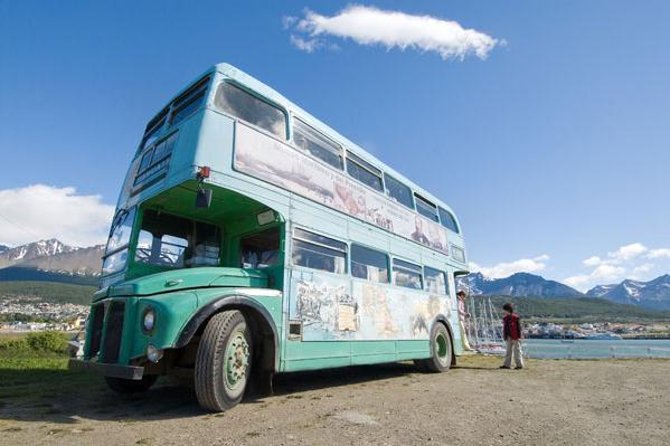
Ushuaia is squeezed between the Beagle Channel and steep wooded hills, so this one-hour bus loop gives you a useful first look without spending half a day on a formal city tour. You pass old government buildings, memorials, neighborhoods, university grounds, and high viewpoints, with two main chances to get out for photographs.
I like the quick orientation and the hilltop views over the harbor. I also like the price: at $32, it is reasonable if you have just arrived from a cruise ship or have only a short window in town. The drawback is that the commentary may be recorded or light on detail, and the route, stops, and language setup can vary by season.
Key points to know before you board

- A compact 15-kilometer loop: You see a wide slice of Ushuaia in about 70 minutes, then return to the Civic Plaza.
- Best first-day use: Take it early in your stay to understand the city’s layout before choosing museums, walks, or longer excursions.
- The high point is the view: Monte Gallinero, Monte Vigía, and a photo stop near Laguna del Diablo provide the strongest scenery.
- Summer and winter differ: The double-decker operates from October through April. In winter, the vehicle changes to a Bondi 4×4 and the tour is Spanish only.
- Audio is practical but not always personal: Summer departures include English and Spanish guiding, while other languages use seat audio with your own headphones.
- Do not expect a full museum visit: The tour passes or stops near several historic sites, but this is an overview rather than a detailed cultural tour.
Why this short ride works in Ushuaia
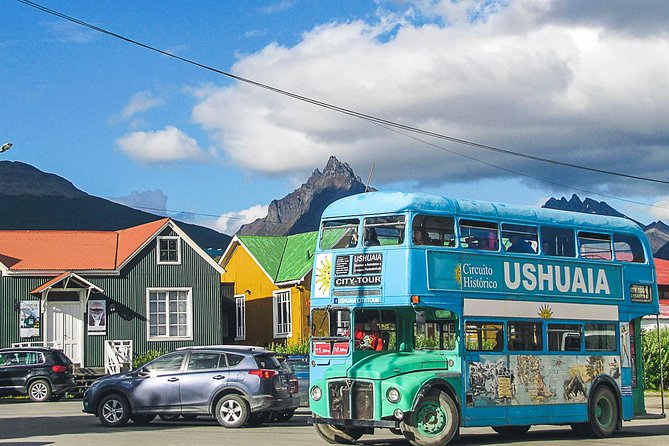
The main appeal is coverage. Ushuaia’s center is easy enough to walk, but the city climbs quickly into the hills, and some of the most rewarding views sit well above the waterfront. This bus takes you beyond the central streets to places you might skip on foot.
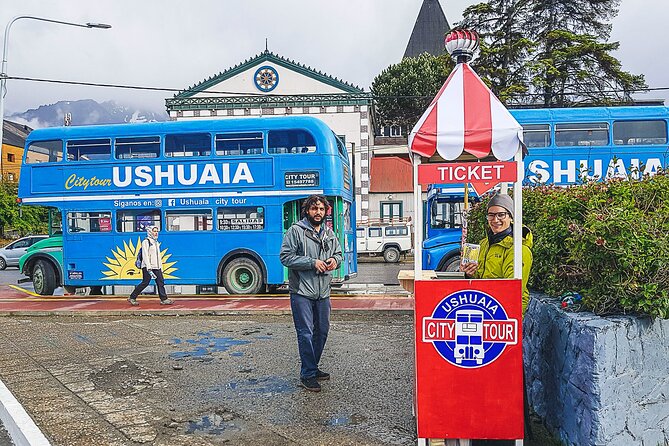
You begin at Civic Plaza on Avenida Maipú, a handy downtown meeting point. The bus then makes a broad circuit through old neighborhoods, newer districts, university grounds, memorials, and hill roads before returning to the same area.
I would use this as an orientation ride, not as a replacement for Ushuaia’s museums or a trip into Tierra del Fuego National Park. The route gives you names, context, and a sense of distance. You still need separate time for the places that deserve a closer look.
The group is capped at 20 people, which is smaller than a typical large city sightseeing bus. That helps with boarding and gives the ride a more local feel, though the upper deck can become cramped, and narrow stairs lead up to it.
Other trips people book in Ushuaia:
- Ushuaia: National Park & Train of the End of the World Tour
★ 4.5 · 811 reviews - Ushuaia: Penguin Watching Tour by Catamaran
★ 4.5 · 439 reviews - Ushuaia: Catamaran Sailing to Penguin Island
★ 4.4 · 436 reviews
From the old government house to the First Chapel
The first part of the route focuses on Ushuaia’s civic and religious beginnings. The Antigua Casa de Gobierno, or old government house, is the starting point, and the tour continues toward the region’s first school.
That pairing is useful because it frames Ushuaia as more than a gateway for ships and national park trips. Government, education, and faith helped shape the settlement, and the short stop at the First Chapel adds another piece to that early story.
You do not receive a long walking tour here. The allotted time is brief, so listen closely and keep your camera ready. The value comes from seeing these places in sequence, rather than studying one building in depth.
The next stop is Lucinda Otero, known as the Otero House. It offers a glimpse of local architecture and the city’s spiritual life. Five minutes is enough for a quick look, but not enough for a full architectural explanation or an indoor visit.
This is one reason I would not book the bus if your main goal is detailed heritage interpretation. It gives you a useful outline. You will need a museum, guide, or self-guided walk for the finer points.
Malvinas Memorial and the old cemetery
The Malvinas Memorial is one of the more serious stops on the circuit. It honors Argentine combatants in the Malvinas War, known in many countries as the Falklands War. The memorial connects Ushuaia to a major part of Argentina’s modern national memory.
You have about ten minutes here. That is enough to pause and understand why the monument matters, but the experience depends heavily on the guide or audio narration. If the commentary is brief, take a moment to read what is available and treat the stop with respect.
The First Cemetery follows. It is a quieter place, and the five-minute visit offers a pause from the bus route. Cemeteries often reveal how a town grew, who settled there, and which families helped build it, even when the tour only gives you a short introduction.
These stops are not flashy. They are valuable because they add human scale to the city. You are not just looking at a port and a mountain backdrop. You are seeing a place shaped by military memory, settlement, family, and public institutions.
University grounds and the best city views
The route continues past CADIC, the local scientific center, and the Universidad Nacional de Tierra del Fuego. This section shows a more modern side of Ushuaia, with science and higher education placed alongside the older civic landmarks.
The bus then climbs toward Monte Gallinero and Monte Vigía. Here, the city opens below you, with the harbor and surrounding hills providing the kind of broad view that is hard to get from the downtown streets.
This is one of the strongest reasons to choose the bus instead of walking only around the center. You get a quick sense of Ushuaia’s physical setting: water below, hills rising behind the town, and neighborhoods spreading across the slopes.
The ride can be bumpy on the upper deck, particularly on steep or uneven roads. That is part of the old-fashioned charm, but it is worth keeping in mind if you prefer a smooth ride or are sensitive to motion.
Bring a rain jacket. Ushuaia weather can change quickly, and the main photo stops are outdoors. A clear day can make the high viewpoint memorable. Wet weather may reduce the view, although the bus still provides shelter and a useful city circuit.
Same base, a different kind of day out:
- Ushuaia: Beagle Channel & Sea Wolves Island Catamaran Cruise
★ 4.6 · 433 reviews - National Park and Train Trip End of the World Guided Tour
★ 4.0 · 414 reviews - Ushuaia: Beagle Channel and Penguin Island
★ 4.6 · 318 reviews - From Ushuaia: Tierra del Fuego Emerald Lagoon Trekking Tour
★ 4.9 · 271 reviews
Río Pipo, new neighborhoods, and Prisoners’ Road
The route passes Río Pipo and newer neighborhoods before entering the historic Camino de los Presos, or Prisoners’ Road. This section points toward Ushuaia’s penal past, an important part of the city’s development.
The road name refers to the former prison system and the work carried out by prisoners. It helps explain why the old prison is so closely tied to Ushuaia’s identity. The route does not turn this into a full prison tour, but it gives you a reason to visit the museum later.
The five-minute stop is short, and the quality of the explanation matters. Some departures use recorded commentary, and passengers talking upstairs can make it difficult to hear. If you want the clearest audio, sit where you can use the provided equipment without too much background noise.
The prison history is one of the places where expectations matter most. The bus can introduce the subject, but it cannot match a proper visit to the Museo Marítimo and former prison complex. The published route includes the End of the World Museum and refers to the maritime and prison area, but the exact stop has not always operated as expected.
If getting off at the old prison is essential for you, confirm the current route before booking. Do not assume that passing nearby means you will have time to enter.
Laguna del Diablo and the photo stop
Laguna del Diablo is the main planned break on the circuit. You get off for about ten minutes to take photographs, look around, and catch your breath before continuing through the Barrio de los Italianos and past the local hospital.
This stop gives the bus ride a needed change of pace. Sitting upstairs for an hour can feel passive, especially if the commentary is prerecorded. Stepping out lets you experience the air and scenery directly.
The value of the lagoon stop depends on the weather and your expectations. It is a pleasant pause, not a major wilderness excursion. You will not be walking a long trail or spending a quiet morning beside a remote lake.
The nearby hill and airstrip viewpoint have also been praised for wide views of the city and harbor. The exact photo point may vary, so keep your camera ready throughout this stretch. The bus route offers several quick glimpses, but the dedicated stop is the best chance to take your time.
Boarding can be slow when everyone gets off and on together. Stay aware of the departure time, especially if you are taking the tour between a ship arrival and another activity.
Saint Christopher, the End of the World Museum, and the harbor
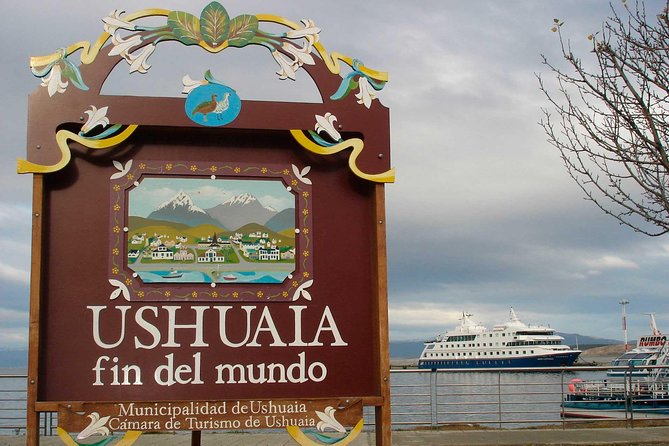
Near the end, the bus reaches the Saint Christopher shipwreck and the Museo del Fin del Mundo, or End of the World Museum. Saint Christopher is a familiar maritime symbol in the harbor, while the museum adds natural and cultural context to the region.
The itinerary allows about five minutes here. That is enough to identify the site and take a photograph, but not enough for a proper museum visit. If the museum interests you, plan a separate visit rather than relying on the bus stop.
The circuit finishes at the Naval Pier and Fournier Monument. These final points return the focus to Ushuaia’s maritime character and the pioneers connected with the port.
Ending where you started is convenient. You can walk to nearby restaurants, shops, museums, or the waterfront afterward without arranging another ride. It also makes the bus practical for cruise passengers, though you should allow extra time if your ship schedule is tight.
What the $32 price really buys you
At $32 per person, the tour is not the cheapest way to move around town. A walk through central Ushuaia costs nothing, and a taxi may make more sense if you already know which two or three places you want to visit.
The bus earns its price through breadth and convenience. You see the center, the hills, university grounds, old neighborhoods, memorials, and photo stops in one circuit. You also get a driver and a guide or audio narration, depending on the departure.
For a first-time visit, that can be good value. You learn where the city rises into the hills, how far the prison area is from the pier, and which places deserve a return visit. You save the effort of figuring out the route yourself.
The price feels less attractive if you expect a detailed live lecture, frequent hop-on hop-off service, or entry to museums. This is a short sightseeing ride, not an all-day pass. The bus may be older, and the top deck can be cramped or bumpy.
Languages, seasons, and comfort
From October through April, the double-decker runs with a professional English and Spanish-speaking guide. Other languages, including German, Chinese, Russian, Italian, French, and Portuguese, are available through seat equipment for use with your own headphones.
Bring headphones with a jack connection if you want to use the alternate-language audio. If you do not have suitable headphones, the operator says they can be purchased, but the supplied information does not give a price.
During winter, the experience changes. The double-decker is replaced by a Bondi 4×4, and the tour operates in Spanish only. That is a major booking detail, especially if English commentary is important to you.
The bus is generally described as comfortable enough for the short ride, and departures are intended to leave on time. Still, the upper deck is exposed to weather, the stairs are narrow, and the ride can jolt on steep streets. Choose the lower level if you value warmth and stability over the best view.
Who should book this Ushuaia tour?
I would choose this ride for a first morning in Ushuaia, a rainy day, or a short port call. It is also a good fit if you want a simple introduction before deciding which museums and walks deserve your limited time.
Families and older visitors may appreciate seeing the hills without climbing them. Solo visitors can use it to learn the city layout quickly. The small group limit helps keep the experience manageable.
I would skip it if you already know Ushuaia well, want a long nature walk, or need a detailed visit to the prison museum. I would also think twice if the only available departure is in a language you do not understand.
Because the cancellation policy is strict, check the forecast and your schedule before paying. If poor weather cancels the tour, you are offered another date or a full refund, but ordinary cancellations and changes are not refundable.
Should you book it?
Book this tour if you want a fast, practical introduction to Ushuaia with hilltop views and a broad city circuit. Its best qualities are the route, the orientation, the scenery, and the ability to fit the experience into roughly 70 minutes.
Keep your expectations modest. The commentary may be recorded, some stops are brief, the route can change, and the tour does not replace a proper museum visit. Confirm the current prison and museum stops if those are your priority.
For most first-time visitors with limited time, I think the bus is worth considering. Take it early, bring a rain jacket and headphones, and use what you learn to plan the rest of your time in Ushuaia.
FAQ
Where does the Ushuaia double-decker tour start?
The tour starts at Civic Plaza on Avenida Maipú 420-498 in Ushuaia.
Where does the tour finish?
The activity returns to the same meeting point at Civic Plaza.
How long does the tour last?
The tour lasts approximately 1 hour and 10 minutes.
How much does the tour cost?
The listed price is $32 per person.
Does the tour operate all year as a double-decker bus?
No. The double-decker operates from October through April. During winter, the tour operates in a Bondi 4×4.
Is the winter tour available in English?
The winter operation is Spanish only. In summer, the professional guide speaks English and Spanish.
Are other languages available?
Audio equipment is available at each seat in German, Chinese, Russian, Italian, French, and Portuguese. You need your own headphones with a jack connection.
Does the tour include hotel pickup?
No. Hotel pickup and drop-off are not included.
Is the tour suitable for most people?
Most people can participate, and the maximum group size is 20 people. The bus has narrow stairs to the upper deck, and the ride may be bumpy on steep roads.
Just added in Ushuaia
- BIG FUEGIAN LAKES OFF-ROAD 4×4★ 5.0 · 7 reviews
- Escondido and Fagnano Lakes – 4×4 Off Road Experience with lunch★ 4.5 · 32 reviews
- Escondido and Fagnano Conventional Lakes★ 5.0 · 33 reviews
- Ushuaia: Escondido & Fagnano Lakes Tour AM★ 4.4 · 10 reviews
- From Ushuaia: Penguin Watching Tour by Catamaran★ 4.1 · 55 reviews
- Packrafting experience along the Olivia River★ 5.0 · 60 reviews
- Tierra del Fuego National Park Private Tour★ 5.0 · 58 reviews
- 4WD Off-Road Lakes Adventure in Tierra del Fuego★ 4.5 · 56 reviews
Tours in Ushuaia, compared.
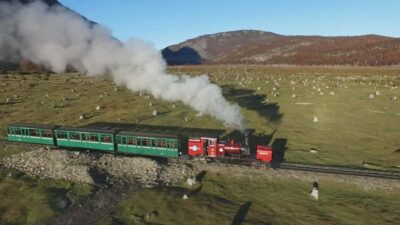
National Park & Train of the End of the World Tour
Read our review →


Beagle Channel & Sea Wolves Island Catamaran Cruise
Read our review →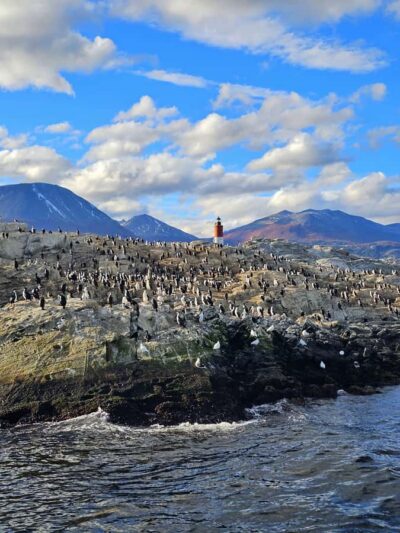
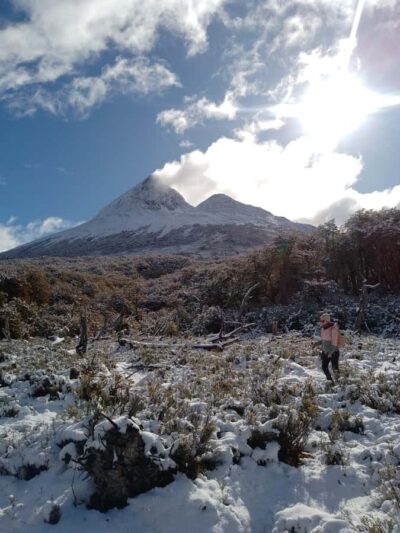
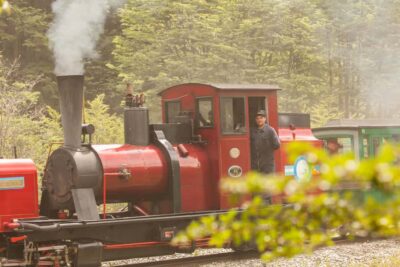
National Park, Train, and Beagle Channel Navigation
Read our review →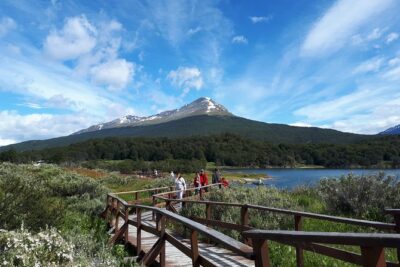
Shore Excursion – National Park Tierra del Fuego
Read our review →Browse the lists this tour appears in