
Reviewed · STREET ART
Private Off the Beaten Path: Hidden Urban Art Bike Tour
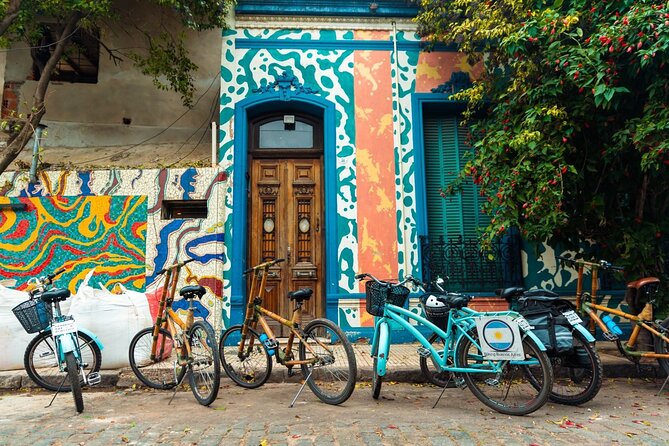
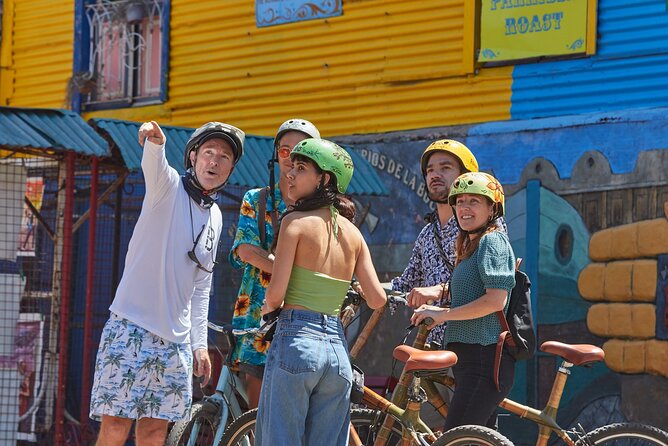
Buenos Aires reveals a different face when you pedal south from San Telmo. This private bike tour threads through La Boca and Barracas, where political murals, football references, colorful facades, mosaics, and working-class stories fill streets that most visitors never reach. The art is the doorway, but the city itself is the subject.
I like the small private format, which lets your guide slow down for questions and adjust the ride to your group. I also like the mix of major works, local collectives, design spaces, snacks, and mate, rather than a simple parade of painted walls. Guides such as Raymond and Daniel have brought strong local knowledge and personal connections to the route.
The main consideration is the riding. You need to feel comfortable on a bicycle in an urban setting and have moderate fitness. Some bikes have needed more maintenance, and the tour operates in all weather, so this is not the best choice if you want a gentle, fully predictable sightseeing outing.
Key points to know before booking
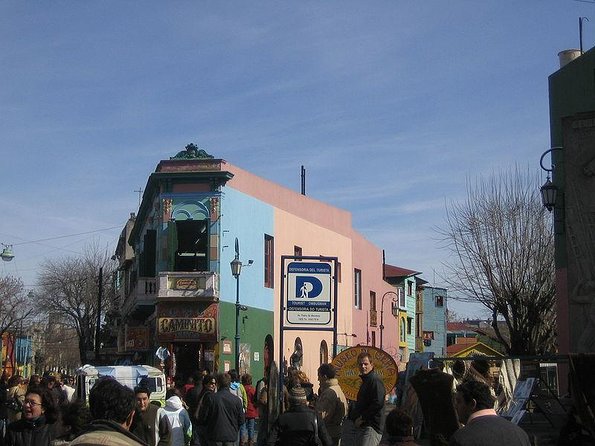
- Pasaje Lanín brings art into an ordinary residential street, with colorful facades and mosaics linked to artist Marino Santa Maria.
- Barracas holds Alfredo Segatori’s enormous mural, spread across three buildings and filled with local references.
- The route reaches less-touristy parts of La Boca, beyond the most familiar Caminito scenes.
- Street art becomes a way to discuss politics, football, religion, neighborhood life, and Argentine culture.
- Snacks, bottled water, and a coffee or yerba mate stop are included, along with the bicycle and helmet.
- This is a private four-hour ride, with an optional e-bike available for an extra fee.
Why this bike route shows you a different Buenos Aires
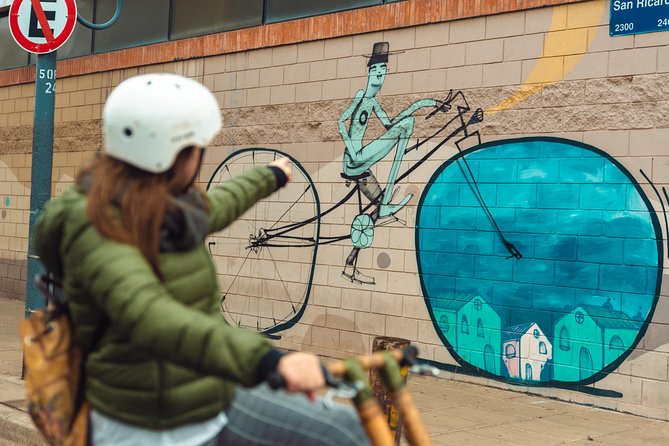
Many city tours keep you near the grand center, Recoleta, or the most photographed stretch of Caminito. This one heads into southern Buenos Aires, using street art to connect places that can feel very different from the postcard version of the city.
That matters because the murals are not just decoration. A painted wall may refer to football, neighborhood identity, political struggles, religion, or a local artist’s personal style. Your guide explains those links as you go, so you begin to read the city rather than simply photograph it.
The ride also gives you a useful sense of distance. You move from old San Telmo through La Boca and Barracas by bicycle, passing backstreets and larger roads along the way. You see how the neighborhoods change, how art appears in different settings, and how creative projects have helped bring attention to streets that once looked plain or neglected.
The tour lasts about four hours and includes roughly eight stops or pauses. It is private, so only your group takes part. That makes the pace more flexible than a large group outing, although the route still requires steady movement and comfort around city traffic.
Other rides around the city:
- Buenos Aires: North or South Buenos Aires Bike Tour
★ 4.7 · 719 reviews - Buenos Aires: Full Day Bike Tour with Lunch
★ 4.9 · 152 reviews - Buenos Aires Bike Tour: North Districts, Recoleta and Palermo
★ 4.5 · 91 reviews
Starting in San Telmo with a short bike briefing
Meet at Balcarce 1016 in San Telmo, one of Buenos Aires’ oldest neighborhoods. The opening portion takes about 20 minutes and covers your bicycle, helmet, riding tips, and the general route.
Do not treat this as a minor formality. Buenos Aires is a large city, and even quieter streets require attention. You will want to understand the bicycle before the route reaches busier roads and unfamiliar neighborhoods. Ask early if you need the seat adjusted or want guidance on handling the bike.
The company places emphasis on connecting visitors with local culture, not merely handing out bicycles and pointing toward the next stop. That approach helps explain why the ride includes conversations about community and everyday city life alongside the art.
A standard bicycle is included. An e-bike is available for an additional charge, which may be useful if you are concerned about the four-hour duration or prefer help on the longer stretches. The tour requires a moderate level of fitness, so an e-bike does not turn it into a completely effortless outing.
Calle Lanín and the art of changing an ordinary street
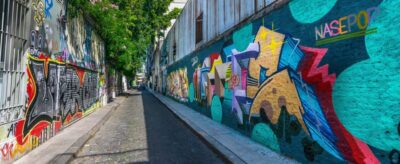
One of the most memorable stops is Calle Lanín in Barracas. This was once a gray, neglected-looking street. Artist Marino Santa Maria helped transform it with painted facades and decorative work, and the street later gained recognition as a site of cultural interest.
The appeal here is the scale. You are not viewing a single mural in isolation. The street itself becomes the artwork, with individual homes contributing to a shared visual identity. It is a good place to slow down, walk beside the bicycle, and look closely at details that would be easy to miss from a car.
This stop also gives the guide a chance to explain how public art can change the way a neighborhood is seen. You are still looking at homes and a working residential street, not a purpose-built gallery. That makes Calle Lanín more revealing than a polished art center, though visitors expecting one huge dramatic wall may find the experience quieter.
Bring a camera, but also take time to look at the facades without photographing every inch. The charm comes from the full street and the way the pieces work together.
Barracas and Alfredo Segatori’s three-building mural
The Barracas portion includes El Regreso de Quinquela, painted by Alfredo Segatori, also known as Pelado. The work stretches across three buildings and was once described as the longest mural painted by one person. It is now considered the longest in Argentina.
This is one of the route’s big visual moments. You need space and time to take in the mural’s size, and the guide can help point out the connections between the painting, Buenos Aires, and the neighborhood around it. It is a useful contrast to Calle Lanín: there, art is spread across a street of facades; here, one artist creates a large, unified statement over several buildings.
Barracas also brings you into the contemporary design side of the tour. You may visit or see projects linked to the Metropolitan Design Center and Cooperativa Vieytes, a collective based in a former ice cream factory. Cooperativa Vieytes is decorated with a symbolic mural and reflects the way old industrial spaces can take on new community and creative uses.
The route includes work by artists such as Pum Pum, Mart, Pol Corona, and Martin Ron. You will also see a collaborative mural connected with the Styles Street Art Convention. The range is useful: decorative work, large-scale painting, stencil art, social commentary, and collaborative projects all appear within the same half-day.
More murals and painted walls in Buenos Aires:
- Palermo: Graffiti and Street Art Guided Tour in English
★ 4.8 · 684 reviews - Premium Argentinian Wine and Malbec Tasting & Urban Art Tour
★ 4.0 · 16 reviews - Private Street Art Tour in Buenos Aires
★ 4.9 · 7 reviews
La Boca beyond the familiar Caminito
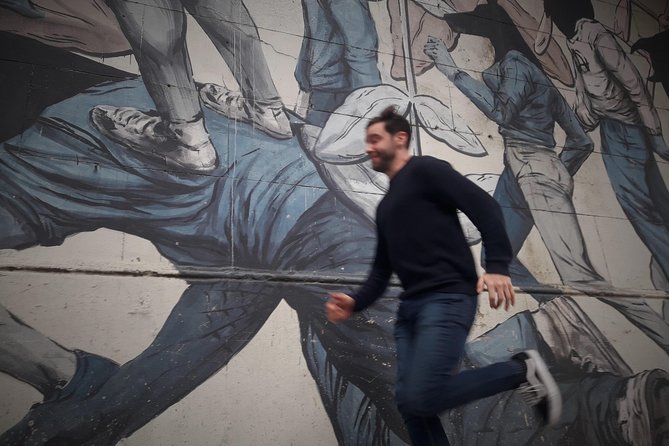
La Boca is famous for its brightly painted buildings, Italian roots, working-class identity, and Boca Juniors football club. Caminito is the best-known part, and the tour spends about an hour and a half in and around this area.
Caminito can feel highly arranged for visitors, with its colorful facades and strong tourist presence. That is not a reason to skip it. It is a striking place, and the guide explains how it became one of the city’s most visited and colorful spots. But the value of this tour is that Caminito is only part of the La Boca visit.
You also ride through nearby streets and look for murals connected with the COLOR BA festival and other local projects. A Stealth Stencil stop adds a more playful, small-scale element to the route. Instead of looking only at famous facades, you get a sense of how art appears across the wider neighborhood.
This section is also where the tour’s cultural discussions can stretch beyond art. Football, migration, religion, neighborhood pride, and public space all enter the conversation. Guides Raymond and Daniel have been praised for making those connections and for offering useful suggestions for the rest of a Buenos Aires stay.
The area requires sensible awareness. The tour asks you to visit non-touristy streets, and you should follow your guide’s lead rather than wandering off alone. The route is designed to help you see more of La Boca while keeping the group together.
Art collectives, local voices, and the role of the guide
The tour includes work by creative collectives such as Red Sudakas and Triangulo Dorado. These groups help show that Buenos Aires street art is not only about solo artists working independently. Collaboration, shared walls, neighborhood projects, and design communities all play a part.
That is where the guide makes a major difference. A wall can be attractive on its own, but its meaning is easier to understand when someone explains who made it, what style you are seeing, or how local politics and community life shaped the image.
The strongest guides on this route bring more than a list of artist names. Raymond has been noted for using street art as a path into Argentine culture and for giving practical recommendations for the rest of a visit. Daniel has been praised for his knowledge of working-class neighborhoods and for having connections that may open the door to a local artist’s studio.
Those personal touches are not guaranteed with every departure, but the private format gives you a better chance to ask questions and keep the conversation focused on your interests. If you care about art technique, ask about stencils, mosaics, scale, and collaborative painting. If you are more interested in politics or football, say so early.
The food and mate breaks add local texture
The tour includes bottled water, snacks, and a coffee or tea mate stop. Yerba mate is a favorite local drink, and trying it during a pause gives you a small but useful connection to everyday Argentine habits.
One stop may include empanadas, and the food has been singled out as a memorable part of the outing. Do not expect a full restaurant meal as the main purpose of the tour. Think of it as a well-timed local bite during a long ride, with enough of a break to rest your legs and continue the conversation.
These pauses also keep the tour from becoming four straight hours in the saddle. You will make about eight stops, get off the bike, walk around, take photos, and look at the art from different angles. That rhythm makes the ride manageable, though you should still arrive ready to pedal for much of the afternoon.
Price, equipment, and practical value
At $115 per person, this is not the cheapest way to look around Buenos Aires. The value depends on how much you want from the afternoon.
You are paying for a private four-hour outing, a guide in English or Spanish, bicycle and helmet use, water, snacks, and a mate or coffee stop. You also cover a lot of ground without needing to arrange taxis between San Telmo, La Boca, and Barracas. A private guide can explain the city in a way a self-guided ride cannot, especially when the best art is tucked into ordinary streets.
The price makes the most sense for two or more people who want a focused cultural activity and prefer a personal guide. Solo visitors may find it expensive, but the private format can still be worthwhile if street art is a main interest.
Equipment is a modest concern. Some bikes may need more maintenance, though they remain usable. Check the bike before setting off and speak up about any problem. The optional e-bike costs extra, so include that in your budget if you want electric assistance.
The tour runs in all weather. Wear practical clothes and shoes, and prepare for sun, wind, or rain. Because much of the appeal comes from outdoor walls and streets, poor weather may affect comfort even if the tour still operates.
Who should book this four-hour ride?
I would choose this tour if you want to see Buenos Aires beyond its central sights, enjoy contemporary art, and feel comfortable riding through an urban setting. It is especially useful near the start of your stay, since the guide can suggest places to eat, neighborhoods to explore, and other things to do afterward.
It suits adults, couples, friends, and families with older children who can manage city cycling. The private setup also works well for people who want to ask a lot of questions or adjust the pace.
I would not choose it if you dislike bicycles, have limited fitness, want a fully indoor activity, or prefer only the safest and most polished tourist areas. La Boca and Barracas are valuable precisely because they feel like real city neighborhoods, not a carefully packaged museum route.
The ride ends back at Balcarce 1016 in San Telmo. Free cancellation is available if you cancel at least 24 hours before the start time. If your schedule is uncertain, that deadline matters.
Should you book it?
Book this tour if you want a more personal look at Buenos Aires, especially if street art is a serious interest rather than a quick photo stop. The combination of La Boca, Barracas, Calle Lanín, design collectives, large murals, local snacks, and a private guide gives you a broad view of the city in one afternoon.
The strongest reason to go is not simply the largest mural or the colorful Caminito facades. It is the chance to understand how art connects with football, politics, neighborhood pride, and daily life. Just be honest about the cycling requirement, check the equipment before leaving, and consider the e-bike if four hours of urban riding sounds demanding.
FAQ
How long does the bike tour last?
The tour lasts approximately four hours, including cycling, art stops, walking breaks, and the food or drink pause.
Where does the tour begin and end?
It begins at Balcarce 1016 in San Telmo, Buenos Aires, and returns to the same meeting point at the end.
Is the tour private?
Yes. Only your group participates in the activity.
Which neighborhoods does the tour visit?
The route begins in San Telmo and continues through La Boca and Barracas, including Caminito and Calle Lanín.
Is bicycle use included?
Yes. Bicycle and helmet use are included in the price. An e-bike is available for an extra fee.
What food and drinks are included?
The tour includes bottled water, snacks, and a stop for coffee or tea mate.
What language is the tour offered in?
The guide speaks English or Spanish.
Can I cancel for a full refund?
Yes, if you cancel at least 24 hours before the experience’s start time. Cancellations made less than 24 hours ahead are not refunded.
More Cycling Tours in Buenos Aires
- City Bike Tour in Palermo and Recoleta
★ 4.5 · 7 reviews - Buenos Aires: E-Bike Tour in the North Circuit of Buenos Aires
★ 4.3 · 5 reviews - Bike Tour: Buenos Aires to the North
★ 4.0 · 3 reviews
More bike tours in Buenos Aires
- Buenos Aires in a Day – All Inclusive Bike Tour
★ 5.0 · 89 reviews - Buenos Aires Bike Tour: San Telmo and La Boca Districts
★ 4.5 · 74 reviews - Bike Tour: Buenos Aires to the South
★ 4.8 · 29 reviews - Buenos Aires: E-Bike Tour in the South Circuit of Buenos Aires
★ 4.6 · 9 reviews
Just added in Buenos Aires
- Buenos Aires: Speakeasy & Mixology Bar Tour with Cocktails★ 5.0 · 5 reviews
- Premium Empanadas Cooking Class & Wine Tasting Experience★ 4.9 · 35 reviews
- Buenos Aires: Small-Group Wine Tasting★ 4.8 · 18 reviews
- Buenos Aires: Rojo Tango Show with Optional Dinner★ 3.4 · 3 reviews
- Buenos Aires: Santa Susana Ranch Day Tour, BBQ & Shows★ 4.6 · 32 reviews
- Buenos Aires:Small Group Tour AM & Sunset Open Bar Cruise PM★ 4.5 · 15 reviews
- Buenos Aires: Private Photo Tour for Ammateur Photographers★ 4.9 · 5 reviews
- Buenos Aires: Private Recoleta Cemetery Walking Guided Tour★ 4.6 · 13 reviews
Street Art, compared.
Premium Argentinian Wine and Malbec Tasting & Urban Art Tour
Read our review →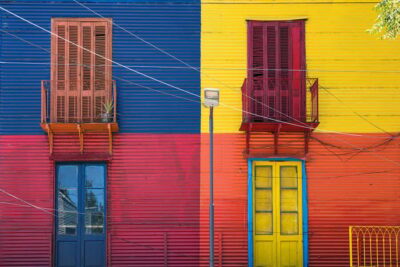
Browse the lists this tour appears in