
Reviewed · SALINAS GRANDES & PURMAMARCA TOURS
Quebrada de Humahuaca and Purmamarca
The most striking part of this day is the changing color of the Andean rock. You move from Purmamarca’s Seven Colors Hill to the Painter’s Palette near Maimará, with old villages, Inca routes, pre-Incan ruins, and high valleys between them. I like the wide range of stops and the chance to see both famous sights and smaller towns in one trip.
I also like that hotel pickup, a guide, and air-conditioned transport are included for $86. The main concern is the length. This is a 12-hour outing, and some departures have run longer because of hotel pickups, traffic, or mixed tour arrangements. English commentary can also be shorter than the Spanish version.
Key points to know before you go
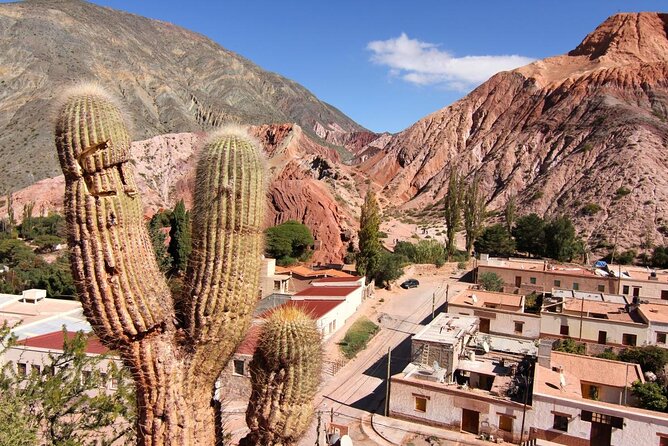
- Purmamarca gives you the day’s first big color show: See Cerro de los Siete Colores, a cactus-roofed church, and a craft market.
- The route covers several historic towns: Tilcara, Huacalera, Uquía, Humahuaca, and San Salvador de Jujuy each offer something different.
- Pucará de Tilcara is an optional-cost stop: The entrance fee to the ruins is not included.
- Lunch is your own expense: You may bring food and drinks, or eat in Humahuaca.
- Language matters: Guides such as Abel, Pamela, Maria, Freddy, Eva, and Jessie have received strong praise, but English explanations can be abbreviated on bilingual departures.
- Expect a very full day: The group can reach 30 people, and shared pickups may add time before and after the main route.
Why this northern Argentina day trip is worth considering
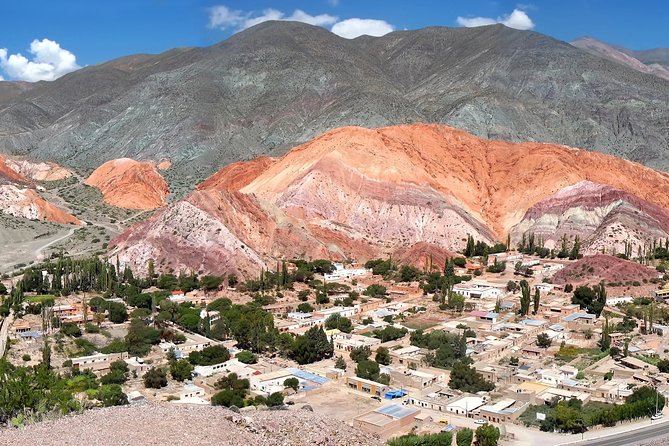
The Quebrada de Humahuaca is not one single viewpoint. It is a long mountain corridor stretching about 155 kilometers through Jujuy Province. The Río Grande runs through it during the summer, and the route has served as an Inca caravan road, a colonial trade path, and a setting for fighting during Argentina’s war of independence.
That background gives the trip more weight than a simple mountain photo stop. You are moving through a place shaped by trade, indigenous communities, colonial religion, and national history. The guide’s commentary matters here, since the scenery alone cannot explain why the towns look and feel so different from Salta.
At $86 per person, the value is fairly strong if you want transportation from Salta and a broad introduction to the region. A private outing would offer more control, but this shared trip covers a large amount of ground without requiring you to rent a car or plan the route yourself.
The tradeoff is simple: you get breadth instead of a relaxed pace. You will see many places, but you will not have long, unhurried time in every town.
Other runs up to the salt flats from Salta:
- From Salta: Full-Day Trip to Salinas Grandes and Purmamarca
★ 4.6 · 914 reviews - From Salta: Salinas Grandes, Purmamarca & Los Colorados Hike
★ 4.3 · 356 reviews - Full-Day Tour Salinas Grandes and Purmamarca from Salta
★ 4.0 · 220 reviews
The early road from Salta into the quebrada
Pickup begins around 7:00 a.m. at selected Salta hotels. Because this is a shared transfer, the exact process can take longer than expected. Keep yourself ready at the hotel and allow patience for other pickups, especially if your accommodation is collected late in the route.
The vehicle is air-conditioned, and the group may be as large as 30 people. Some departures use a smaller van, while others use a coach. Either way, much of the day is spent on Route 9, so comfortable clothes, good walking shoes, sunscreen, and a jacket or sweater are sensible choices.
The first major stretch takes roughly two to two and a half hours toward Humahuaca, with stops and commentary along the way. Guides have been praised for making this long ride interesting. Abel, Pamela, Maria, Freddy, Eva, and Jessie are among the guides specifically associated with strong experiences, though the guide and language arrangement can vary by departure.
If you speak English, confirm that an English-speaking guide is assigned. A few English-speaking visitors have found that the guide first explains everything in Spanish, then gives a shorter English version. That does not ruin the day, but it can mean less detail about the history and culture.
Purmamarca and the Seven Colors Hill
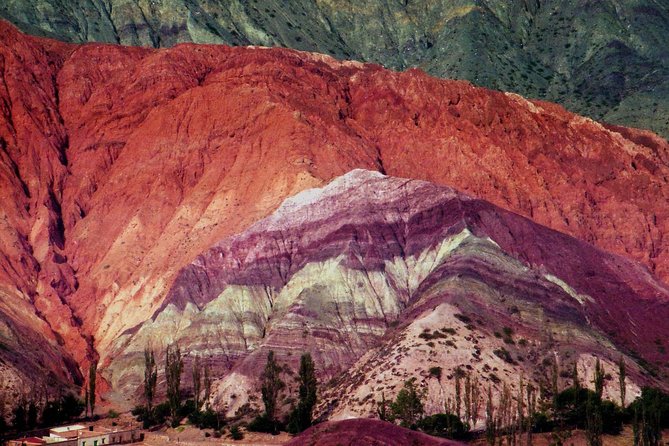
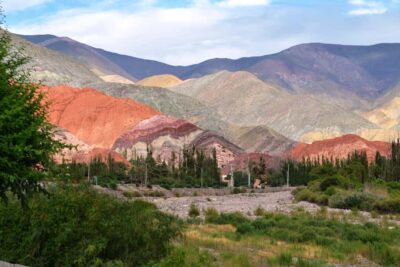
Purmamarca is usually your first village stop. It is small, photogenic, and built beneath Cerro de los Siete Colores, or Seven Colors Hill. The mountain’s bands shift through pale cream, green, rose, ocher, and dark plum tones.
You get about an hour in the village, plus roughly 20 minutes focused on the hill. The exact viewing arrangement matters. One departure stopped close to the road rather than at a broad viewpoint, while other visitors wished for more time in Purmamarca itself. You should expect good photographs, but not a long hike or a private viewing platform.
The village church is notable for its roof covered with organ-pipe cacti. The local craft market sells jewelry, wool rugs, and other handmade goods. Prices can be more favorable than in Salta or Buenos Aires, making this a useful place to browse if you want a small textile or piece of jewelry.
I would not treat the market as an obligation. The strongest reason to stop is the combination of the village and the colored mountain. Some departures have included several shopping-oriented pauses, so if you prefer archaeology and scenery, ask the guide how much free time you will have.
Tilcara and the hilltop Pucará
Next comes Tilcara, one of the key towns in the quebrada. The route usually includes a viewpoint near the town, where you can see pre-Incan ruins and the surrounding valley. You then visit the Pucará de Tilcara area and the archaeological museum near the town square.
The hilltop ruins help explain how people used the terrain before the Inca period. From above, you can see why this corridor mattered: it provided a natural route through difficult mountain country. The museum adds objects and historical context that the outdoor ruins alone cannot provide.
The entrance fee to the Tilcara ruins is not included in the $86 price. That is an important detail when comparing the tour with other options. The stop is worthwhile if archaeology interests you, but you should carry extra money if you want to enter.
The schedule gives roughly an hour here. That is enough for a useful introduction, but not enough for a slow archaeological visit. If Tilcara is your main priority, a separate day or private tour would allow more time.
More of the coloured gorge from Salta:
- From Salta: Serranías del Hornocal & Hill of 14 Colors Tour
★ 4.4 · 339 reviews - Full-Day Tour to Humahuaca from Salta
★ 4.4 · 140 reviews - Hornocal: Tour of the 14 Colors Mountain & Humahuaca´s Gorge
★ 4.2 · 81 reviews - Hornocal, 14 colors mountain, trough Humahuaca´s gorge
★ 4.0 · 75 reviews
Huacalera, the Tropic of Capricorn, and Uquía
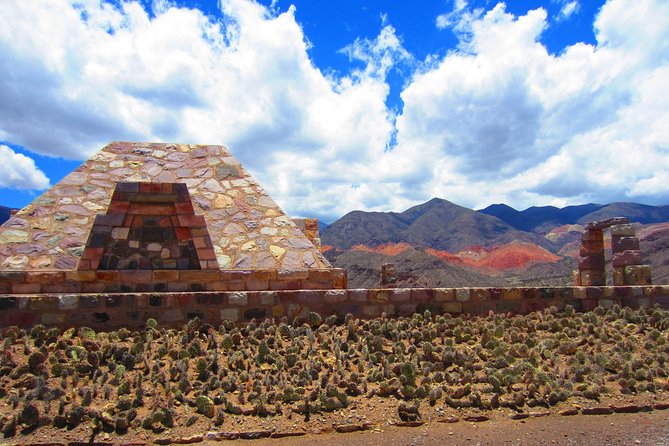
The route continues through Huacalera, where you cross the Tropic of Capricorn. A sundial marks the location, and the group makes a short stop for photographs. It is a quick roadside pause rather than a major attraction, but it breaks up the drive.
You also see La Pollera de la Coya, a multicolored hill whose name refers to the layered skirt traditionally associated with an Andean woman. The mountain’s colors make it another easy photo stop, though the view is generally taken from near the road.
In Uquía, the focus shifts from geology to religious art. The church contains paintings from the 1600s made by indigenous students of the Cuzco School, a major artistic tradition founded in Peru. The works show the meeting of European Catholic imagery and local artistic traditions.
You get about 30 minutes in Uquía. That is enough to see the main paintings, but you will need to stay aware of the departure time. This is one of the more culturally meaningful stops, so I would pay close attention rather than treating it as another quick photograph.
Humahuaca, the day’s northern turning point
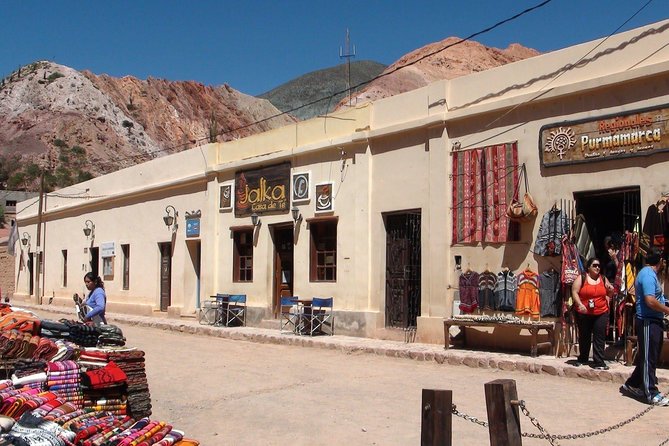
Around midday, the tour reaches Humahuaca, the largest and most densely populated town on the route. White colonial buildings line cobbled streets, and a staircase leads toward the Monument of Independence, built in 1950. From there, you can look across the Río Grande valley.
The local cathedral contains more Cuzco School paintings. You also get time to walk through the town and choose lunch, which is not included. You may bring your own food and drinks, but the guide can recommend a restaurant.
Lunch is one area where your own judgment helps. A recommended restaurant may offer inexpensive local food, but the quality can be uneven. If you are particular about meals, look at the menu before sitting down, or ask whether you can eat elsewhere during the allotted time.
The schedule allows about two hours in Humahuaca, but the real amount can depend on the operator’s other arrangements. One particularly poor departure involved different tours sharing a coach, with a long wait while other groups visited additional sites. That is not something to accept quietly at booking. Confirm that the service you choose follows the shorter Humahuaca itinerary and does not require you to wait for a separate excursion.
Humahuaca is also where the day can feel rushed. You have colonial streets, a monument, a cathedral, paintings, and lunch competing for the same block of time. I would choose one or two priorities before arriving.
The return past Maimará and the Painter’s Palette
After lunch, the coach heads south again. The return route brings you past La Paleta del Pintor, or Painter’s Palette, near Maimará. The triangular ridges have bands of rose, green, and ocher, creating a broad natural frame around the town.
This is one of the best moments for simply watching from the vehicle. The colors change with the light, and the formations feel different from Seven Colors Hill despite belonging to the same broad world of layered rock.
The itinerary allows about an hour in this area, though the precise stop can vary. Some departures have been criticized for offering too few formal viewpoints and too few chances to stop for photographs. If the scenery is your main reason for booking, ask whether the guide will make designated photo stops rather than relying only on views from the road.
San Salvador de Jujuy and the final miles
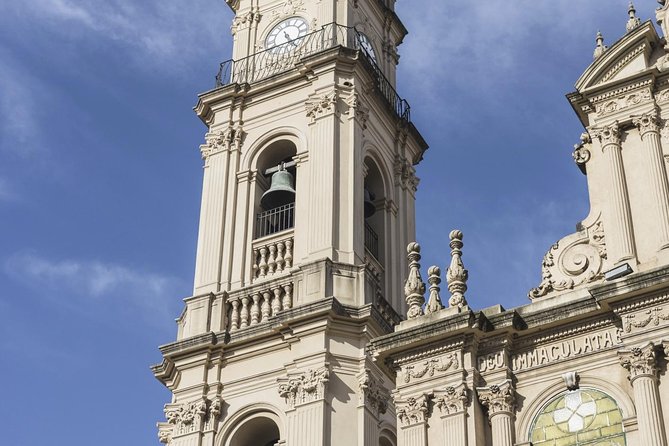
On the way back to Salta, the tour stops in San Salvador de Jujuy. You visit the Cathedral of San Salvador de Jujuy, then the French Baroque-style Flag’s Hall and the Government House.
This final city stop gives the day a different texture. After the open mountain corridor and small villages, you see an important provincial center tied to Argentina’s national story. The Flag’s Hall is especially relevant to the country’s independence traditions.
The return continues along winding Route 9, with views of subtropical plants, Santa Laura Pass, La Cienaga dam, Las Maderas, Campo Alegre, and Vaqueros. This is scenic, but it is also the point when fatigue sets in.
Traffic and hotel drop-offs in San Salvador de Jujuy can add substantial time. Some departures have returned about two and a half hours later than planned because of an unexpected medical problem, while others have simply lost time with shared drop-offs. A 12-hour estimate should be treated as an approximate full-day commitment, not a firm arrival time.
Price, group size, and what you really get
At $86, the tour includes hotel pickup and drop-off, a professional guide, and air-conditioned transport. It does not include lunch, drinks, or the entrance fee for the Tilcara ruins.
That makes the price reasonable for anyone who wants a route covering several towns and both provinces without arranging transport. It is less attractive if you only want Purmamarca, since a long shared day is a lot of time for one village and one mountain.
The group limit is 30 people, though some departures have been much smaller. A small group can make it easier to ask questions, move through towns, and communicate with the guide. A full coach will feel less personal, particularly when the commentary is bilingual.
Free cancellation is available until 24 hours before the start time. If the minimum number is not reached, the operator can offer another date or a full refund.
Who should book this tour?
I would choose this excursion if you have limited time in Salta and want one broad introduction to Jujuy Province. It suits first-time visitors, history fans, photographers, and anyone who prefers not to drive a long mountain route.
It also works well if your priorities are variety and convenience. In one day, you see colored mountains, a cactus-roofed church, markets, pre-Incan ruins, colonial buildings, indigenous religious art, and an important provincial capital.
I would hesitate if you dislike early starts, long coach rides, or fixed schedules. You may also prefer a private or smaller outing if you want extended time in Purmamarca or Tilcara, or if every explanation needs to be in English.
The best practical move is to confirm three things before paying: the guide language, whether the Tilcara entrance is extra, and whether your vehicle is combining multiple tour programs. Those details can change the feel of the day more than the advertised list of sights.
Should you book it?
Book it if you want the most scenery and cultural variety possible in a single day from Salta, and you accept that the schedule will be tight. The colored mountains and mountain villages are the real reward, while the included transport keeps the price sensible.
Skip it for a slower visit. If you can spend several days in the region, separate trips to Purmamarca, Tilcara, and Humahuaca would give you more time for walking, museums, markets, and meals. For a first look, though, this is a strong, demanding day out, provided you confirm the language and understand that the return may run late.
FAQ
How long is the Quebrada de Humahuaca tour?
The planned duration is about 12 hours, starting around 7:00 a.m. Because of shared pickups, traffic, and hotel drop-offs, the actual return can take longer.
Where does the tour start?
The experience starts in Salta, Argentina, with pickup from selected hotels.
Is hotel transportation included?
Yes. Round-trip hotel pickup and drop-off are included for most Salta hotels.
What towns does the tour visit?
The route includes Purmamarca, Tilcara, Huacalera, Uquía, Humahuaca, and San Salvador de Jujuy.
Is lunch included?
No. Food and drinks are not included. You may buy lunch in Humahuaca or bring your own food and drinks.
Is the entrance fee to the Tilcara ruins included?
No. The entrance fee to the Pucará de Tilcara ruins is an additional cost.
What should I bring?
Wear comfortable clothes and walking shoes. Bring sunscreen, a jacket or sweater, and money for lunch, drinks, crafts, and the Tilcara entrance fee.
How many people can join the tour?
The maximum group size is 30 people.
Can I cancel for a full refund?
Yes, if you cancel at least 24 hours before the experience start time. Cancellations made less than 24 hours ahead are not refunded.
Just added in Salta
- From Salta: Great Salt Flats Day Tour★ 4.0 · 10 reviews
- From Salta: City Tour of the city on a half-day ride★ 4.0 · 59 reviews
- From Salta: Salinas Grandes, Purmamarca and Cuesta de Lipán★ 4.4 · 70 reviews
- From Jujuy: Salinas Grandes, Purmamarca & Los Colorados Hike★ 4.2 · 75 reviews
- 3 Days 3 Full Excursions Pack★ 4.0 · 73 reviews
- From Salta: Day Trip to Cachi and the Calchaquí Valleys★ 4.2 · 67 reviews
- From Salta: Full-Day Tour to Cafayate, Land of Wines★ 4.5 · 74 reviews
- Hornocal, 14 colors mountain, trough Humahuaca´s gorge★ 4.0 · 75 reviews
Salinas Grandes & Purmamarca Tours, compared.
Full-Day Trip to Salinas Grandes and Purmamarca
Read our review →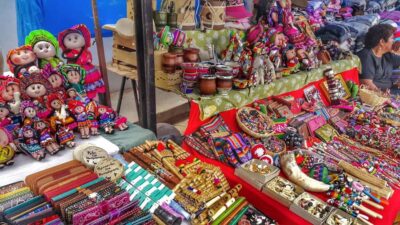
Salinas Grandes, Purmamarca & Los Colorados Hike
Read our review →
Full-Day Tour Salinas Grandes and Purmamarca from Salta
Read our review →
Browse the lists this tour appears in