
Reviewed · HIGH MOUNTAIN & ANDES DAY TRIPS
Cabalgata Cruce de Los Andes Cruce Sanmartiniano
The Cabalgata Cruce de Los Andes is not a gentle horseback outing. It is a seven-day Andean expedition over high passes, rough trails, cold nights, and wide-open mountain country. You follow the route of General José de San Martín and his troops toward the Argentine-Chilean border, traveling by horse with mules carrying much of the camp gear.
I like the strong historical thread, especially at Valle Hermoso, where San Martín made his final camp on the Argentine side. I also like the small-group format, with six to fourteen people and a guiding team led by Cristian and Eugenia. The main caution is clear: this is a medium-to-high difficulty trip at elevations up to 4,500 meters, with several nights in tents and weather that can change fast.
Key points to know
- Reach 4,500 meters at the Espinacito Pass, one of the most demanding and exciting points of the route.
- Sleep in mountain camps, including five nights under the Andean sky according to the supplied experience details.
- Ride a historic route linked to José de San Martín, with camp sites and passes that give the journey real context.
- Travel with mules, baqueanos, and local guides, rather than treating the Andes as a backdrop for a short ride.
- Look for condors and guanacos, along with changing views of valleys, streams, ridges, and high peaks.
- Expect a remote, effort-based adventure, not a comfort-focused holiday.
A horseback crossing with real mountain work
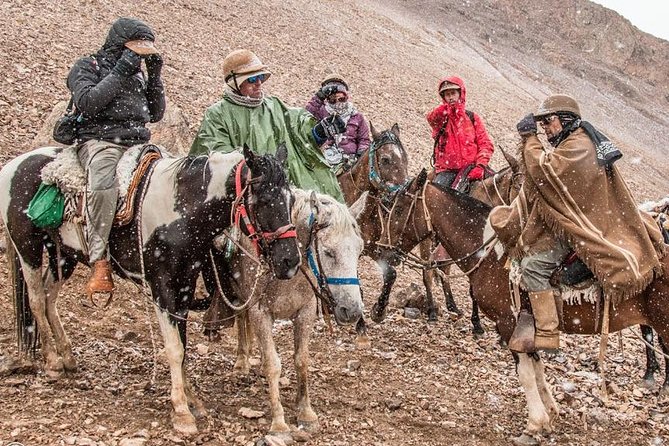
This expedition gives you a close look at the Andes from the saddle. The route passes through valleys bordered by the La Ramada and Alma Negra mountains, crosses high passes, and follows streams through remote cordilleran country. You are not simply being driven to scenic viewpoints. You ride, camp, help adjust to the rhythm of the mules, and accept the limits imposed by altitude and weather.
That effort is part of the point. San Martín’s crossing was a military operation carried out under far harsher conditions, and this route lets you grasp the scale of that achievement without pretending the modern expedition is the same thing. The historical stories make more sense when you are looking up at the passes and watching horses and mules work their way along the trail.
The expedition is offered in summer, from December through March. That is the operating season, but summer in the high Andes does not mean warm or predictable conditions. You need clothing for sun, wind, cold, and possible changes in the weather. The trip operates in all weather conditions unless conditions make the expedition unsafe.
More time up in the mountains from Argentina:
- From Mendoza: High Andes Aconcagua Mountain Tour
★ 4.4 · 767 reviews - Bariloche: 7 Lakes & San Martin de Los Andes Road Trip
★ 4.5 · 624 reviews - Andes Day Trip from Mendoza Including Aconcagua, Uspallata and Puente del Inca
★ 4.5 · 419 reviews
Day 1: San Juan to Barreal and a careful start
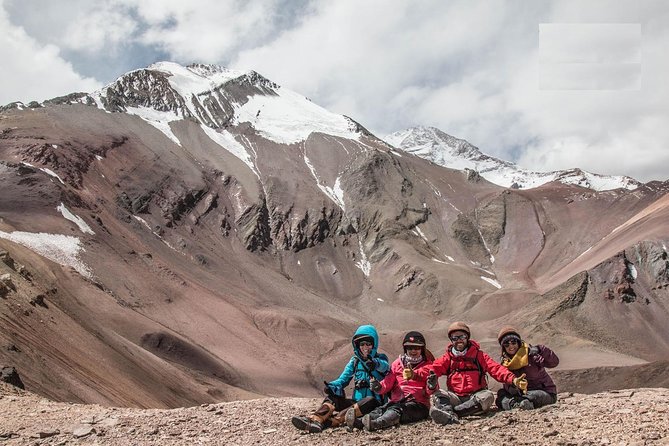
Your pickup begins in the city of San Juan, followed by transport to Barreal. This first day is less about distance and more about preparation. You stay in Barreal, review your equipment, hear the logistics briefing, and receive an introduction to the crossing and its historical setting.
That overnight stop matters. It gives you time to get used to the area before reaching the high camps. The guide team can review the equipment and explain how the expedition will work, including the relationship between riders, horses, mules, guides, and baqueanos.
You also have free time in Barreal. The schedule lists about two hours for the initial activity, but the full day includes the transfer and accommodation. Confirm the precise pickup time and lodging details when booking, since the supplied schedule describes the trip as roughly seven days while also describing it as eight days and seven nights.
Day 2: Four-wheel-drive access and the first cordilleran camp
The second day starts with breakfast and a four-wheel-drive transfer to the first mountain outpost. This is an important practical detail. The expedition does not ask you to ride every kilometer from San Juan. A vehicle takes you into the mountain area, where the mules are assigned and prepared.
You eat lunch in the field before setting out through a mountain valley framed by Cerro La Ramada and Cerro Alma Negra. This is where the trip changes character. Roads and town facilities fall away, and the group settles into the slower pace of a mounted expedition.
Keep your eyes open for native wildlife. Condors and guanacos are among the animals associated with the route, though sightings are never guaranteed. You finish at the first camp, with dinner and a night outdoors. The supplied details include tents, but they do not describe the exact tent arrangement or toilet facilities, so ask about those points before departure if camp comfort matters to you.
Day 3: The Espinacito Pass at 4,500 meters
The climb toward the Espinacito Pass is the trip’s great physical test. At 4,500 meters above sea level, altitude becomes a serious factor, even for a fit rider. The route reaches one of its highest points here, and the combination of steep mountain country, exposed terrain, and mule work creates the expedition’s strongest sense of adventure.
You should not treat this as a casual horseback ride. The operator asks for moderate physical fitness and rates the difficulty as medium to high. You need to be comfortable spending long periods outside, riding on uneven mountain trails, and coping with cold or wind. The itinerary does not state daily riding hours, so ask for that information before you commit.
After the pass, the group reaches the base camp and continues to Las Vegas de Gallardo, where you eat dinner and sleep. This is one of the nights when the setting matters as much as the facilities. High camps offer enormous skies and silence, but you give up the comforts of a hotel. The trip’s appeal depends heavily on how much you enjoy that trade.
Same base, a different kind of day out:
- El Calafate: Perito Moreno Glacier & Optional Boat Cruise
★ 4.7 · 2,586 reviews - Buenos Aires Hop-On Hop-Off Bus, Free Walking Tours & Discounts
★ 4.5 · 2,218 reviews - Buenos Aires: Piazzolla Tango Show with Optional Dinner
★ 4.4 · 2,122 reviews - Buenos Aires: City Highlights Guided Tour with Transfer
★ 4.7 · 1,946 reviews
Day 4: Valle de los Patos and San Martín’s final Argentine camp
The ride continues through Valle de los Patos before reaching Valle Hermoso. This is one of the most meaningful sections of the route because it connects the physical crossing with the story of San Martín’s army.
Valle Hermoso is identified as the final camp San Martín made on the Argentine side before continuing toward Chile. You spend the night near the Valle Hermoso River. That detail gives the stop a special weight. It is not just another scenic camp. The location helps you picture the movement of troops, animals, equipment, and supplies through terrain that remains demanding today.
The river also gives the camp a natural focus, though you should not assume modern riverside facilities. Dinner is included, and the supplied plan indicates camping. Bring a good attitude toward simple routines: eating outdoors, organizing your belongings in a tent, and living by daylight and weather instead of by hotel schedules.
Day 5: The Argentine-Chilean border marker
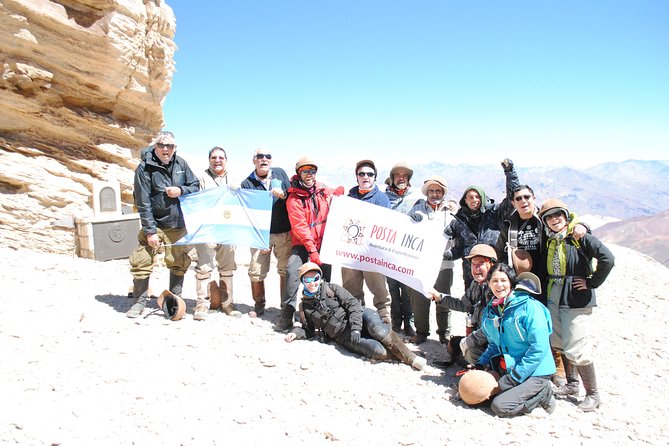
The ride reaches the border marker between Argentina and Chile on the fifth day. The expedition pauses there, and the rest of the day is free. That break is welcome after the high passes and long riding days.
This is a good point to slow down and take in the scale of the route. The border is not presented as a commercial crossing or a town visit. It is a remote mountain marker reached on horseback. The current valid passport requirement is still important, even though the supplied itinerary does not describe an immigration procedure at the marker.
Use the free time wisely. You may want to rest, take photographs, write notes, or simply enjoy the silence. Do not expect a full range of services at the border area. The experience is about being there, not shopping or sightseeing in the usual sense.
Day 6: Returning through streams and high valleys
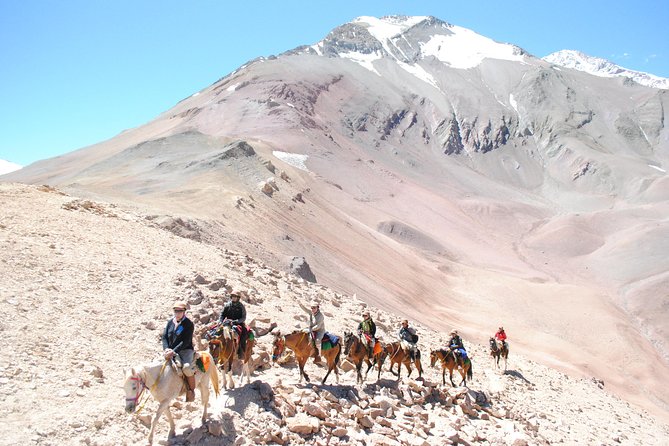
The return ride follows mountain streams toward Rancho de Lata or Vega del Cura. You spend the night at one of these locations, with dinner included.
This section provides a different view of the same country. On the way out, you are focused on gaining height and reaching the historic route. On the return, you have more time to notice the small details: watercourses, changing rock colors, the work of the horses, and the rhythm of the group. The route is still physically demanding, but the emotional pressure may ease once the main border objective is behind you.
The exact overnight location may depend on conditions, so flexibility is part of the deal. A remote horseback expedition cannot always run like a city tour. Your baqueanos and guides make the practical decisions according to the trail and weather.
Day 7: La Honda Pass, Aconcagua views, and the return to Barreal
After breakfast at Rancho de Lata or Vega del Cura, you climb toward La Honda Pass at 4,350 meters. From this high point, the route offers views toward the line of the high peaks and Cerro Aconcagua.
The La Honda section is another major effort. It comes after several days of riding, which means stamina matters more than a single day’s fitness. The scenery may be spectacular, but you still need to concentrate on your horse, your footing, your clothing, and the instructions of the guides.
The expedition descends to Manantiales, where vehicles take you back to Barreal. The day ends with a farewell dinner and a night in cabins. Drinks and dessert are not included, so budget for those separately if they are available. The return to a bed and a more settled meal will feel well earned after the nights in tents.
What the guides and support team add
The experience is led by Posta Inca Adventures Expeditions, with Cristian and Eugenia associated with the operation. Their roles appear to extend beyond guiding on the trail. The preparation in Barreal, the equipment check, the logistics briefing, and the coordination of mules and baqueanos all require careful organization.
The baqueanos are especially important in this setting. They bring local mountain experience and handle the animals and route work that make a remote crossing possible. You should expect the expedition to rely on the full team, not just one person giving instructions from the front of the group.
The group size is limited to a maximum of fourteen, with at least six people required for the departure. It is described as a private activity, so only your group participates. That should appeal to people who prefer a shared expedition without being folded into a large bus tour. It also means the departure depends on reaching the minimum group size.
How much comfort should you expect?
The price is listed at $1,550 per person. That is a substantial sum, but it covers a week of transport, animals, guides, food, camps, and difficult mountain logistics. Included are tents, an air-conditioned vehicle, six lunches, five breakfasts, and seven dinners.
The value depends on what you want from a trip. If you are comparing this with a short trail ride, it will look expensive. That comparison misses the point. You are paying for a multi-day crossing in a remote area, with mule support, four-wheel-drive access, camp organization, and a professional team working far from ordinary services.
The package is not all-inclusive. Drinks and dessert at the farewell dinner are excluded, and aerial evacuation is not included. You should also confirm what personal equipment you must bring, since the supplied information only confirms the provision of tents and meals. A current passport is required, and children must be accompanied by an adult.
Who will enjoy this crossing most?
You are a good match if you enjoy horses, wilderness, history, and physical effort. The trip suits someone who would rather sit beside a camp under a starry sky than return to a hotel every evening. It also suits people who want a meaningful route, not just dramatic scenery.
The expedition is less suitable if you need reliable phone access, private rooms, easy walking, or a fixed schedule with little change. The material specifically says travelers should have moderate fitness, and children aged twelve and under are not recommended. The altitude and camping make this a poor choice for anyone who dislikes rough conditions.
The strongest emotional element is the link to San Martín. At the Espinacito and La Honda passes, the historical story becomes physical. You can better understand the scale of the crossing by seeing the height, remoteness, and narrow routes for yourself.
Practical booking details and cancellation
Pickup is offered from San Juan, and the activity returns to the meeting point after the expedition. The listed operating dates run from April 3, 2025, through March 3, 2026, with stated Monday through Friday hours from 9:00 a.m. to 12:30 p.m. Those hours may refer to the booking office rather than the full expedition schedule, so confirm the actual departure time.
Confirmation is provided at booking. The published cancellation terms allow a full refund if you cancel at least 24 hours before the start time. Cancellations or changes within 24 hours are not refunded or accepted. If poor weather prevents the trip, you are offered another date or a full refund. The same applies if the minimum number of participants is not reached.
The experience carries a 5.0 rating from 41 published ratings, with 100 percent recommending it. That is a strong signal, but the nature of the praise also tells you what kind of satisfaction to expect: people value the scenery, the guides, the historical route, the group spirit, and the feeling of accomplishing something difficult. This is not a soft adventure.
Should you book the Cabalgata Cruce de Los Andes?
Book it if you want a demanding horseback journey with a clear historical purpose. The high passes, mule trains, remote camps, wildlife possibilities, and San Martín connection give the route more substance than a standard riding excursion.
Skip it if you want comfort, short rides, or a guaranteed easy schedule. Before paying, confirm the exact number of nights, daily riding times, equipment requirements, camp facilities, and how the advertised seven-day and eight-day descriptions fit together.
For the right person, this is a powerful way to meet the Andes: slowly, outdoors, and with enough effort to make the mountains feel real.
FAQ
Where does the expedition begin?
It begins with pickup in San Juan, in San Juan Province, Argentina.
Where does the expedition end?
The activity ends back at the meeting point after transport returns to Barreal and then to San Juan as arranged.
How long does the trip last?
The experience is described as approximately seven days. The detailed overview also describes it as eight days and seven nights, so you should confirm the exact schedule before booking.
What is the highest point on the route?
The highest listed point is the Espinacito Pass at approximately 4,500 meters above sea level.
Is the horseback crossing difficult?
It is rated medium to high difficulty, and participants should have a moderate level of physical fitness.
What is included in the price?
The package includes tents, an air-conditioned vehicle, six lunches, five breakfasts, and seven dinners.
Are drinks and dessert included at the farewell dinner?
No. Drinks and dessert are not included.
Is a passport required?
Yes. A current valid passport is required on the day of travel.
What happens if the trip is canceled because of weather or too few participants?
You are offered a different date or experience, or a full refund.
Just added in Argentina
- Zuccardi Legacy: A Journey Through Uco Valley’s Finest★ 5.0 · 5 reviews
- Tango Show at El Querandi with optional Dinner★ 4.2 · 3 reviews
- Wine Tasting in Buenos Aires★ 4.2 · 4 reviews
- Wine Icons: Meet the sparkling world of Chandon★ 5.0 · 3 reviews
- Wine Icons: Meet Salentein at the heart of Uco Valley★ 4.1 · 6 reviews
- Zuccardi Full Paired Lunch at Piedra Infinita in Uco Valley★ 3.0 · 3 reviews
- Wine Idols: Meet El Enemigo by Alejandro Vigil★ 4.6 · 6 reviews
- Wine and Chocolate Bike Tour: ride, taste, lunch, vineyards.★ 4.1 · 10 reviews
High Mountain & Andes Day Trips, compared.
Andes Day Trip from Mendoza Including Aconcagua, Uspallata and Puente del Inca
Read our review →
San Martin de los Andes by Seven Lakes Road from Bariloche
Read our review →
Browse the lists this tour appears in