
Reviewed · HOP-ON HOP-OFF BUS TOURS
Buenos Aires Hop-On Hop-Off Bus, Free Walking Tours & Discounts
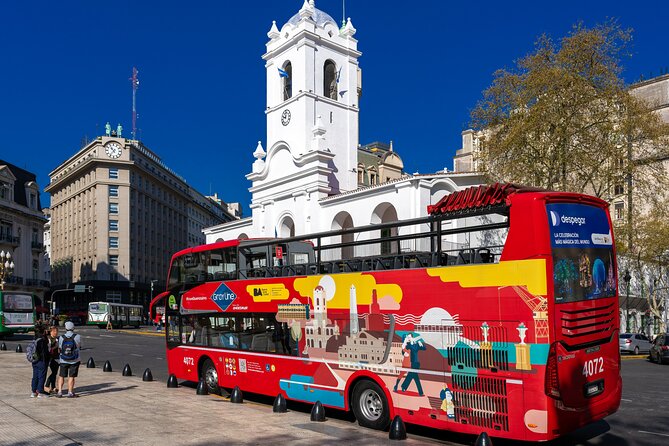
Buenos Aires is a huge city, and this open-top double-decker route gives you a quick look at neighborhoods that are hard to connect on foot. A full circuit takes about three hours, so you can first ride the loop, mark the places you want to explore, then return to the best stops.
I like two things here. First, you can choose a 1-, 2-, or 3-day pass and start using it when you activate the ticket. Second, the route reaches far beyond the central sights, from San Telmo and La Boca to Recoleta, Palermo, Monumental, and Costanera Sur. The main drawback is finding the stops, since several are poorly marked and route changes can cause confusion.
Key points to know before you board
- A full circuit takes about three hours, before traffic delays or time spent getting off.
- The route covers 27 stops, including Congreso, San Telmo, La Boca, Puerto Madero, Recoleta, MALBA, Planetario, Monumental, and Teatro Colón.
- The audio system is uneven, with reports of unclear sound, stop numbers that do not match the map, and commentary that can fall out of sync.
- Walking tours are optional and voluntary-payment based, with schedules confirmed through the guide on board.
- Your 24-hour use period begins when you first activate the ticket, so a late start may let you use it across parts of two calendar days.
- The $39 price makes most sense for a first-day city overview or a multi-day pass, not simply as a replacement for Buenos Aires’ regular public transport.
Why this bus can help you understand Buenos Aires
Buenos Aires is not a city you can neatly cover from one central square. Its major districts spread across a large area, and the character changes sharply from one neighborhood to the next. The bus lets you cross those distances without planning a new taxi or metro trip for every sight.
I would use it first as an orientation ride. Stay aboard for the entire circuit, watch the city change through the windows, and note which districts deserve a longer visit. One complete loop can take around three hours, and traffic may stretch that time, but it gives you a useful sense of scale.
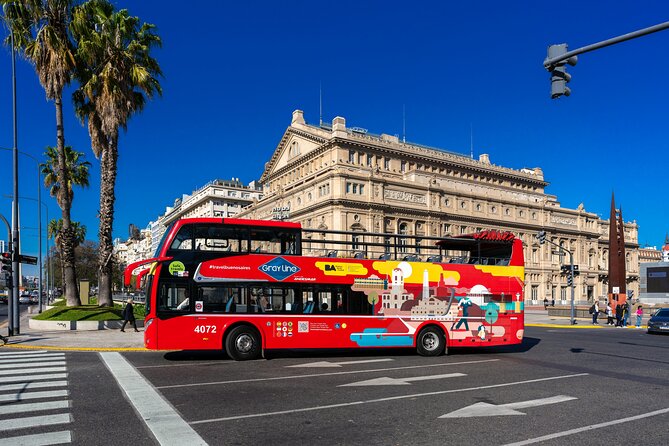
The upper deck is the best place for photos and street views. Buses have air conditioning and a sunroof, though conditions can vary between the open and covered sections. On hot days, you may prefer the covered air-conditioned area near the front of the upper deck.
The buses also provide a multilingual audio guide. This is useful in theory, but you should keep expectations modest. The sound may be hard to hear, the recording can become out of step with the route, and stop numbers do not always match the printed map or announcements. Some rides feel more like a transport circuit with commentary than a fully narrated city tour.
Other guided walks through the barrios:
- Buenos Aires: La Boca Guided Walking Tour in English
★ 4.8 · 1,587 reviews - Nazis in Buenos Aires: a historical walking tour
★ 4.9 · 193 reviews - Buenos Aires: Personalized 2 to 8-Hour Private Walking Tour
★ 4.7 · 149 reviews
The central loop: Diagonal Norte through San Telmo
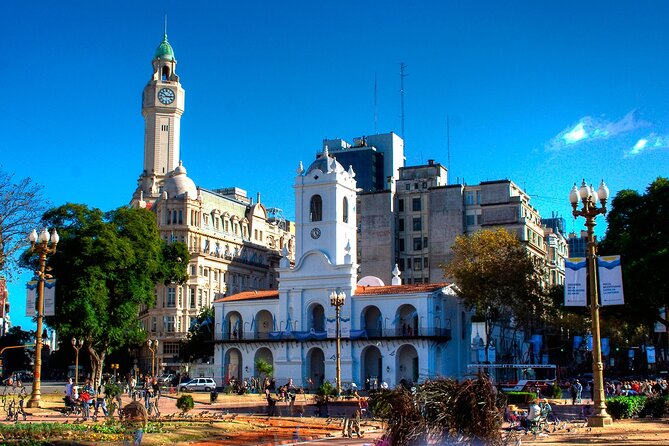
The route begins at Diagonal Norte, near Avenida Presidente Roque Sáenz Peña 728. This is a sensible starting area for a first ride because it puts you close to the formal center of Buenos Aires.
From there, the bus reaches Congreso, at Avenida Rivadavia 1545. The stop places you near the National Congress area and the broad civic avenues that make central Buenos Aires feel grand and slightly theatrical. This is a good place to get off if you want architecture, plazas, and a central walking start.
At Paseo de la Historieta, the route shifts toward a lighter side of the city. The stop connects with Argentina’s comic-art tradition, including the famous Mafalda character. It is a pleasant short stop if you like local pop culture rather than only major monuments.
Next comes San Telmo and Plaza Dorrego, one of the most useful stops on the whole route. San Telmo is known for old streets, antique shops, cafés, and a strong connection with tango culture. Plaza Dorrego is especially appealing when you want to walk rather than simply photograph the city from a bus.
The bus then reaches Usina del Arte, a former power station used as a cultural venue in the La Boca area. Its location is less central than San Telmo, so the bus is helpful here. Check the operating schedule before planning your day around any indoor attraction, since the bus timetable and venue hours may not align.
La Boca: colorful streets and football history
Two nearby stops serve the La Boca area: Bombonera and Caminito. Bombonera is the home ground associated with Boca Juniors, one of Argentina’s most famous football clubs. Even if you are not attending a match, the stop gives you a look at how important football is to the city’s identity.
Caminito is the more obvious sightseeing stop. Its painted buildings, tango displays, souvenir shops, and street scenes make it one of the most recognizable parts of Buenos Aires. This is a place to get off, walk slowly, and keep your belongings close in crowded areas.
The bus can be especially useful for reaching La Boca from central districts. On the other hand, the stop locations and service pattern need attention. Route changes have occurred without clear notice, and one of the La Boca area walking tours was not always running. Ask the onboard guide about the current route before you leave the bus.
The optional walking tours can add value here. They do not operate as fully included private tours. The guide works on a voluntary payment system, and the schedule depends on weather and operating conditions. You must reach the correct stop and reconfirm the time with the guide on the bus.
Costanera Sur, Puerto Madero, and the riverfront
After La Boca, the route reaches Costanera Sur, with a weekday stop at Avenida Dr. Tristán Achával Rodríguez 337 and a weekend stop at Julieta Lanteri 1700. That change matters. Do not assume the same location works every day.
Costanera Sur gives you a break from the dense streets. It is a useful area for open space and waterfront views, but it may not feel like a traditional sightseeing stop if your main interest is old architecture. The route then continues to Puerto Madero, at Avenida Alicia Moreau de Justo 930.
Puerto Madero is a modern district of renovated docks, offices, restaurants, and wide promenades. I like this contrast after the older streets of San Telmo and La Boca. You can see how Buenos Aires presents two very different faces within a short ride.
At Estación Fluvial, near Cecilia Grierson 320, the bus comes close to the river transport area. This stop may be useful if it fits your plans, though the route is not designed as a river cruise. Food and drinks are not included anywhere on the bus, so plan a café stop separately.
Other guided walks in Buenos Aires:
- Buenos Aires: San Telmo and Market Guided Walking Tour
★ 4.8 · 102 reviews - Buenos Aires Walking Tour with Local Guide and Optional Rooftop
★ 4.5 · 87 reviews - Best of Buenos Aires Private Walking Tour
★ 4.5 · 73 reviews - Full Day Private Walking Tour of Buenos Aires Neighborhoods
★ 5.0 · 55 reviews
Galerías Pacífico, El Ateneo, and Plaza San Martín
The central return route includes Galerías Pacífico, a major shopping center near Avenida Córdoba. The building is known for its interior decoration and central location, making it a practical stop for shopping, a meal, or a short rest from the bus.
The next stop is El Ateneo, at Avenida Callao 927. This former theater turned bookstore is one of the city’s most distinctive indoor sights. It is worth leaving the bus here if you want a quiet break and a memorable photo, especially after several hours of traffic and street noise.
Plaza San Martín, at Avenida Santa Fe 808, brings you into a more formal central district with tree-lined public space and impressive buildings. It is also a convenient point for combining the bus with your own walk, since the route does not bring every major attraction directly to its front door.
Several stops are farther from the sights they serve than first-time visitors expect. The printed map can help, but the exact bus position and walking distance may not be obvious. Give yourself extra time, and do not rely only on the stop number announced through the speakers.
Recoleta and the cultural stops north of downtown
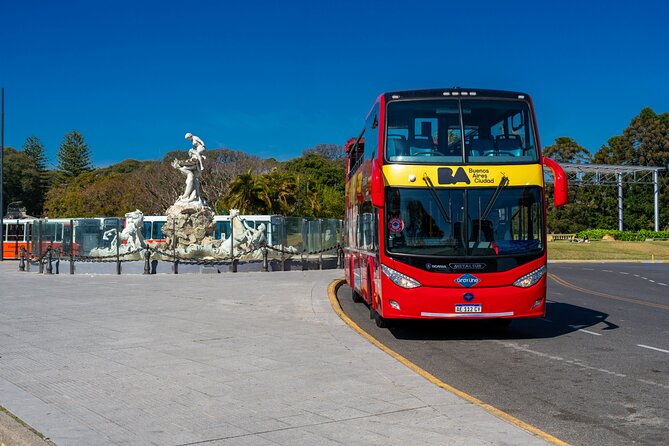
The route then moves toward Floralis Genérica, the large metal flower sculpture on Avenida Presidente Figueroa Alcorta. This is a quick photo stop and a good marker for the city’s northern cultural district.
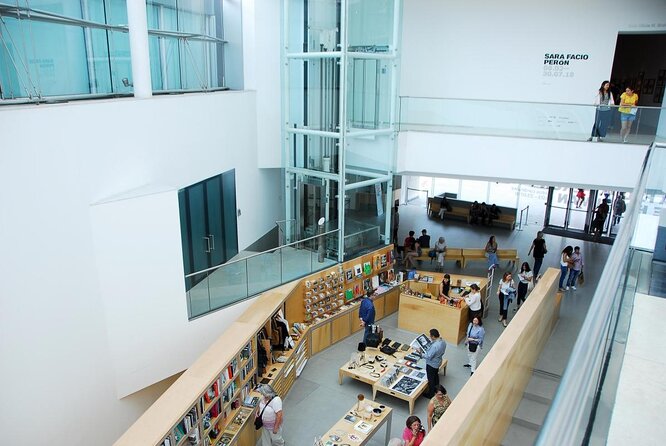
Nearby, the bus serves MALBA, the Museum of Latin American Art of Buenos Aires. The museum is an important reason to use the hop-on hop-off format, since it lies outside the most compact central sightseeing zone. If modern and contemporary Latin American art interests you, plan enough time to get off rather than treating it as a passing photo opportunity.
The Planetario stop takes you into the Palermo park area. It is a pleasant change from the traffic-heavy central avenues, though the planetarium’s own visiting hours are not provided with this bus ticket. Check before building your day around a timed visit.
At Club de Pescadores and Aeroparque, the route follows the city’s northern waterfront. These stops are more about seeing the scale of Buenos Aires and its relationship with the river than checking off a famous old monument. The upper deck is useful here, especially when traffic is slow and you have time to watch the city pass.
The route continues to Parque de la Memoria, a significant memorial site. This is a more reflective stop than the colorful streets of La Boca or the shopping district around Galerías Pacífico. If you choose to visit, allow time for a thoughtful walk rather than a quick photo.
Monumental, Barrio Chino, and Palermo
The bus then reaches Monumental, associated with River Plate football. Along with Bombonera, this gives football fans a chance to see both major club districts from one route.
Barrio Chino offers restaurants, shops, and a different local atmosphere. It is one of the stops where getting off makes more sense than viewing the area from above. You can combine it with the nearby Palermo circuit, but keep an eye on return bus times.
The route continues past Campo Argentino de Polo and the Monumento a los Españoles. These stops cover the broad avenues and parks of Palermo. They are not as compact as San Telmo or Recoleta, so the bus is useful simply because it cuts down on long walks between districts.
At the Museo Nacional de Arte Decorativo, you can leave the bus for another cultural stop. This museum pairs naturally with MALBA if you are planning an art-focused day, though you should confirm opening times independently. The ticket does not include admission to museums.
Recoleta and Teatro Colón
The Recoleta stop is one of the most practical places to get off. The neighborhood combines elegant buildings, restaurants, cultural sites, and the famous Recoleta Cemetery. The bus does not include entry tickets, but it does put you in the right area to continue on foot.
I would plan this stop with care. Recoleta rewards a few hours, not a rushed twenty-minute visit. If you use a 1-day pass, choose either Recoleta or several smaller stops rather than trying to see every district in one afternoon.
The final listed stop is Teatro Colón, near Cerrito 892. The theater is one of Buenos Aires’ major cultural landmarks, and its central position makes it a useful end point for a walking circuit. The bus route gives you the introduction, but the best experience here comes from leaving the vehicle and exploring at street level.
Audio, maps, and the real operating challenges
The biggest weakness is not the route itself. It is the gap between the neat printed plan and what can happen on the street.
Some stops have no clear sign. Others may be moved or altered, and a few stop numbers have been announced incorrectly. Finding the pickup point can take time, particularly if you are standing on a broad avenue with several possible bus lanes. Use the exact address, check both sides of the street, and ask bus staff when possible.
Service frequency can be good, with periods of little waiting, but that is not guaranteed. One reported wait lasted more than an hour, and a thunderstorm made the delay worse. Buenos Aires traffic, rain, route changes, and stop relocations can all affect the day.
The audio guide is available in several languages, but sound quality is not always consistent. Bring your own sense of direction and use the route map as a backup. If the audio stops describing what you see, do not assume you have taken the wrong bus.
There are two hop-on hop-off bus services in Buenos Aires, which adds to the confusion. Confirm that you are boarding the Gray Line Argentina service connected with your ticket. This is especially important at busy stops where buses may look similar.
Is $39 a fair price?
At $39 per person, the value depends on how you use the ticket. If you ride only one short section and walk the rest of the day, regular public transportation may cost less. Buenos Aires also has a metro and bus network, and independent transport can be more efficient for specific point-to-point trips.
The bus earns its price when you want a broad first look with little planning. It connects distant districts, includes the audio system, offers optional walking tours, and provides a voucher book with discounts at selected locations. The 2-day or 3-day options make more sense if you plan to get off several times and return to the route.
The timing rule can help. The 24-hour period begins when you activate the ticket, so an afternoon start may extend into part of the following day. If you need to change the pass duration after booking, cancel the existing reservation and make a new one so the QR code matches the new ticket.
The bus includes air conditioning, a sunroof, multilingual audio, and access to the optional walking tours. Hotel pickup, food, drinks, and attraction admission are not included. Free cancellation is available up to 24 hours before the start time, but late cancellations and late changes are not refunded or accepted.
Who should book this Buenos Aires bus?
I would choose it if you have limited time, want to see how large the city is, or prefer a simple overview before exploring on foot. It also suits families and anyone who finds long cross-city trips tiring.
It is less suitable if you want a polished, continuous city narration or exact public-transport reliability. You need patience with traffic, changing stop locations, and imperfect audio. Service animals are allowed, and most people can participate, but the practical challenge is still locating the stops.
Should you book it?
Book this tour if you want a city orientation with access to far-flung districts and plan to use the pass actively. Ride the full loop first, then focus on La Boca, San Telmo, Recoleta, MALBA, Puerto Madero, or another area that catches your interest.
Skip it if you already know Buenos Aires well or prefer the metro and independent walking. For first-time visitors, the route is useful, but treat it as a flexible sightseeing tool rather than a perfectly synchronized narrated tour.
FAQ
How long does the full bus route take?
A complete circuit takes approximately three hours, although traffic, weather, and operating conditions can make it longer.
What ticket durations are available?
You can choose a 1-day, 2-day, or 3-day pass.
When does the 24-hour ticket period begin?
The 24-hour period begins when you first activate the ticket. Depending on your start time, you may use it over parts of two calendar days.
What is included with the bus ticket?
The ticket includes access to the open-top double-decker bus, air conditioning, a sunroof, a multilingual audio guide, optional walking tours, and a voucher book with selected discounts.
Are the walking tours included?
The walking tours are free to join but use a voluntary payment system for the guide. Their schedule must be confirmed with the guide on board, and they depend on weather and operating conditions.
Does the tour include food or hotel transportation?
No. Hotel pickup and drop-off, food, and beverages are not included.
Where does the route go?
The route connects central Buenos Aires with Congreso, San Telmo, La Boca, Costanera Sur, Puerto Madero, Galerías Pacífico, Recoleta, MALBA, Planetario, Monumental, Barrio Chino, Palermo, and Teatro Colón, among other stops.
Can I change the ticket duration after booking?
To change the duration, you must first cancel the existing reservation and then make a new reservation. This is required so the new QR code matches the replacement ticket.
More hop-on hop-off tours in Buenos Aires
- Buenos Aires: Hop-On Hop-Off City Bus Tour
★ 4.2 · 1,855 reviews - Buenos Aires Hop-On Hop-Off Bus and Exclusive Benefits
★ 4.4 · 1,714 reviews - Buenos Aires: Hop-On Hop-Off Bus and Football Museums
★ 4.3 · 39 reviews - Mendoza Hop-On Hop-Off Wine Tour
★ 4.0 · 130 reviews
Just added in Buenos Aires
- Buenos Aires: Speakeasy & Mixology Bar Tour with Cocktails★ 5.0 · 5 reviews
- Premium Empanadas Cooking Class & Wine Tasting Experience★ 4.9 · 35 reviews
- Buenos Aires: Small-Group Wine Tasting★ 4.8 · 18 reviews
- Buenos Aires: Rojo Tango Show with Optional Dinner★ 3.4 · 3 reviews
- Buenos Aires: Santa Susana Ranch Day Tour, BBQ & Shows★ 4.6 · 32 reviews
- Buenos Aires:Small Group Tour AM & Sunset Open Bar Cruise PM★ 4.5 · 15 reviews
- Buenos Aires: Private Photo Tour for Ammateur Photographers★ 4.9 · 5 reviews
- Buenos Aires: Private Recoleta Cemetery Walking Guided Tour★ 4.6 · 13 reviews
Hop-On Hop-Off Bus Tours, compared.
Browse the lists this tour appears in