
Reviewed · SALINAS GRANDES & PURMAMARCA TOURS
Purmamarca: Hiking with Llamas through multicolored mountains
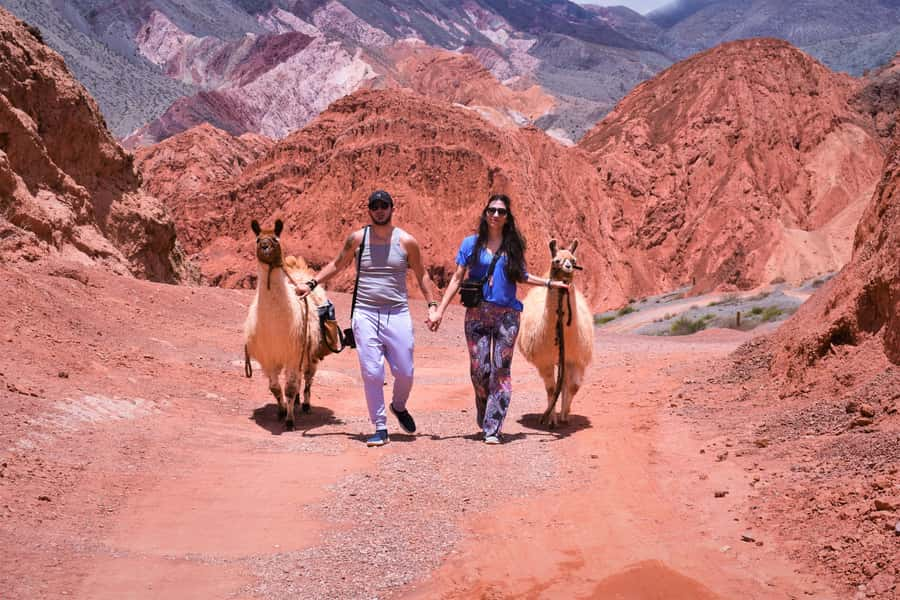
Purmamarca’s striped mountains are spectacular from a lookout, but walking among them with llamas gives the scenery a more personal scale. You begin by meeting the animals, learning how to hold them, and then follow a gentle route while your guide explains Andean ideas about nature, geology, plants, and Pachamama, Mother Earth.
I like the small group of no more than eight, which gives you time for photos, questions, and quiet contact with the llamas. I also like the calm pace: this is a nature walk, not a demanding trek. The main consideration is access. Uneven paths and the lack of wheelchair access make it unsuitable for visitors with mobility impairments, and babies must be carried in a backpack.
Key points at a glance
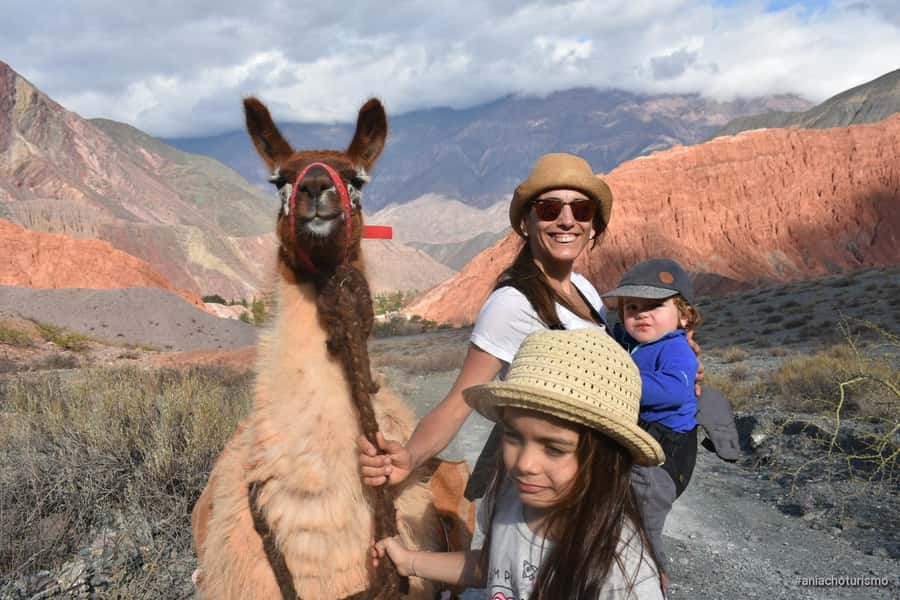
- Close contact with llamas: You may stroke and hug the animals, but you never ride them or force them to perform.
- A gentle two-hour walk: Routes can be adjusted for different ages and physical abilities.
- Purmamarca’s multicolored mountains: The setting adds geology and scenery to what could otherwise be a simple animal encounter.
- Andean culture in context: Your guide discusses camelids, medicinal plants, local beliefs, and the relationship between people and nature.
- English and Spanish guiding: The activity can be led in either language, with guides including Fabrizio and Aniacho.
- Simple meeting point: The walk starts and ends about 200 meters from Purmamarca’s main square, beside the cemetery at Paseo de los Colorados.
Meeting the llamas beside Paseo de los Colorados
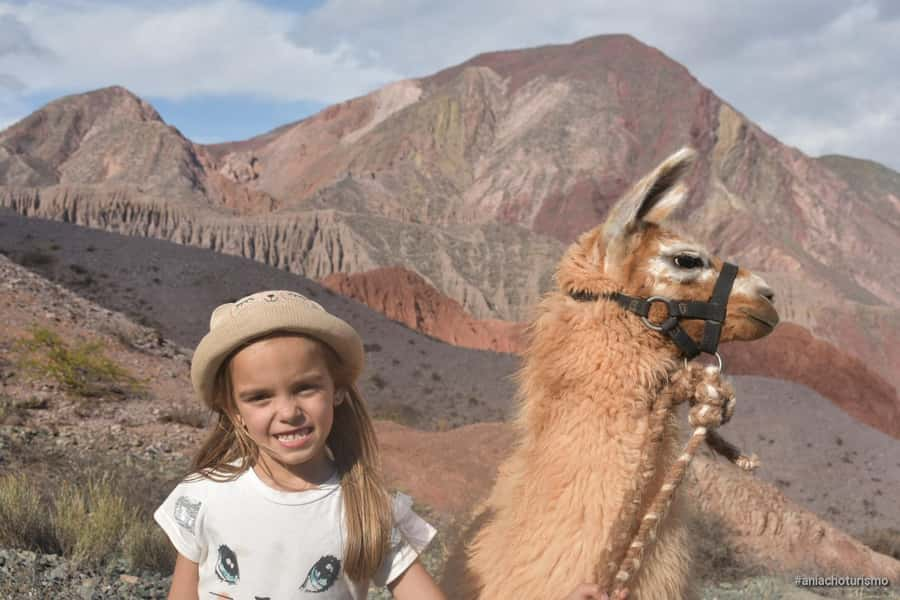
The meeting point is on the cemetery side of Paseo de los Colorados, about 200 meters from Purmamarca’s central square. The coordinates are -23.74663543701172, -65.4992446899414. This is close enough to reach on foot from town, but check the exact cemetery-side entrance before setting out.
The first part is not rushed. You check the supplies needed for the activity and meet the llamas before walking anywhere. Your guide shows you how to hold them and explains how to approach them safely. That introduction matters, especially if you have never been near a llama. You learn to follow the animal’s movement rather than pull it along.
The ground rules are clear. You do not ride the llamas. You do not hurt them, demand things from them, or treat them as props. The animals do not attack participants, and the contact is based on gentle handling, petting, and time together.
That makes this a better choice for you if animal welfare is part of your booking decision. The llamas are part of the activity, not a decorative extra added for a quick photograph. You still get photographs and videos, but the encounter has room for quiet moments too.
Other runs up to the salt flats from Salta:
- From Salta: Full-Day Trip to Salinas Grandes and Purmamarca
★ 4.6 · 914 reviews - From Salta: Salinas Grandes, Purmamarca & Los Colorados Hike
★ 4.3 · 356 reviews - Full-Day Tour Salinas Grandes and Purmamarca from Salta
★ 4.0 · 220 reviews
Walking through Purmamarca’s colored mountains
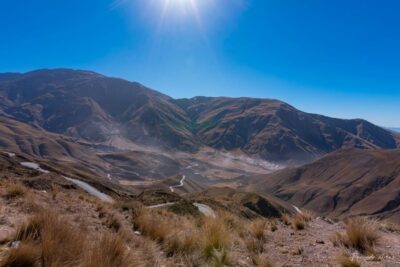
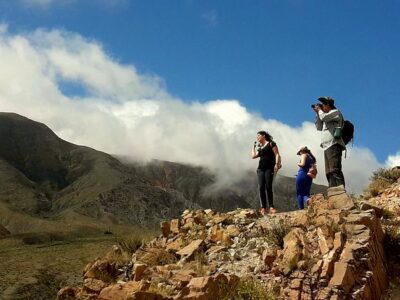
Once everyone is comfortable, the group begins a slow walk through the surrounding mountains. The route is described as non-demanding, and different circuits are available for different ages and needs. The exact path is not fixed in the information provided, so you should expect a flexible outing rather than a marked, strenuous hike with a set summit.
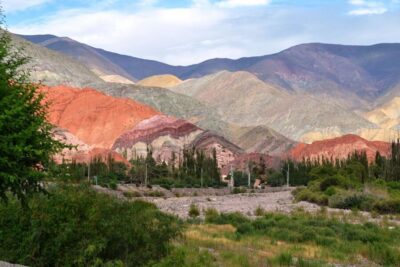
The scenery is the main reward. Purmamarca is known for its bands of red, orange, yellow, green, and other mineral colors, and the llamas give you a natural companion as you move through it. The setting is more than a backdrop for photographs. It helps explain why geology is such an important part of the guide’s talk.
You will hear about how the mountains formed, and you can ask questions as you walk. One guide, Fabrizio, has been praised for answering questions and sharing information about the area. Another guide named Aniacho has been described as attentive to the group’s comfort. Guide assignments can vary, but both names are useful to know when you check your departure details.
The pace is intended to suit adults and families with children of different ages. Still, non-demanding does not mean fully accessible. You should be ready to walk outdoors on uneven ground. Sandals and flip-flops are not allowed, and sturdy closed footwear is the sensible choice.
What your guide adds beyond the scenery
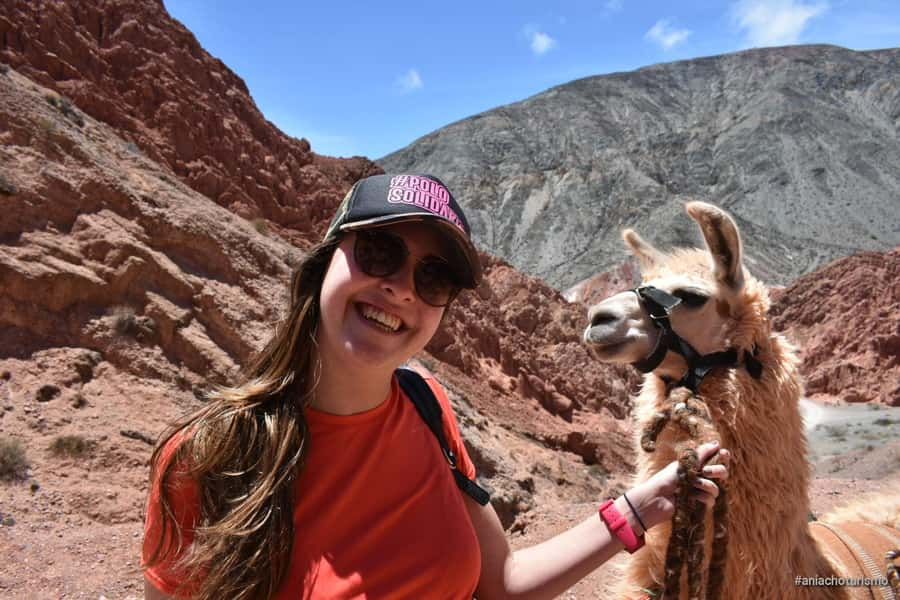
A good part of the value comes from the information shared along the route. The guide discusses the geology of the mountains, the local flora, and the medicinal use of plants. You also learn about the biology of camelids, the animal family that includes llamas.
The cultural side is just as important. The walk explains the Andean relationship between people, animals, and the natural world. The idea of Pachamama is presented as part of a living belief system and as a way of understanding reciprocity with nature. That gives the outing more substance than a standard photo stop.
The experience also touches on syncretism, the blending of cultural and religious ideas that developed over time. The supplied details do not promise a long formal lecture, so expect conversation and explanations during the walk rather than a museum-style presentation.
This approach suits you if you enjoy learning in small pieces while moving through a place. It is less suitable if you want a fast hike, a major archaeological site, or a full historical tour of the Quebrada de Humahuaca. The subject is focused: llamas, mountains, plants, geology, and Andean thought.
A small group makes the animal contact better
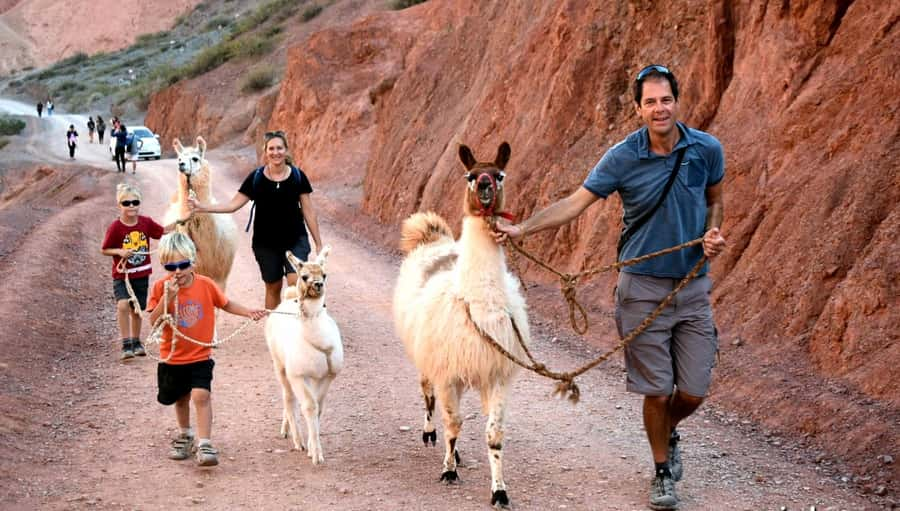
The maximum group size is eight. That is a useful limit for this kind of activity. With fewer people, you have a better chance to spend time beside the llamas without a crowd gathering around each animal. It also makes it easier to hear the guide and stop for photographs without holding up a large procession.
The small format also supports the quieter side of the outing. The experience promises silence, privacy, and authenticity, though the exact level of solitude will depend on the day and the route. You should not expect complete isolation in a popular town, but a group of eight or fewer can feel personal compared with a coach excursion.
The guide’s attention is another benefit. Fabrizio has been described as responsive to questions, while Aniacho has focused on keeping participants comfortable. Those details suggest a hands-on style rather than a guide who simply leads from the front.
The trade-off is that a small-group activity can feel less predictable than a large scheduled tour. Circuits may change to suit the ages and needs of the people booked that day. For most people, that flexibility is a strength. If you want a precise distance, fixed elevation gain, or exact route map, this experience does not provide those details.
Other walks and treks from Salta:
- From Jujuy: Salinas Grandes, Purmamarca & Los Colorados Hike
★ 4.2 · 75 reviews - Trekking Purmamarca
★ 5.0 · 52 reviews - El Calafate: Perito Moreno Glacier Trekking Tour and Cruise
★ 4.8 · 805 reviews - From Ushuaia: Tierra del Fuego Emerald Lagoon Trekking Tour
★ 4.9 · 271 reviews
Photos, quiet moments, and the rhythm of the walk
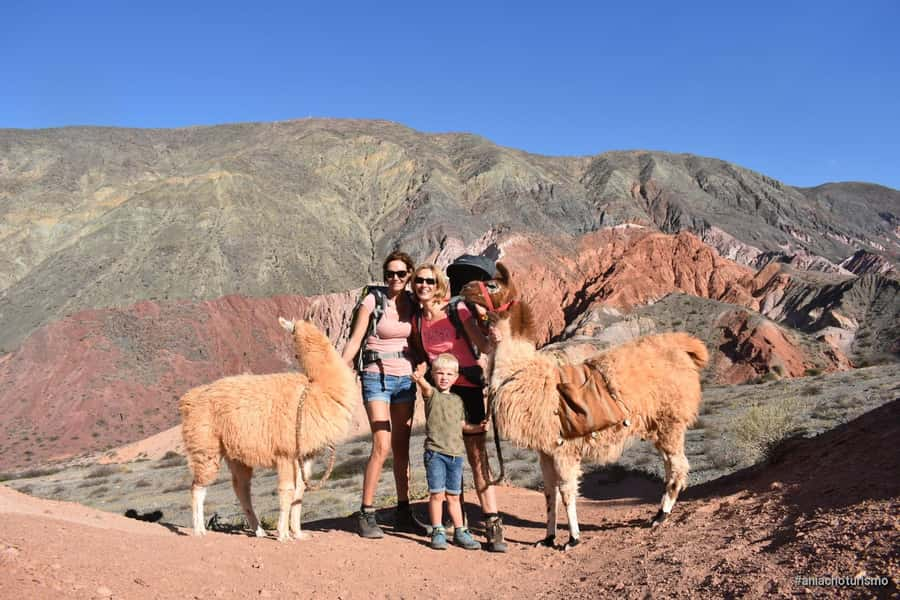
You will have time for photographs and videos during the activity. The colorful mountains and llamas naturally work together in pictures, but the best images may come from the simple interaction rather than a posed scene. Take a moment to notice how the animals move and how the colors change with the angle of the sun.
The activity description places value on caresses and embraces. You can expect direct contact, but animals have their own moods and boundaries. The guide will show you how to handle them, and following that instruction is the best way to keep the encounter relaxed.
The walk lasts about one and a half to two hours. The booking information also mentions a four-hour itinerary entry, but the stated service duration is two hours, with routes lasting between 90 minutes and two hours. Plan your day around the shorter, clearer duration rather than assuming a half-day excursion.
Because the walk starts and finishes near the town square, it fits well before or after another Purmamarca activity. It can be paired with time in the village or with a longer excursion in the Quebrada, but it is not itself a transport tour to the Salinas Grandes, Tilcara, Humahuaca, or Hornocal.
Who will enjoy this most
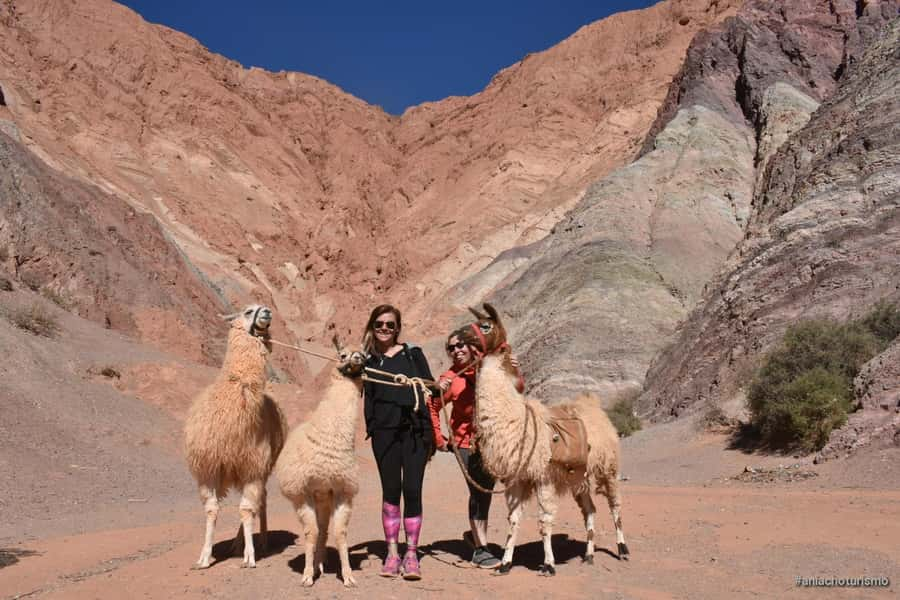
I would recommend this for you if you want a close animal encounter tied to a real place and local culture. Families with older babies and children can take part if they are comfortable walking and can follow instructions. Babies under one year are not accepted, and babies who are allowed to participate must be carried in a baby backpack.
It also suits couples, solo visitors, and photographers who prefer a slow morning or afternoon outdoors. The English and Spanish options make it easier to follow the cultural and geological explanations, though some content may remain in its original language.
You should think twice if you have limited mobility, recent surgery, a visual impairment, or need a wheelchair. The activity is not suitable for wheelchair users, and strollers are not permitted. There is no option to ride a llama, so anyone seeking a mounted animal experience should choose something else.
The age limit excludes babies under one year and people over 95. That is a firm suitability point to check before booking.
What to bring to the high-altitude sun
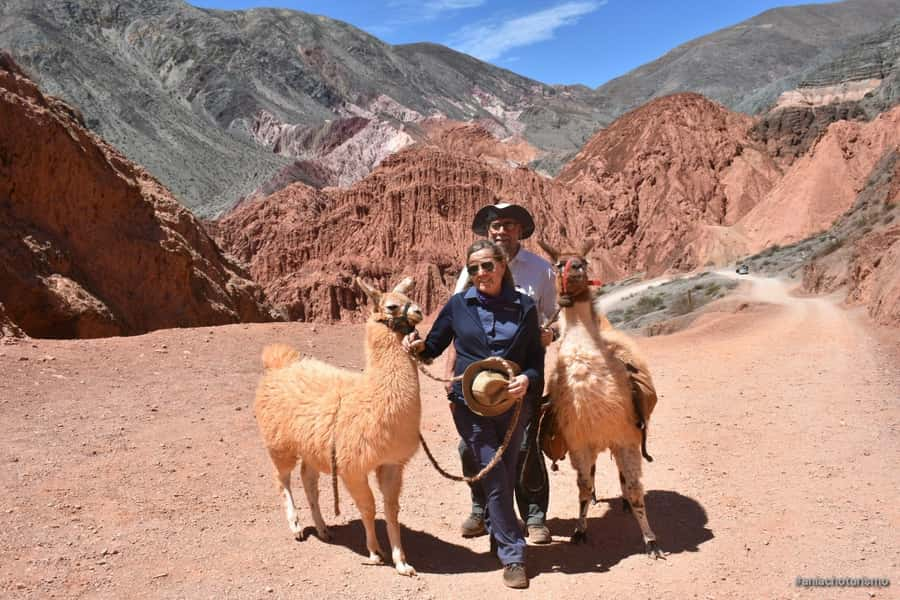
Purmamarca’s bright mountain setting calls for practical preparation. Bring a sun hat, water, biodegradable sunscreen, and a small daypack. Sunscreen matters even on a cool day because the open terrain offers little shelter from strong sunlight.
Wear closed shoes suitable for an outdoor walk. Sandals and flip-flops are not allowed, and they would offer poor support on uneven paths in any case. Keep your hands free when possible, especially while learning to handle a llama and taking photographs.
Alcohol and drugs are not permitted. Baby carriages are also not allowed. If a baby is joining the group, bring a proper baby backpack instead.
The activity does not list a meal, transport, or specialist hiking equipment. That helps keep the outing simple, but you should eat and organize transportation separately if needed. Since the meeting point is close to the square, most participants can reach it from central Purmamarca on foot.
Is the experience good value?
No price is provided here, so I cannot judge the exact cost. I can still explain what you are paying for. The value is not just the walking time. It includes a small group, direct contact with llamas, a guide in English or Spanish, route flexibility, and explanations about geology, plants, camelids, and Andean beliefs.
Compared with a quick animal photo stop, this offers more time and context. Compared with a full-day drive through the region, it gives you less distance and fewer major sights, but far more focus on one place and one relationship between people, animals, and nature.
The small group is important to the value. A larger outing could offer similar mountain views, but it would be harder to hear the guide, ask questions, or spend calm time with the llamas. If you care about personal attention, the limit of eight helps justify the booking.
I would not book it mainly as a hiking challenge. The routes are gentle, and the focus is contact and interpretation rather than athletic effort. Book it for the combination of animals, scenery, and Andean culture.
Should you book the llama walk?
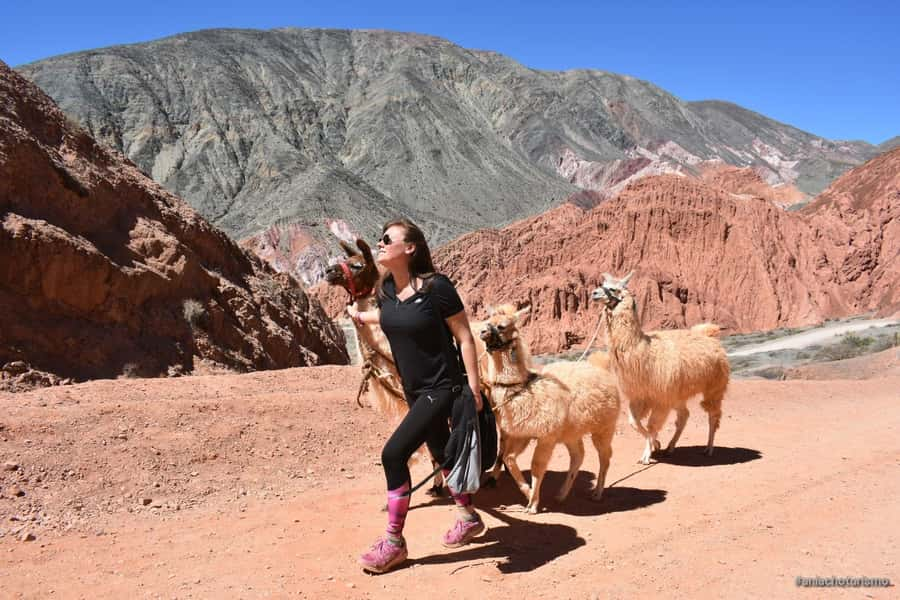
Book this experience if you want two unhurried hours near Purmamarca, with llamas at your side and a guide explaining the mountains and local traditions. It is especially well suited to people who value ethical animal contact, small groups, and a slower connection with the place.
Skip it if you need wheelchair access, a stroller, a strenuous hike, or a fixed long-distance route. Also skip it if your main goal is to cover several destinations in one day, since this activity stays close to Purmamarca.
For most able-bodied visitors who enjoy animals and mountain scenery, this is a thoughtful add-on to a Quebrada de Humahuaca itinerary. Bring water, wear proper shoes, and leave enough time to enjoy the llamas without rushing from one photograph to the next.
FAQ
Where does the llama walk start?
It starts at Paseo de los Colorados, on the cemetery side, about 200 meters from Purmamarca’s main square.
What are the meeting point coordinates?
The coordinates are -23.74663543701172, -65.4992446899414.
How long does the activity last?
The stated duration is two hours. The walk itself may last between one and a half and two hours, depending on the circuit and the group.
Do participants ride the llamas?
No. Participants do not ride the llamas at any time.
Can I touch and hug the llamas?
Yes. The activity includes direct contact, including caresses and embraces, while following the guide’s instructions for handling the animals.
Is the walk physically difficult?
The routes are described as non-demanding and can be adapted for different ages and needs. You still need to walk outdoors on uneven ground.
Which languages are available?
Guiding is available in English and Spanish. Some content may be presented in its original language.
How large is the group?
The activity is limited to eight participants.
Can babies and strollers join?
Babies under one year are not accepted. Participating babies must be carried in baby backpacks, and baby carriages are not permitted.
What should I bring?
Bring a sun hat, water, biodegradable sunscreen, and a daypack. Wear closed shoes, since sandals and flip-flops are not allowed.
Just added in Salta
- Tucumán: Tafí del Valle Full Day Tour★ 3.8 · 4 reviews
- Trekking Purmamarca★ 5.0 · 52 reviews
- Salinas Grandes and Purmamarca Full Day Tour★ 4.5 · 34 reviews
- Tilcara: 2 hours cycling tour trough the rural area★ 5.0 · 5 reviews
- Salta: Tour to the Salinas Grandes and Purmamarca★ 3.7 · 3 reviews
- Salta or Jujuy: Iruya and Salinas Grandes 2-Day Tour★ 4.3 · 3 reviews
- From Salta: Quebrada de Humahuaca, Purmamarca and Tilcara★ 4.2 · 43 reviews
- From Salta: Cafayate, Humahuaca, Cachi, & Salinas Grandes★ 4.3 · 13 reviews
Salinas Grandes & Purmamarca Tours, compared.
Full-Day Trip to Salinas Grandes and Purmamarca
Read our review →
Salinas Grandes, Purmamarca & Los Colorados Hike
Read our review →
Full-Day Tour Salinas Grandes and Purmamarca from Salta
Read our review →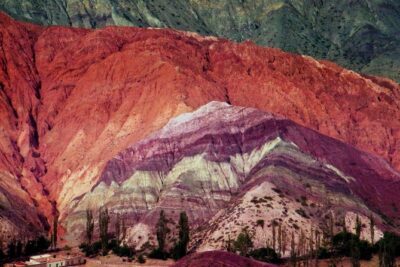
Cafayate, Humahuaca & Salinas Grandes 3-Day Tour
Read our review →Browse the lists this tour appears in