
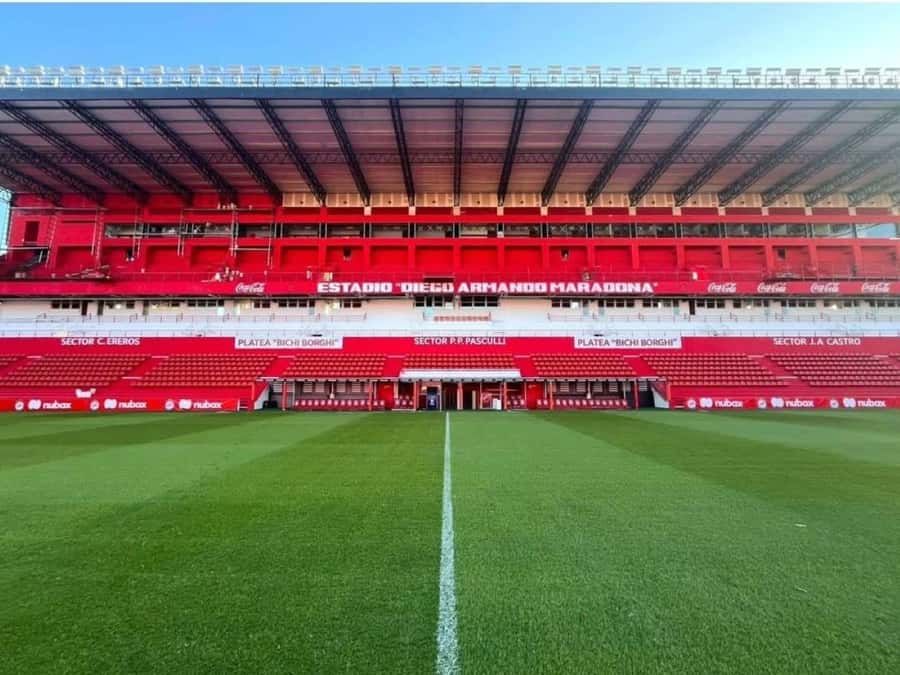
Reviewed · FOOTBALL STADIUM TOURS
Buenos Aires: Visit to the Diego Armando Maradona Stadium
The most moving part of this Buenos Aires football tour is not a giant arena packed with modern displays. It is the Diego Armando Maradona Stadium, where Maradona made his first-team debut for Argentinos Juniors at only 15. You also visit the ground where Lionel Messi first scored for Argentina.
I like the fan-made museum, because its shirts, cards, photos, and trophies come from people who care about the club. I also like the small group size and hotel transport. The main drawback is the $80 price, which is a lot for a 150-minute stadium visit if you are only mildly interested in football.
Key points at a glance
- Maradona’s first-team debut: Visit the stadium where he first played for Argentinos Juniors at age 15.
- A museum made by supporters: See donated shirts, photos, cards, trophies, and club memorabilia.
- Behind-the-scenes access: Walk through the pitch area, changing rooms, central hall, press room, and stands.
- A personal Maradona focus: Finish at the Maradona Sanctuary, a key stop for serious fans.
- Small-group guiding: Groups are limited to 10, with tours offered in English or Spanish.
- Hotel transport included: Pickup and drop-off at your hotel in Buenos Aires City make this easier than arranging your own way there.
Why La Paternal matters to Argentine football
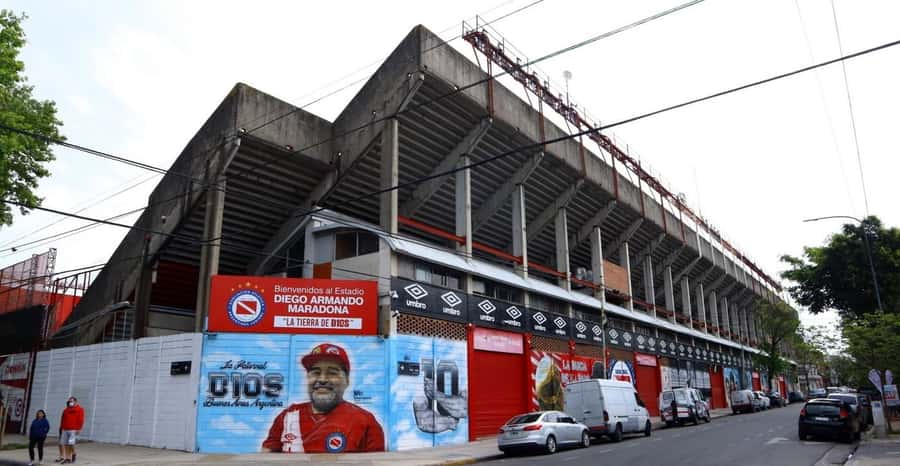
Buenos Aires has better-known football sights, including Boca Juniors’ La Bombonera and River Plate’s Monumental. This tour takes you somewhere more personal: La Paternal, the neighborhood tied to Argentinos Juniors and the early career of Diego Armando Maradona.
Argentinos Juniors is famous for developing players through its youth system. Maradona is the most famous name linked to the club, but the wider story is about a team that has long valued young talent. That gives the visit more substance than a simple trophy-room stop.
The stadium carries a strong sense of place. This is where Maradona first wore the Argentinos Juniors shirt at senior level. Years later, the same stadium was linked to Lionel Messi’s first goals for the Argentine national team. Those two facts give the tour a clear thread: the meeting point of local club football and Argentina’s greatest national icons.
You do not need to know every Argentine league champion to enjoy the visit. A basic interest in football is enough. Still, the more you care about Maradona, Messi, or the way Argentina develops young players, the more the tour will give you.
More football in Buenos Aires:
- Buenos Aires: Tickets to Boca Juniors Museum & Stadium
★ 4.5 · 581 reviews - Buenos Aires: Boca Juniors and River Plate Football Tour
★ 4.3 · 82 reviews - Buenos Aires: River Plate and Boca Juniors Museum Tour
★ 4.5 · 72 reviews
Pickup from Buenos Aires City
Your guide collects you at the door of your hotel in Buenos Aires City and returns you there after the visit. That matters because you do not need to work out local transport to La Paternal or find the stadium on your own.
The transport is part of the value, especially for visitors who are new to Buenos Aires. Fernando, one of the guides involved with the tour, contacts guests through WhatsApp after booking and sends the pickup details. He also confirms the arrival time before collecting you. That sort of communication can remove much of the uncertainty from a short city activity.
One account also praised the comfortable vehicle and the offer of water during the ride. Raul, another driver, was singled out for being helpful with an onward drop-off. Since transport arrangements can shape a tour as much as the attraction itself, these details are worth noting.
The supplied information gives a total activity length of 150 minutes, with about 90 minutes listed for the guided stadium visit. The exact driving time depends on your pickup point and Buenos Aires traffic, so do not plan a tightly timed activity immediately afterward.
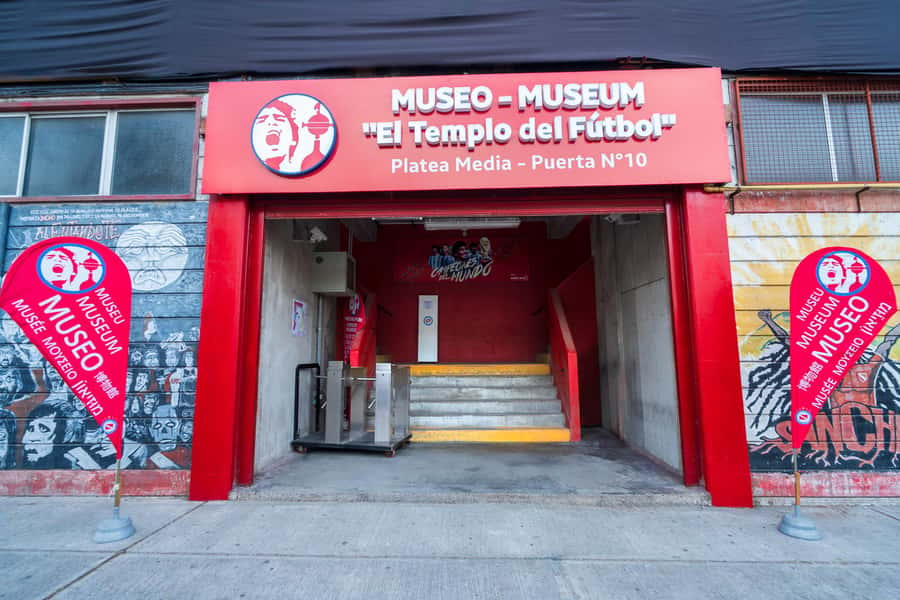
Inside the Temple of Soccer Museum
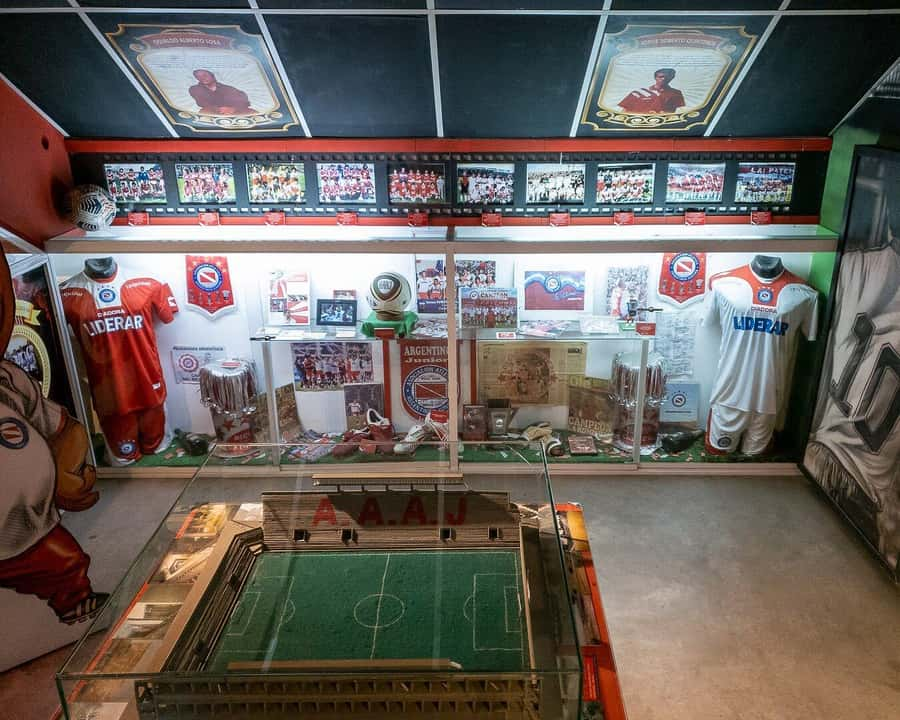
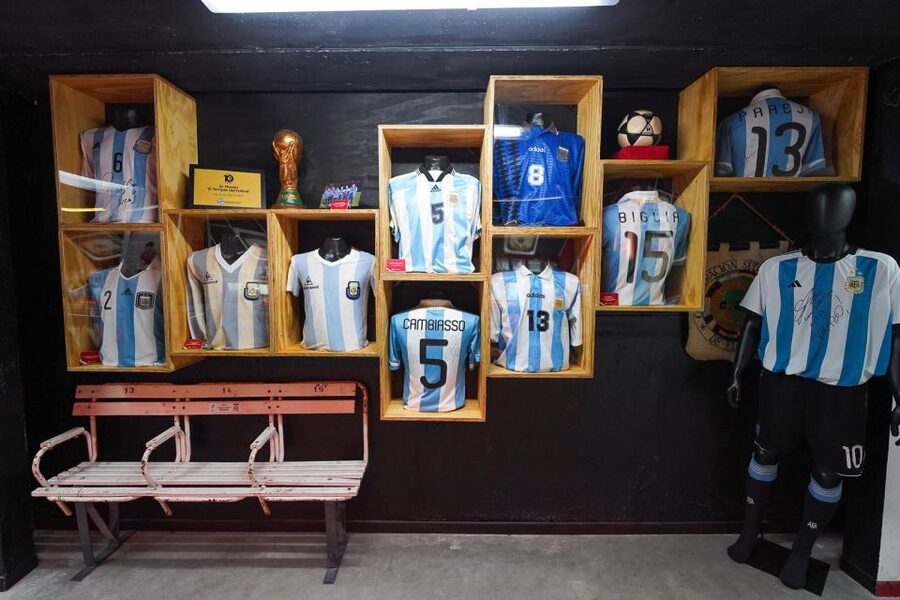
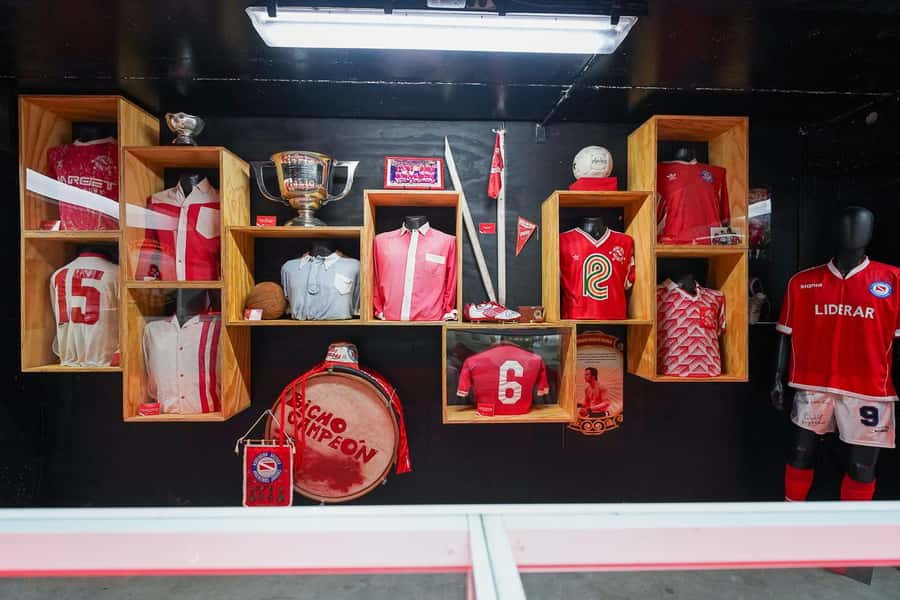
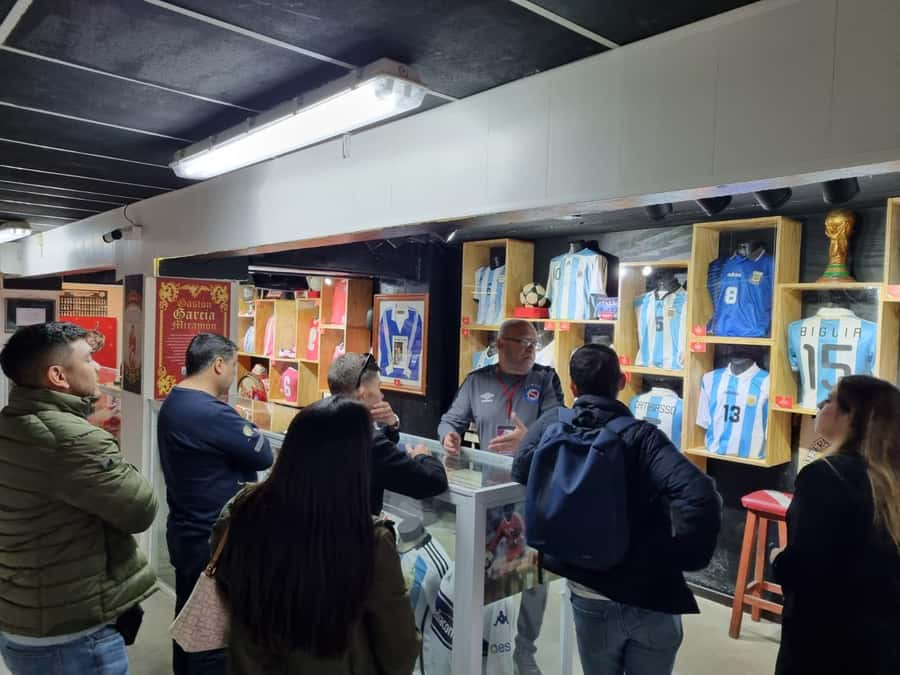
The museum is called El Templo del Fútbol, or the Temple of Soccer. Its most unusual feature is how it came together. Club supporters and members created it through volunteer work, and fans donated many of the objects on display.
That changes the feel of the collection. You are not walking through a polished corporate museum built around expensive interactive screens. You are seeing the objects supporters thought were worth saving: old photographs, player cards, trophies, shirts from different campaigns, and other club items.
I like this kind of museum because it tells you what a club values. A shirt may not be rare in a formal museum sense, but it can carry a story for the people who watched that campaign or wore the colors. The displays connect the club’s past to its supporters rather than presenting football as a purely commercial product.
The museum also helps explain Argentinos Juniors beyond Maradona. The club’s youth divisions are central to its identity, and the collection gives you a way to understand why the club is respected for producing players. Your bilingual guide can place the objects in context in English or Spanish.
Do not expect a huge museum that takes half a day. This is a focused collection within a working football stadium. Its appeal comes from the personal nature of the material, not from its size.
Walking through Maradona’s stadium
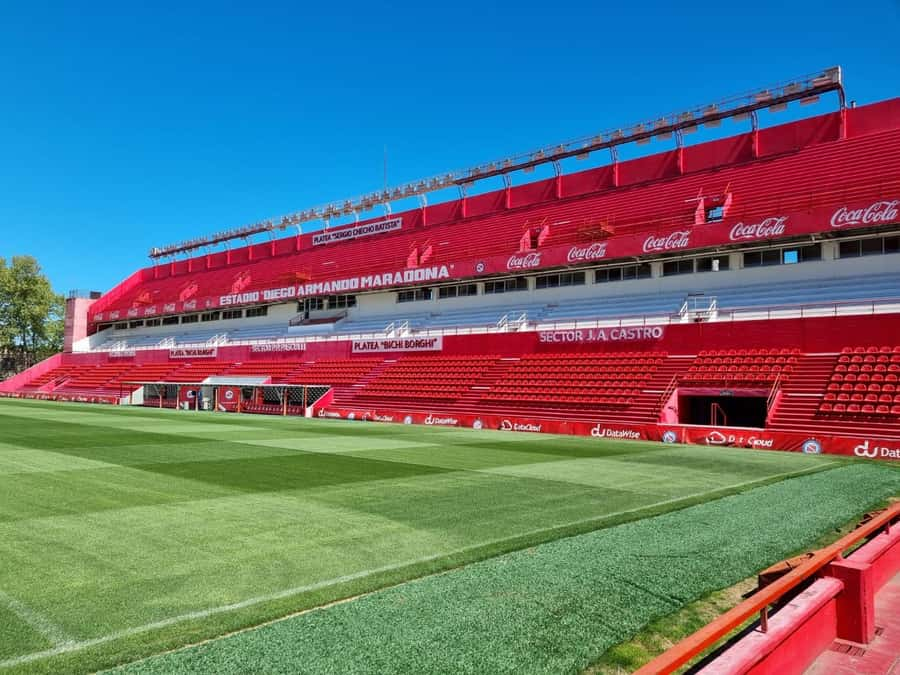
After the museum, the tour moves through the stadium itself. You visit the playing field, changing rooms, central hall, press room, and stands. Seeing these areas together gives you a better sense of how a matchday space works.
The playing field is the emotional center. It is one thing to see a framed photograph of Maradona. It is another to stand in the stadium where he began his senior career. The setting helps turn a famous name into a real football story tied to one neighborhood and one club.
The changing rooms and central hall add the practical side of the visit. These are the spaces players and staff use before the public sees them. The press room shows the stadium’s role after the match, when players and coaches explain what happened.
The stands let you look back at the stadium from the supporter’s point of view. You can think about the scale of a match here, the closeness between the crowd and the action, and the local character of the ground. The tour does not only show you a pitch. It gives you several angles on the club’s daily life.
The stadium is not promoted as a giant modern attraction, and that is part of its appeal. If you want glossy architecture, vast concourses, or a long list of high-tech exhibits, you may find the experience modest. If you want football history tied to an actual club home, the smaller scale works in its favor.
Same base, a different kind of day out:
- Buenos Aires Hop-On Hop-Off Bus, Free Walking Tours & Discounts
★ 4.5 · 2,218 reviews - Buenos Aires: Piazzolla Tango Show with Optional Dinner
★ 4.4 · 2,122 reviews - Buenos Aires: City Highlights Guided Tour with Transfer
★ 4.7 · 1,946 reviews - Buenos Aires: Hop-On Hop-Off City Bus Tour
★ 4.2 · 1,855 reviews
The Maradona Sanctuary
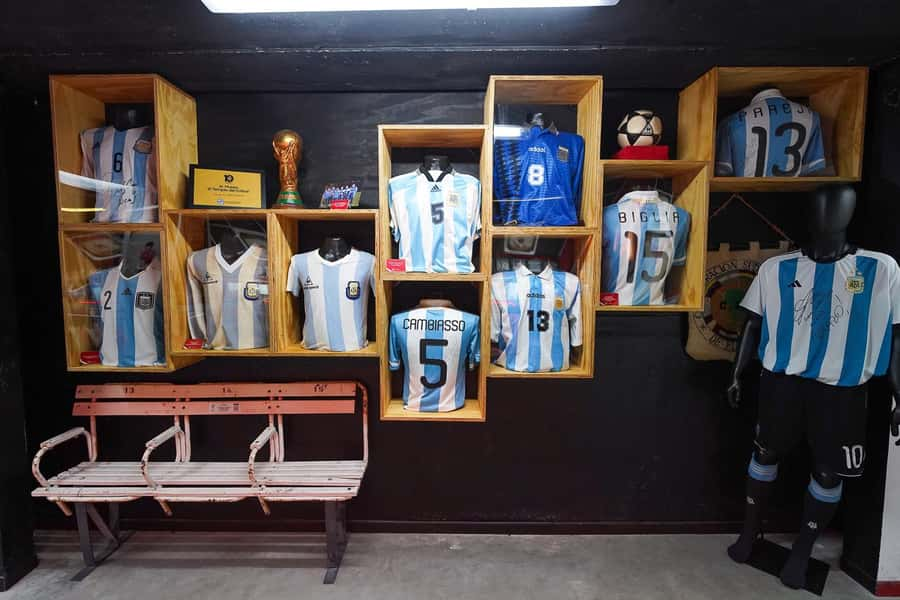
The visit ends at the Maradona Sanctuary. This final stop gives the tour a clear emotional finish and keeps the focus on the player’s connection to Argentinos Juniors.
Maradona’s story can easily become a broad national or global subject. Here, the focus is narrower: the place where his senior career began, the shirt he wore, and the club that helped launch him. That local view is useful because it shows why Argentinos Juniors speaks about him with such pride.
Your guide’s role matters here. Agustin was praised for bringing real excitement to the club, while Carmela was noted for explaining the club’s story in a lively way that held children’s attention. Fernando is described as a devoted Argentinos Juniors and Maradona supporter, and his enthusiasm appears to extend beyond the stadium, including footage of Argentina’s 2022 World Cup celebrations.
Those individual guides will shape the tone of your visit. The experience is not simply a self-guided walk through rooms. The club’s story comes through the person explaining it, so an enthusiastic guide can make the difference between recognizing a few names and understanding why they matter.
What the small group changes
The tour limits groups to 10 people. That is a useful middle ground. You get more personal attention than on a large coach tour, but you do not have to arrange a private visit.
A small group also suits a museum built around details. You may want to ask about a shirt, a trophy, a player card, or a particular moment in Maradona’s career. A guide has a better chance of hearing your question and giving you time to follow up.
The tour is offered in English and Spanish. If you book the English option, you should expect the guide to explain the club, stadium, and Maradona connection in clear terms. Names attached to the experience include Fernando, Agustin, and Carmela, while Raul has handled driving for some departures.
The guide reports are unusually consistent on two points: communication and enthusiasm. Fernando is noted for contacting guests soon after booking, confirming pickup details, and staying in touch. Several guides are praised for being friendly and engaging. That is important here because much of the value lies in interpretation rather than the building alone.
Is $80 good value?
At $80 per person, this is not the cheapest football activity in Buenos Aires. You are paying for more than stadium entry, though. The fee covers hotel pickup and drop-off, admission to the Temple of Soccer Museum, the guided stadium visit, and bilingual service in a small group.
The price makes the most sense if you would otherwise need to arrange transport and you want a guide who can explain the club in detail. It is also a good fit if you care specifically about Maradona and Argentinos Juniors rather than simply wanting to see any football ground.
The value is less clear if you are collecting stadiums without much interest in club history. The visit lasts 150 minutes, not a full day, but $80 is still a meaningful amount for a short activity. Compare it with what you want from your Buenos Aires sightseeing budget.
I would see the tour as a specialist experience rather than a general city attraction. For a devoted football fan, the access and context can justify the cost. For a casual visitor, the museum’s modest scale may not provide enough to make the price feel comfortable.
Who should book this visit?
I would recommend it most strongly to:
- Maradona fans who want to see where his professional story began.
- Football followers interested in Argentine club culture.
- Families who want a guided activity with a manageable length.
- Visitors who prefer a small group over a large stadium crowd.
- People staying in Buenos Aires City who value hotel pickup.
- Anyone who has already seen the major tourist sights and wants a more local football story.
The tour also works well for families because the guide can keep the club’s story moving. Carmela was specifically praised for making the explanation enjoyable for children, though the overall appeal will still depend on how interested your family is in football.
You may want to skip it if you have no interest in Maradona, Messi, Argentine football, or club museums. The stadium is meaningful because of its sporting connections. Without that interest, the physical spaces alone may feel brief.
Practical details before you book
The tour includes food and drinks only if you arrange them yourself, so do not expect a meal or refreshments as part of the program. Water was provided during at least one transfer, but that should not be treated as a guaranteed inclusion.
Pickup is offered at the door of your hotel in Buenos Aires City. The listed pickup area matters, so confirm that your accommodation is inside the stated service area before booking.
You can cancel up to 24 hours in advance for a full refund. The reserve-now, pay-later option lets you hold a place without paying immediately, which is useful while your Buenos Aires plans are still changing.
The tour includes skip-the-ticket-line entry, although the main benefit is the organized access and guide rather than a long public queue. Since the group is limited to 10, booking ahead is sensible if you have a fixed day in mind.
Should you book the Maradona Stadium tour?
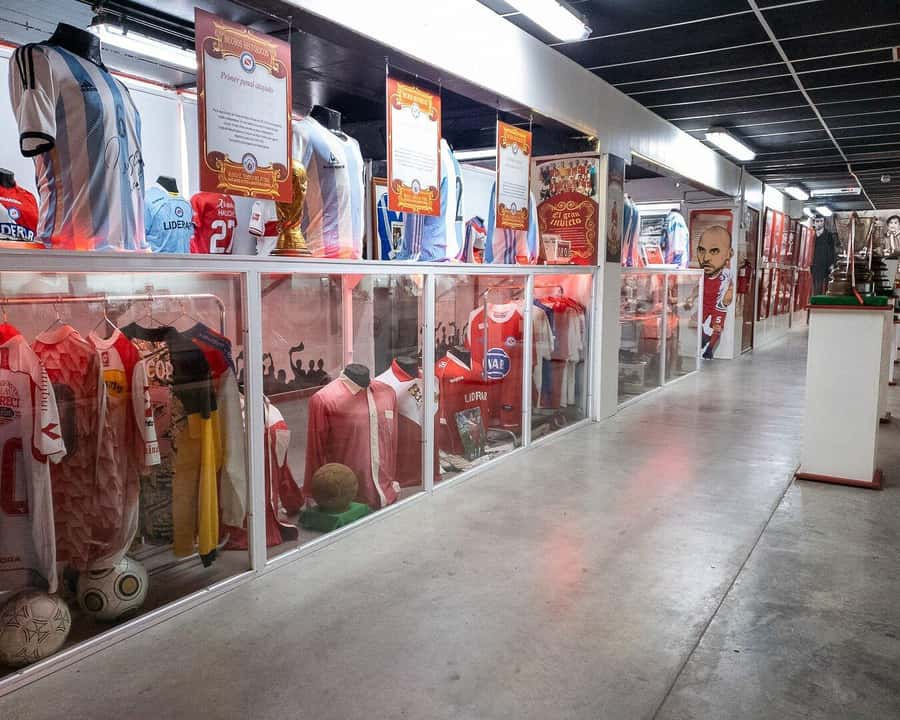
Book it if you want football with a strong local identity. The fan-built museum, the club’s youth-player tradition, Maradona’s first senior appearance, and the final Sanctuary visit create a focused story that the bigger Buenos Aires stadiums cannot quite duplicate.
I especially like the combination of transport, a small group, and personal guiding. Fernando’s careful pickup communication and the enthusiasm associated with guides such as Agustin and Carmela add practical value. Just keep your expectations in check: this is a compact, supporter-created museum and a working club stadium, not a huge entertainment complex.
For a serious Maradona or Argentine football fan, $80 is a fair price for the access and context. For everyone else, spend your sightseeing money elsewhere unless the story of Argentinos Juniors genuinely interests you.
FAQ
Where is the Diego Armando Maradona Stadium?
The stadium is in the La Paternal neighborhood of Buenos Aires, in Buenos Aires Province, Argentina.
How long does the tour last?
The full activity lasts 150 minutes. The guided stadium and museum visit is listed as about 1.5 hours, with the remaining time used for transfers.
What is included in the $80 price?
The price includes hotel pickup and drop-off, entry to the Temple of Soccer Museum, the stadium and museum tour, and a bilingual guide in English or Spanish.
Does the tour include hotel pickup?
Yes. Pickup and return are included at the door of your hotel in Buenos Aires City.
Which languages are available?
The tour is offered in English and Spanish with a live bilingual guide.
Can I cancel the booking?
Yes. You can cancel up to 24 hours in advance for a full refund. The reserve-now, pay-later option is also available.
Just added in Buenos Aires
- Tango Show at El Querandi with optional Dinner★ 4.2 · 3 reviews
- Wine Tasting in Buenos Aires★ 4.2 · 4 reviews
- Walking Tour: Buenos Aires bookstores★ 4.3 · 12 reviews
- Velez Sarsfield Football Match★ 5.0 · 3 reviews
- Private Underground Tango Immersion★ 5.0 · 31 reviews
- Tour Buenos Aires in one day on Electric Scooters★ 5.0 · 33 reviews
- Experience The Essence of Buenos Aires in San Telmo★ 5.0 · 51 reviews
- Teatro Colon Guided Tour Admission Ticket★ 4.0 · 208 reviews
Football Stadium Tours, compared.
La Boca, a collective creation: Port, immigrants, arts and football
Read our review →
River Plate Monumental Stadium and Museum Guided Tour
Read our review →
Boca Juniors Game at La Bombonera with Local & Transport
Read our review →
Browse the lists this tour appears in