
Reviewed · HISTORICAL TOURS
El Calafate History Museum Tour
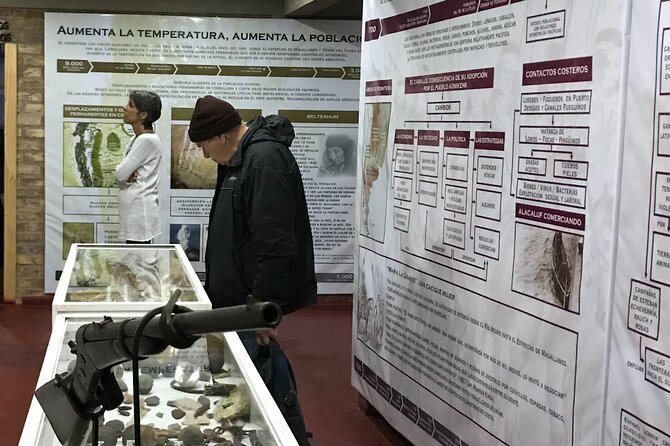
El Calafate’s small Historical Interpretation Center covers an astonishing 100 million years of Southern Patagonia. In one compact visit, you move from dinosaurs and extinct mega-mammals to glaciers, Pleistocene ecological change, and the Tehuelche people. I like the clear mix of bone mounts, graphics, and videos, and I like that you can visit any time from 10:00 am to 8:00 pm. The main drawback is size: this is a focused museum, not a full-day attraction.
I especially like its location, about seven blocks from Libertador Avenue, making it easy to reach while walking around town. I also like the price, $15 per person, for a family-friendly stop that adds useful context to a visit filled with glacier excursions. Plan to read carefully, though. One practical note is that the written material may be more useful than the audio aids.
Key points to know
- A 100 million-year timeline: Follow Patagonia’s geological changes from dinosaurs to glaciers and modern human history.
- Fossils with local meaning: See dinosaur skeletons and the bones of extinct mega-mammals connected to the region.
- Flexible opening hours: Visit any day between 10:00 am and 8:00 pm, with about two hours being a sensible allowance.
- A good rainy-day or family stop: The indoor displays give children and adults a useful break from outdoor excursions.
- Several language options: Information is available in Spanish, French, English, Italian, and Portuguese.
- Simple, independent planning: Admission is included, but transportation, parking, food, and drinks are not.
Why This Small Museum Matters in El Calafate
El Calafate is best known as a base for seeing glaciers, especially the enormous ice front of Perito Moreno. That focus can make it easy to treat Patagonia as a place of scenic views alone. This museum corrects that narrow picture.
The region you see today is the result of huge changes over immense stretches of time. Dinosaurs lived here long before the modern ice fields. Later, glaciers reshaped the ground, climate patterns changed, and large mammals disappeared. Human groups adapted to these conditions, including the Tehuelche people whose culture is part of the area’s story.
I find that background useful because it gives your glacier visit a larger frame. Instead of seeing ice as an isolated attraction, you begin to understand it as one stage in a long sequence of geological and ecological change.
The center is not designed as a grand institution with endless galleries. It is a relatively small space filled with material, and that can work in your favor. You can take in the main story without spending half a day indoors, then return to El Calafate’s cafés, shops, or other plans.
A few more things to do in El Calafate worth a look
- Buenos Aires: Tickets to Boca Juniors Museum & Stadium
★ 4.5 · 581 reviews - Buenos Aires: River Plate and Boca Juniors Museum Tour
★ 4.5 · 72 reviews - River Plate Monumental Stadium and Museum Guided Tour
★ 4.5 · 39 reviews
Entering the Historical Interpretation Center
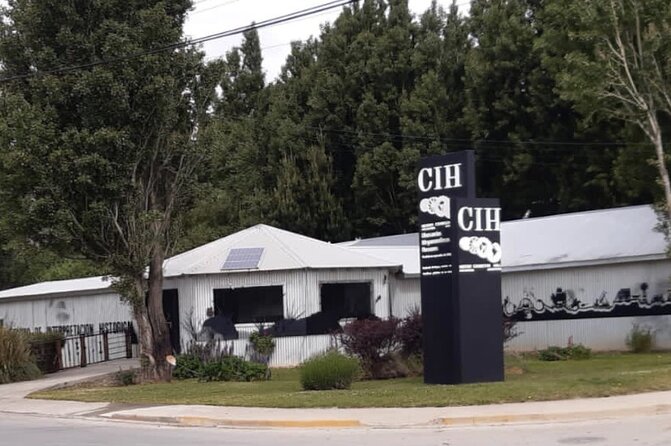
The visit begins at the El Calafate Historical Interpretation Center, also referred to as the Interpretation Center CALAFATE. The museum is open every day from 10:00 am until 8:00 pm, so you have much more flexibility than with a fixed departure excursion.
The published start time is 10:00 am, but the attraction itself can be visited at any point during opening hours. That matters if you are arranging the museum around a glacier day, an arrival, or a dinner reservation. You are not tied to a long guided schedule.
Allow about two hours if you want to read the displays and watch the videos without hurrying. The stated duration can range from one to four hours, which reflects different paces. You can make a quick one-hour visit, but the museum’s material rewards a slower look. Four hours would suit someone who reads every panel closely and spends time with each visual aid.
The center is about seven blocks from Libertador Avenue. That makes it a reasonable walk from the central part of El Calafate, although transportation to and from the attraction is not included. Parking fees are also separate if you drive.
Dinosaurs, Mega-Mammals, and the First Chapters
The earliest part of the visit deals with Patagonia’s ancient geological past. The museum uses dinosaur skeletons and bone mounts to show that this area was once home to creatures very different from those associated with present-day glaciers.
The dinosaur material gives younger visitors an immediate point of interest, but it is not just a children’s display. The fossils help explain how the region changed over time and why paleontology matters in Southern Patagonia. You get a sense of the area as an active part of an ancient world, not simply an empty wilderness waiting for modern exploration.
The bones of extinct mega-mammals form another strong part of the visit. These large animals belonged to a later period than the dinosaurs and help connect the ancient past to the Pleistocene. Their presence makes the museum’s time scale easier to grasp. The story is not just about one vanished age. It is about repeated changes in climate, animals, vegetation, and human life.
I recommend taking the time to compare the different sections rather than treating the skeletons as isolated objects. The value comes from seeing how the exhibits build a sequence. Patagonia had several very different pasts before it became the place you recognize today.
Glaciers and Pleistocene Change
The museum also explains the glacier process and the ecological changes of the Pleistocene. This section is especially useful if you are planning a glacier excursion, because it gives you a basic framework before you face the ice itself.
Glaciers do more than provide dramatic scenery. They alter the ground, affect water systems, and influence the plants and animals that can survive nearby. The center uses graphics and videos to make those changes easier to follow. You will not get the same scale as an outdoor viewpoint, but you can get the sequence and terminology that help you understand what you are seeing later.
The Pleistocene material adds another layer. It shows that the environment was not fixed, and that the region’s animals and human communities had to respond to changing conditions. That idea gives the museum more substance than a simple collection of fossils.
If you already know a great deal about geology, you may find the display fairly introductory. For most people, though, that is appropriate. The center provides a useful foundation without assuming that you have studied glacial science before arriving in Argentina.
Same base, a different kind of day out:
- El Calafate: Perito Moreno Glacier & Optional Boat Cruise
★ 4.7 · 2,586 reviews - From El Calafate: Full-Day Tour to El Chaltén
★ 4.4 · 926 reviews - El Calafate: Perito Moreno Glacier Trekking Tour and Cruise
★ 4.8 · 805 reviews - From El Calafate: Torres del Paine Full Day Tour
★ 4.6 · 434 reviews
Tehuelche Culture and Human History
The human story becomes more important as you move through the center. The displays connect ecological change with the Tehuelche culture, placing people within Patagonia’s long environmental history rather than treating human settlement as a separate subject.
That approach is valuable because it prevents the museum from becoming only a fossil hall. The region’s past includes animals, ice, geology, and people. Learning about the Tehuelche connection also gives more meaning to the place names and cultural history you encounter elsewhere in Southern Patagonia.
The supplied material does not identify individual guides, so you should not expect a named guide-led presentation. The experience may be operated with a multilingual guide, but the visit is mainly structured around the center’s displays and interpretation tools. Spanish, French, English, Italian, and Portuguese options are available.
If you rely on audio assistance, pay attention to how the information is presented. A practical tip is to read the panels carefully, since the written material may provide more help than the audio aids. This is not a reason to skip the museum, but it is a reason to give yourself enough time and avoid rushing from display to display.
Graphics, Videos, and Bone Mounts
The museum uses three main tools: graphics, videos, and bone montages. Each serves a different purpose.
The graphics help organize the timeline. They are useful when the dates and geological periods begin to blur together. The videos add movement and explanation, particularly for processes such as glacial change. The mounted bones give the story a physical presence that a text panel alone cannot provide.
I like this combination for families because it gives children several ways to stay engaged. A dinosaur skeleton catches the eye, a video explains a process, and a graphic helps place it in time. Adults can focus on the cultural and geological information without needing to turn the visit into a formal lesson.
Still, you should set your expectations correctly. This is a compact interpretation center, so the quality of the visit depends partly on how much you want to read and connect the material yourself. It is not a ride, a major fossil excavation site, or a substitute for visiting the natural areas around El Calafate.
What the $15 Price Really Buys You
At $15 per person, the center offers reasonable value if you want context for your time in Southern Patagonia. Admission is included in the quoted price, along with taxes, fees, and handling charges. You do not need to add a separate guide fee based on the information provided.
The value is strongest for three types of visitors. First, families can use the museum as an educational stop with no minimum age requirement. Second, anyone with a strong interest in fossils, glaciers, or regional culture will find several connected subjects in one place. Third, people with a spare afternoon can add a meaningful indoor activity without committing to another full excursion.
The value is weaker if you want a large museum with many hours of galleries. The center’s small size means you may finish in one to two hours, especially if you read selectively. You also need to pay for your own transportation, parking if applicable, and any snacks or drinks.
Coffee, tea, non-alcoholic drinks, snacks, and souvenir photos are available for purchase, but none is included. That keeps the basic price clear, although you should budget separately if you plan to buy something after the visit.
Picking the Best Time to Go
Because the center opens daily from 10:00 am to 8:00 pm, timing is one of its easiest features. A morning visit can set up the rest of your day. An afternoon visit works well after returning from another activity. An evening visit can fill a gap before dinner, provided you allow enough time before closing.
A Sunday afternoon can work particularly well for a quiet town stop, although you should still allow time to read. The museum is about seven blocks from Libertador Avenue, so you can combine it with a walk through the central area.
I would not squeeze the center into a rushed transfer day. Even though the visit can be short, the dates and historical changes are easier to follow when you have a little mental space. If your schedule allows, reserve roughly two hours, then treat any extra time as optional.
Families, Accessibility, and Group Details
There is no minimum age, and children must be accompanied by an adult. Most people can participate, and service animals are allowed. The center is near public transportation, but transportation to and from the attraction is not part of the admission.
The activity is described as private, meaning only your group participates. At the same time, the available information does not name a guide or promise a fully guided tour at a fixed hour. You should think of it as a private visit arrangement centered on the museum rather than a scheduled bus excursion.
The language choices make the center more approachable for international visitors. Spanish, French, English, Italian, and Portuguese options are available. Since the audio aids may not be as useful as the written material, I would choose the language option that lets you read most comfortably.
How It Fits Into a Patagonia Itinerary
This museum works best early in your El Calafate stay, before or near the beginning of your glacier sightseeing. The geological and cultural background can make later views more meaningful. You will recognize that the ice is part of a much longer story, not the entire story.
It also works well near the end of your visit. After spending time outdoors, the center gives you a chance to organize what you have seen. The museum’s indoor setting is practical when weather affects your plans, though no specific weather guarantee or indoor scheduling benefit is promised beyond its regular hours.
I would not choose this in place of a major outdoor excursion if you have very little time in El Calafate. The museum cannot replace the experience of seeing Patagonia’s ice and open spaces directly. But if you have an extra half-day, the $15 admission can add more understanding than another unplanned hour of wandering around town.
The center has a rating of 4.5 from 32 published ratings, and 91 percent of people who rated the activity recommend it. Those figures point to a generally well-liked stop, but the small number of ratings means you should treat them as useful guidance, not a guarantee that every visitor will want the same amount of detail.
Booking, Cancellation, and Practical Notes
Confirmation is provided at the time of booking. Free cancellation is available if you cancel at least 24 hours before the experience’s start time. Cancellations or changes made less than 24 hours before the start time are not accepted for a refund, and the cut-off follows local time in El Calafate.
The listed start time is 10:00 am, but the museum’s opening hours run until 8:00 pm. Check your confirmation for the precise arrangements attached to your booking, especially if your plans depend on a particular entry time.
Bring enough time to read. The most useful visit is not necessarily the fastest one, and the center’s strength is the way its small displays connect fossils, ice, animals, and people. If you only look at the largest bones, you will miss much of the point.
Should You Book This Museum Visit?
Book it if you want a short, reasonably priced way to understand Southern Patagonia beyond its famous glaciers. The dinosaur bones, mega-mammals, Pleistocene changes, glacial story, and Tehuelche culture give you several useful entry points. The flexible daily hours also make it easy to fit into a changing itinerary.
Families, curious first-time visitors, and anyone with an interest in geology or local culture are likely to get the most from it. I would also recommend it if you have a rainy afternoon or a spare two hours near central El Calafate.
Skip it if your schedule is extremely tight and you would rather spend every available hour outdoors. The museum is small, transportation is not included, and the written interpretation may suit you better than the audio aids. For $15, though, it is a sensible addition for most visitors who want the glacier views to come with a clearer understanding of the place.
FAQ
Where is the El Calafate History Museum located?
The El Calafate Historical Interpretation Center is about seven blocks from Libertador Avenue in El Calafate, Argentina.
How much does admission cost?
The listed price is $15 per person. Admission, taxes, fees, and handling charges are included.
How long does the visit take?
The visit can take about one to four hours. Allowing around two hours gives you time to use the graphics, videos, and bone displays without rushing.
What are the museum’s opening hours?
The center is open every day from 10:00 am to 8:00 pm.
What can I see inside the museum?
You can see dinosaur skeletons, fossils and bones from extinct mega-mammals, graphics, videos, and displays about Patagonia’s geological and human history.
Does the museum cover the Tehuelche culture?
Yes. The interpretation includes the Tehuelche culture as part of Southern Patagonia’s ecological and human history.
Are language options available?
Yes. Translation options are available in Spanish, French, English, Italian, and Portuguese.
Is transportation included?
No. Transportation to and from the attraction is not included. Any parking fees are also paid separately at check-in.
Can children visit the museum?
Yes. There is no minimum age, but children must be accompanied by an adult.
Can I cancel for a full refund?
Yes, if you cancel at least 24 hours before the experience’s start time. Cancellations or changes made less than 24 hours before the start time are not accepted for a refund.
Just added in El Calafate
- El Calafate: Gourmet Navigation Upsala & Spegazzini Glaciers★ 3.9 · 8 reviews
- Perito Moreno Glacier Experience with Boat Navigation !!★ 5.0 · 41 reviews
- Perito Moreno Full Day Minitrekking with Transfer and Walkways★ 4.5 · 54 reviews
- Safari Experience – Wildlife & Steppe★ 5.0 · 40 reviews
- Ride Experience – Canyons & Mounts★ 5.0 · 33 reviews
- Perito Moreno Glacier Big Ice Tour from El Calafate★ 4.5 · 30 reviews
- Navigation All glaciers★ 4.5 · 45 reviews
- Torres del Paine Day Trip from El Calafate★ 4.1 · 15 reviews
Historical Tours, compared.
Nazis in Buenos Aires: a historical walking tour
Read our review →
Historical Guided Tour with Street Food & Drinks
Read our review →
Recoleta Cemetery – Small Group Tour of History & Secrets
Read our review →
Browse the lists this tour appears in