
Reviewed · TOURS IN BUENOS AIRES
Electric Scooter Tour: North Buenos Aires
The best part of this tour is the amount of Buenos Aires you cover without turning the day into a march. In about 10 kilometers, you roll from Plaza San Martín through Recoleta and past several of the city’s great landmarks, with time to stop, listen, and take photos. Mate and alfajores add a welcome taste of local life.
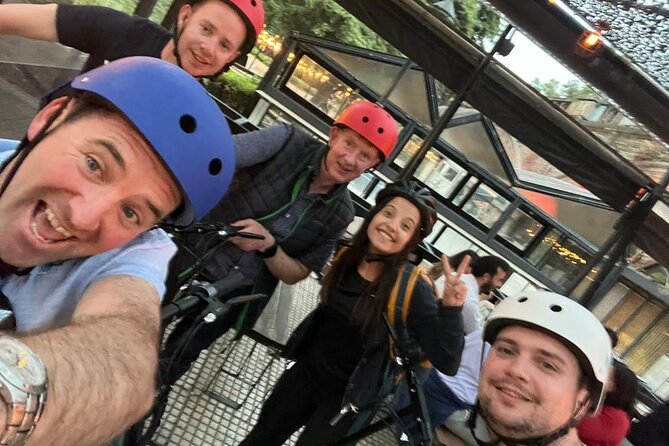
I like the small maximum of eight people, which should make it easier to hear guides such as Miguel or Rita and ask questions about Argentine politics, soccer, and culture. I also like the relaxed mix of riding and conversation, especially the stop at Floralis Genérica for a hands-on mate lesson. The main caution is practical: you need to know how to ride a bicycle, and weekend traffic or crowded areas can make the tour run longer than its advertised two and a half hours.
Key points to know before you roll
- About 10 kilometers of riding: You see far more ground than on a walking tour, with stops at central and northern Buenos Aires landmarks.
- A small group of up to eight: This suits people who want a personal guide rather than a large sightseeing convoy.
- Mate time included: You learn how to prepare yerba mate and taste a chocolate alfajor filled with dulce de leche.
- Guides bring local topics to life: Expect discussion of soccer, politics, migration, religion, barbecue, authority, and Argentine self-expression.
- The route is packed with landmarks: Plaza San Martín, Torre Monumental, the Obelisk, Recoleta Cemetery, the law faculty, and MALBA all appear along the way.
- Weather and minimum numbers matter: Bad weather can cancel the outing, and the operator requires at least two participants.
Why an electric scooter works well in Buenos Aires
Buenos Aires is a city of broad avenues, grand civic buildings, leafy squares, and long stretches between major sights. On foot, you can enjoy the details, but covering this route in one afternoon would mean a lot of walking. An electric scooter gives you a middle path: quicker than walking, more open than a vehicle, and still slow enough to hear a guide during regular stops.
The ride covers roughly 10 kilometers. That figure matters because this is not a short neighborhood spin. You move through several parts of the city and get a useful first look at how central Buenos Aires connects with Recoleta and the northern districts.
The route is not designed as a technical scooter lesson. You should already feel comfortable riding a bicycle, balancing, stopping, and sharing public streets. If you are uneasy on two wheels, the pace and traffic could take attention away from the city itself.
The tour begins at 2:00 pm at Tres Sargentos 463 in central Buenos Aires and returns there. It lasts about two and a half hours, though you should leave some flexibility in your schedule. One family outing reportedly stretched to four and a half hours, partly because weekend conditions and the route near Recoleta can slow things down. I would not book a tight dinner reservation immediately afterward.
Other trips people book in Buenos Aires:
- Buenos Aires Hop-On Hop-Off Bus, Free Walking Tours & Discounts
★ 4.5 · 2,218 reviews - Buenos Aires: Piazzolla Tango Show with Optional Dinner
★ 4.4 · 2,122 reviews - Buenos Aires: City Highlights Guided Tour with Transfer
★ 4.7 · 1,946 reviews
Plaza San Martín sets the European tone
Your first stop is Plaza General San Martín, where the guide tackles a useful question: why does Buenos Aires often feel European? The square is a good place to begin because it connects the city’s architecture, public spaces, and historical ambitions.
You get about 20 minutes here. That is enough time to hear the basic context, look around, and settle into the scooter before the route picks up. The stop also gives the guide a natural opening to explain how Buenos Aires developed an identity that feels both distinctly Argentine and strongly influenced by Europe.
The value here is not just the square itself. You begin learning how to read the city. Grand buildings, formal public spaces, and cultural references can seem disconnected if you only photograph them. A good explanation helps tie them together.
Torre Monumental and the stories of migration
The next stop is Torre Monumental, with about 15 minutes devoted to migration, football, and the tower’s nickname, Little Ben. The connection between migration and Argentine identity is one of the more useful themes on this tour. Buenos Aires has long been shaped by people arriving from elsewhere, and the guide uses the city’s landmarks to connect that story with present-day culture.
Football also enters the conversation here. That is a smart choice because soccer in Argentina is not treated as a minor pastime. It is part of family life, neighborhood identity, and public conversation. If you want your city sightseeing to include more than dates and architectural labels, these cultural links are a strong reason to choose this ride.
The stop is brief, so expect an overview rather than a long historical lecture. You will have time for context and photos, then you are back on the scooter.
The Obelisk, a citywide meeting point
The Obelisk receives about 10 minutes. It is a quick stop, but an important one. This is the landmark most closely tied to the public face of Buenos Aires, and it works as a visual marker for the city’s central avenues and major celebrations.
The guide presents it as a great witness to Buenos Aires. That framing gives the monument a role beyond its shape. It has watched the city gather for joy, football, political moments, and public events.
Do not expect to linger here as you might at a museum. The tour uses the Obelisk as part of a moving city lesson. You see it, hear why it matters, and continue toward the northern part of the route.
Same base, a different kind of day out:
- Buenos Aires: Hop-On Hop-Off City Bus Tour
★ 4.2 · 1,855 reviews - Buenos Aires Hop-On Hop-Off Bus and Exclusive Benefits
★ 4.4 · 1,714 reviews - Buenos Aires: La Boca Guided Walking Tour in English
★ 4.8 · 1,587 reviews - Buenos Aires: La Recoleta Cemetery Guided Tour in English
★ 4.8 · 1,359 reviews
French influence and Argentine self-expression
At the French Embassy, the conversation turns to French ties and the reputation Argentines have for being conceited. The wording may sound playful, but this is one of the tour’s more interesting cultural stops. It gives the guide room to discuss how Argentines see themselves and how outsiders interpret their confidence, directness, and style of conversation.
This kind of subject is difficult to get from a standard sightseeing route. You can look at a building on your own, but you may not think to ask what it says about national identity. Guides such as Miguel have also used the ride to discuss political conditions, the economy, university life, and Argentine attitudes toward Americans.
That range is part of the appeal, though it also means the tone depends on your guide. If you want only polished facts and architectural dates, the discussion may feel broad. If you enjoy asking how people live and think, this is where the ride gains character.
The University of Buenos Aires and public life
The Faculty of Law at the University of Buenos Aires gets about 15 minutes. The building is presented as a place connected with Argentina’s social and political leaders, and with the country’s academic life.
The tour also points to the building’s inauguration by Domingo and Evita Perón. That detail places the stop within the country’s political story, rather than treating the faculty as simply an impressive structure.
I like this stop because it widens the tour beyond famous monuments. You get a glimpse of how education, politics, and public leadership connect in Argentina. The stop will not turn you into an expert on the university system, but it adds useful context to the city’s institutions.
The route has several such moments. Instead of viewing Buenos Aires as a string of pretty façades, you begin to see its public spaces as places where power, culture, and national identity meet.
Mate and alfajores at Floralis Genérica
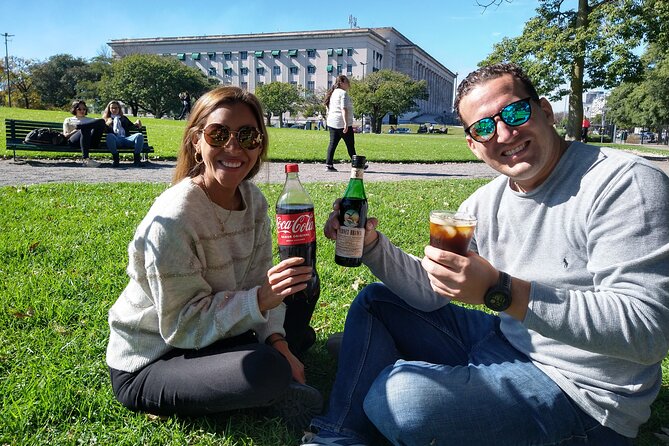
Floralis Genérica is the tour’s most hands-on stop. You spend about 20 minutes taking a break, preparing mate, and tasting a chocolate alfajor filled with dulce de leche.
This is more than a snack break. Mate is a daily social ritual in Argentina, and learning how it is prepared gives you a small but genuine connection to local habits. You can ask questions, watch the process, and taste the infusion instead of simply hearing the word mate repeated in a guidebook.
The alfajor provides a sweet counterpoint. The chocolate coating and dulce de leche filling make it an easy introduction to one of Argentina’s familiar treats.
The flower sculpture also gives you a pleasant visual pause after several civic and institutional stops. The schedule allows enough time to rest, enjoy the snack, and take photos before continuing. If you want a tour with a clear local food element, this is one of its strongest features.
Recoleta Cemetery, with a short visit inside
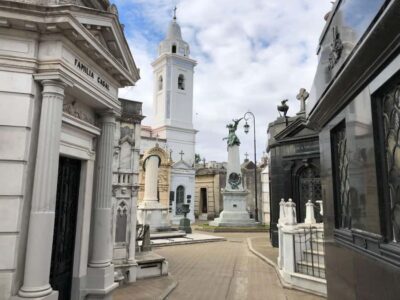
The stop at Recoleta Cemetery lasts about 15 minutes, including roughly 10 minutes when you can go inside and take photos. The cemetery is one of the city’s major cultural sights, with elaborate tombs and the graves of important figures from Argentina and the wider continent.
Because the visit is short, you should think of it as an introduction, not a full cemetery tour. You will get a sense of the place and hear why it matters, but there is not enough time to explore every passage or study each notable tomb.
The timing can also vary. On weekends, the ride may need to pass near an artisans’ fair to reach the cemetery, which can slow the group. That is one reason the total outing may run well beyond two and a half hours.
If Recoleta Cemetery is a top priority, you may want to return independently for a longer visit. Still, including it in this route is useful because it places one of Buenos Aires’ famous sights within a larger story about religion, politics, social status, and national memory.
The Basilica and Argentina’s Catholic identity
The Basilica de Nuestra Señora del Pilar receives about 10 minutes. Here the focus shifts to religion and Argentina’s Catholic tradition, including the significance of the country producing a pope known for coming from the End of the World.
This is another short stop, but it helps explain a part of Argentine identity that can be easy to miss if you focus only on architecture and soccer. The basilica also pairs naturally with Recoleta Cemetery, since both offer a look at how faith and public memory have shaped the city.
The guide’s role matters here. A concise explanation can make the stop meaningful, while a rushed pass-by would make it feel like another photo opportunity. The tour’s wider cultural approach gives the basilica a proper place in the afternoon.
Finishing near MALBA
The final listed stop is the Museo de Arte Latinoamericano de Buenos Aires, commonly known as MALBA. You get about 15 minutes, but museum admission is not included.
That distinction is important. The tour introduces the museum and its place in Buenos Aires’ art scene, but you should not assume you have time for a full museum visit during the ride. If you want to go inside, confirm the timing with the guide and plan a separate visit if needed.
Ending with Latin American art gives the route a modern cultural note after its squares, monuments, cemetery, church, and university. It also shows that Buenos Aires is not only about old European influences. The city’s identity includes contemporary art and a wider Latin American conversation.
The tour then returns to the original meeting point. Since the ride includes many stops, the final portion may feel full rather than leisurely. That is the tradeoff for seeing so much in one afternoon.
What the $39 price gets you
At $39 per person, this is priced as an affordable small-group sightseeing experience rather than a simple scooter rental. The fee includes the electric scooter, helmet, reflective belt, mate or another listed infusion, and a chocolate alfajor with dulce de leche.
The value comes mainly from the guide. A scooter alone would help you cover ground, but it would not explain why the city feels European, how football fits daily life, or what mate means beyond a drink. Guides such as Miguel and Rita add personal stories and discussion, which is where the experience earns its price.
The group limit of eight is another plus. A small group should make it easier to hear the guide and keep the ride from feeling like a large procession. The tour has earned a 4.9 rating from 67 ratings, with 97 percent recommending it, and the strongest praise centers on the guides, the amount of ground covered, and the fun of seeing Buenos Aires by scooter.
Still, the price does not include admission to MALBA. Several stops are viewed from outside or visited briefly, so you are paying for an active overview rather than a series of extended museum entries.
Who will enjoy this ride most
I would choose this tour if you want a fast orientation to Buenos Aires during your first days in the city. It lets you see major sights, learn local customs, and collect ideas for places to revisit on foot.
It also suits families with older children and active adults who prefer movement to a long bus ride. One family found that children, parents, and older family members could enjoy the route without becoming worn out, though everyone still needs to be comfortable on a bicycle.
You may want another type of tour if you dislike riding in city traffic, have poor balance, or need a tightly fixed schedule. The operator advises against joining if you do not know how to ride a bicycle. Bad weather can cancel the activity, and it also requires at least two participants, so keep those conditions in mind when planning.
The 2:00 pm start gives you the morning for another activity, but the afternoon can extend if the route is delayed. I would avoid pairing it with anything nonrefundable or time-sensitive.
Should you book the North Buenos Aires scooter tour?
Book it if you want broad city coverage, local conversation, and a taste of Argentine routine in one outing. The mate lesson, alfajor, football talk, and candid discussion of politics and national character make it more personal than a simple landmark circuit.
Book with realistic expectations. You are not getting long visits at every stop, and the ride can take longer than advertised, especially on weekends. You also need basic cycling confidence and a willingness to ride outdoors in changing weather.
For $39, the combination is strong: a small group, a guide such as Miguel or Rita, safety equipment, a 10-kilometer route, and a useful introduction to northern Buenos Aires. I would choose it early in your stay, then return later to Recoleta Cemetery, MALBA, or any other place that deserves more time.
FAQ
How long does the electric scooter tour last?
The planned duration is approximately two hours and 30 minutes. The actual outing can take longer if traffic, weekend conditions, or the route near Recoleta slows the group.
What time does the tour begin?
The tour starts at 2:00 pm.
Where does the tour start and finish?
It starts at Tres Sargentos 463, C1054ABC, in Buenos Aires, and ends back at the same meeting point.
How many people can join the tour?
The tour accepts a maximum of eight participants.
Do I need to know how to ride a bicycle?
Yes. The activity is not recommended for people who do not know how to ride a bicycle.
What safety equipment is provided?
A helmet and reflective belt are provided.
Is food or drink included?
Yes. You receive a chocolate alfajor filled with dulce de leche and an infusion based on yerba mate, listed as coffee and or tea in the inclusions.
Is admission to MALBA included?
No. The tour stops at the Museo de Arte Latinoamericano de Buenos Aires, but museum admission is not included.
What happens if the tour is canceled because of weather or too few participants?
If poor weather cancels the tour, you will be offered another date or a full refund. If the minimum number of participants is not reached, you will be offered another date or experience, or a full refund. You can also cancel for a full refund up to 24 hours before the start time.
Just added in Buenos Aires
- Premium Empanadas Cooking Class & Wine Tasting Experience★ 4.9 · 35 reviews
- Buenos Aires: Small-Group Wine Tasting★ 4.8 · 18 reviews
- Buenos Aires: Speakeasy & Mixology Bar Tour with Cocktails★ 5.0 · 5 reviews
- Buenos Aires: Rojo Tango Show with Optional Dinner★ 3.4 · 3 reviews
- Buenos Aires: Santa Susana Ranch Day Tour, BBQ & Shows★ 4.6 · 32 reviews
- Buenos Aires:Small Group Tour AM & Sunset Open Bar Cruise PM★ 4.5 · 15 reviews
- Buenos Aires: Private Photo Tour for Ammateur Photographers★ 4.9 · 5 reviews
- Buenos Aires: Private Recoleta Cemetery Walking Guided Tour★ 4.6 · 13 reviews
Tours in Buenos Aires, compared.



Browse the lists this tour appears in