
Reviewed · ARGENTINE FOOD & EMPANADA TOURS
Secret Food Tour: Buenos Aires
Buenos Aires reveals itself bite by bite on this three-hour walk through Palermo. You will sample Argentine barbecue, special empanadas, award-winning choripán, handmade alfajores, and a surprise dish while hearing how Italy, Indigenous traditions, immigration, and politics shaped the city.
I like the small group of 10 and the way the route joins food with neighborhood stories rather than treating lunch as a string of restaurant stops. I also like that the walk covers Palermo Soho, Old Palermo, and the area around Plaza Inmigrantes de Armenia. The main drawback is that the menu and route can change, and three hours may run 15 to 30 minutes late.
Key points to know before booking
- Palermo is the main stage: You walk through Palermo Soho, Old Palermo, and nearby districts rather than staying at one restaurant.
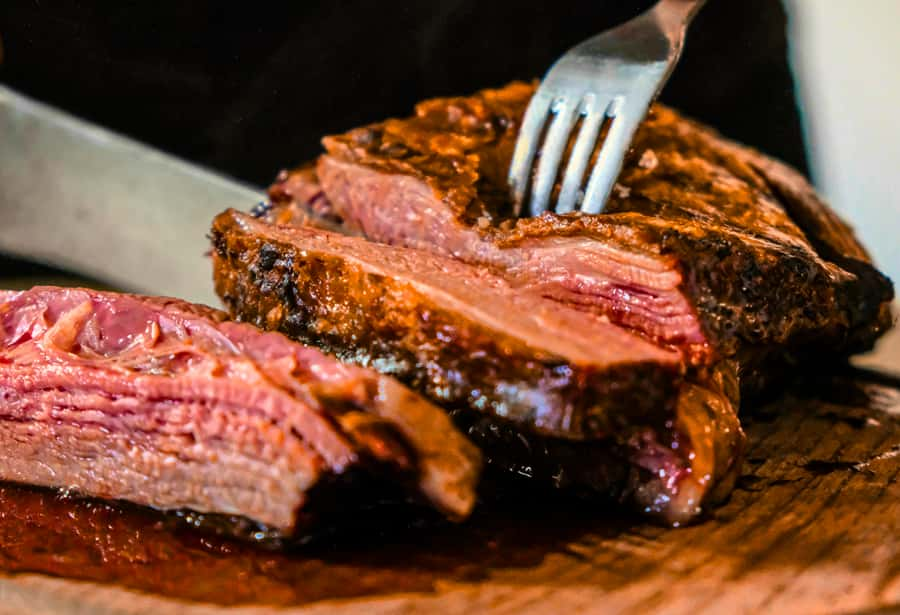
- The steak is a major stop: Fire-grilled beef with chimichurri is part of the meal, and the steak has been a clear favorite.
- The secret dish starts the tour: You get an Argentine specialty that is not revealed on the published menu.
- The food comes with context: Italian immigration, Indigenous heritage, Eva Perón, and Argentina’s dictatorship all enter the conversation.
- The group stays intimate: The maximum is 10 people, with an English-speaking local guide.
- Come hungry, but allow extra time: The advertised length is three hours, though the walk can last up to 15 to 30 minutes longer.
Palermo on foot, with a plate in hand
Palermo is Buenos Aires’ largest neighborhood, and this tour uses its different districts as a food-and-history classroom. You move through Palermo Soho, Old Palermo, and the streets around Plaza Inmigrantes de Armenia, seeing how one broad neighborhood can shift in mood and character from block to block.
That matters because the food is not presented in isolation. Your guide connects each dish to Argentina’s past and to the people who helped shape Porteño cooking. You are not simply stopping for a snack, then marching to the next address. The route gives you a sense of why Palermo became one of the city’s main eating areas.
The meeting point is in front of the main entrance of 1810 Cocina Regional Palermo at Julián Álvarez 1998. Look for the guide with an orange umbrella and a big smile. The tour ends back at the same meeting point, which makes it easy to plan dinner or an evening walk afterward.
The walk is conducted in English. Since the group is limited to 10 people, you should have a reasonable chance to ask questions and keep up with the guide’s explanations. The guide named Iago has received especially strong praise for his food recommendations, city advice, and understanding of the area.
More eating your way around Buenos Aires:
- Buenos Aires: Local Foodie Adventure with Sherpa Food Tours
★ 4.9 · 670 reviews - Buenos Aires: Empanadas and Alfajores Guided Cooking Class
★ 4.8 · 486 reviews - Buenos Aires: Empanada & Alfajor Cooking Lesson in Palermo
★ 4.6 · 186 reviews
A secret dish and Argentina’s Indigenous traditions
The tour begins with its hidden food item. The dish is kept off the public menu, so you do not know exactly what it will be before you arrive. What you do know is that it is meant to introduce Argentina’s Indigenous heritage and the cultural traditions that continue today.
This is a smart opening. It reminds you that Argentine food is not only steak, Italian-style pasta, and European immigration. The country’s food story includes older Indigenous ingredients and customs as well. A secret first course also gives the guide room to explain the dish in person instead of reducing it to a menu label.
Because the dish is not specified, you should not book this tour expecting a particular starter. If you have allergies, religious dietary rules, or other food needs, contact the provider before booking to ask if the tour can accommodate you. That is especially important here, since the menu is fixed in part by the participating locations and may change.
Italian influence in Argentine food
The next part looks at Italy’s major role in Argentina. The tour notes that 62.2 percent of the country’s population traces its ancestry to Italy, a statistic that helps explain why Italian traditions are so visible in Argentine cooking.
Your guide uses this connection to place local food in a wider story of migration. You will learn how Italian heritage influenced traditional Argentine gastronomy, an especially useful bit of background if this is your first visit to Buenos Aires. It helps explain why the city’s food culture cannot be reduced to one national style.
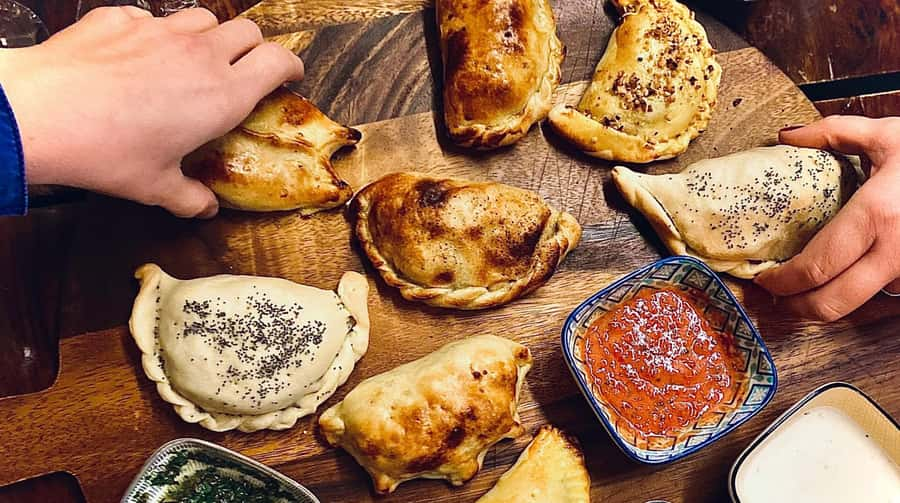
The included food at this stage includes special empanadas and Argentinean cheesecake. The exact stop can change, but the point is clear: the tour gives you several smaller tastes rather than asking you to choose one large meal. That variety works well for first-time visitors who want a quick introduction to local staples.
It also gives you a chance to compare textures and styles. Empanadas are a practical introduction to Argentine cooking because they can reflect different fillings and local habits. Cheesecake brings another side of the country’s European influence to the table.
The parrilla stop and the case for booking hungry
The central food moment is the Argentine barbecue, known locally as parrilla. You receive fire-grilled steak with chimichurri, one of the country’s best-known combinations.
This is the part that makes the tour more than a neighborhood stroll with occasional samples. A proper steak stop gives you a direct taste of the cooking style that defines Argentina for many visitors. The chimichurri adds the sharp, herb-filled sauce traditionally served with grilled meat.
One practical point: you should arrive hungry, but not so hungry that you rush through the early tastings. The tour includes several savory foods, followed later by choripán and dessert. The portions are not described, so you cannot assume the walk replaces every meal for the day, but the list of included dishes makes it much more substantial than a tasting limited to one or two bites.
The steak has been one of the most praised parts of the experience, and that matches the tour’s structure. If Argentine beef is high on your list, this stop gives the $95 price some weight. You are paying not only for a serving of meat, but for a guided route with several other tastings and drinks.
A few more things to do in Buenos Aires worth a look
- Buenos Aires: 9-Course Argentine Meat Tasting at Fogón Asado
★ 4.9 · 826 reviews - Buenos Aires: Wine Tasting and Lunch at Bodega Gamboa
★ 4.8 · 177 reviews - Buenos Aires Food Tour: Local Dishes, Steak, Empanada & More
★ 5.0 · 118 reviews - San Telmo: Historical Guided Tour with Street Food & Drinks
★ 5.0 · 87 reviews
Plaza Inmigrantes de Armenia and Palermo’s international side
After the parrilla, the route heads toward Plaza Inmigrantes de Armenia, one of Old Palermo’s main food and social areas. Here, the guide discusses the international influences that helped shape Buenos Aires.
The plaza gives the walk a useful change of pace. Instead of moving only between dining rooms, you pause in a public space and connect the neighborhood’s modern restaurant culture to its immigrant roots. The name itself points toward the many communities represented in the city.
You should expect a walking tour rather than a seated food crawl. Palermo’s streets are part of the experience, so wear comfortable shoes and leave room in your schedule for the route to take its full advertised length. The activity usually lasts three hours, but it can run 15 to 30 minutes longer when weather, restaurant availability, or the pace of the group requires it.
Eva Perón, dictatorship, and food with a political edge
The route includes a quick stop to raise a toast to Eva Perón, Argentina’s famous first lady. The precise drink is not specified at that moment, but the included beverages include Basque cider, water, and yerba mate.
The tour then stops at a monument honoring people who fought against Argentina’s dictatorship. The guide also discusses Jorge Rafael Videla. This is an important part of the walk because it shows that Buenos Aires food culture exists alongside difficult political memory.
The shift from food to politics may surprise you, but it gives the neighborhood greater meaning. You are not only learning which dishes to order. You are hearing about the people and events that shaped modern Argentina, including a period that remains sensitive and significant.
The amount of time spent at these stops is not given, so do not expect a full political history lesson. Instead, consider these short visits as context woven into a food walk. They are useful if you want your meal to come with a better understanding of the country behind it.
Choripán on a Palermo Soho street
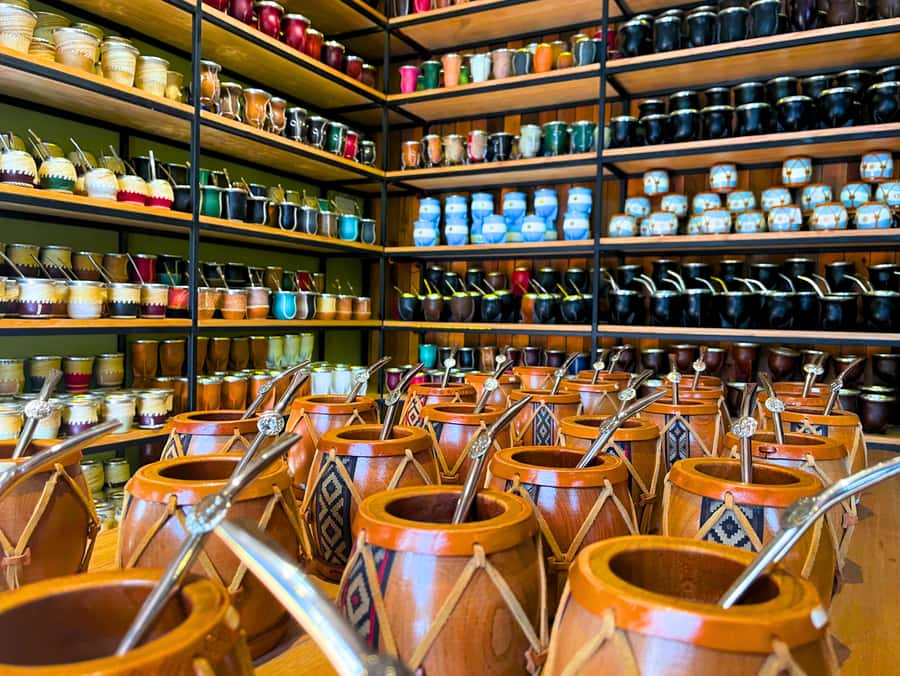
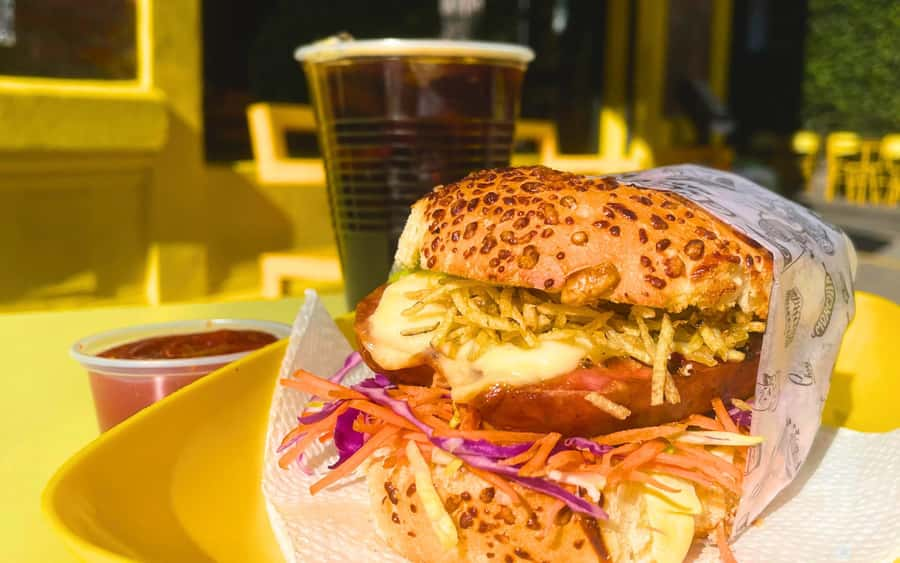
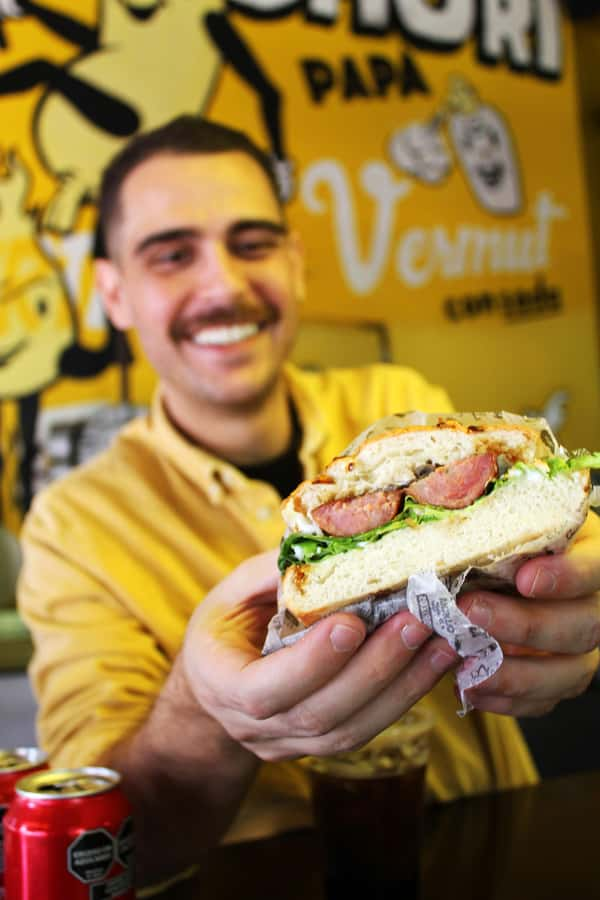
The next major bite is choripán, Argentina’s famous sausage sandwich. This version comes from a much-talked-about venue and has won recognition around the world.
Choripán is a wonderfully direct food. It is casual, filling, and closely linked with everyday Argentine eating. After the more formal idea of a steakhouse parrilla, the sandwich offers a different view of local food culture. You are tasting something associated with street food and relaxed social eating, not just a special-occasion meal.
This stop takes place on one of Palermo Soho’s popular streets. It is a good reminder that Palermo’s food identity covers both polished restaurants and simple handheld food. If you enjoy comparing a country’s famous dish with its less formal staples, this is one of the most useful stops on the route.
The sandwich arrives late in the tour, so save some appetite. The menu is subject to change if a location is unavailable, but choripán is listed as a core inclusion rather than a vague possibility.
Handmade alfajores to finish
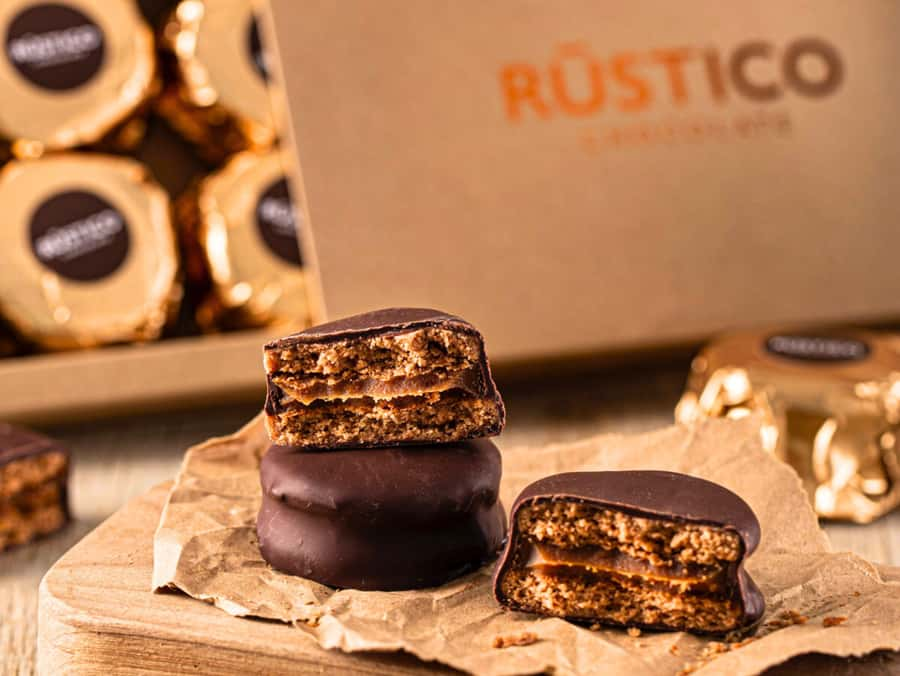
Dessert is an alfajor, one of Argentina’s most famous sweets. The tour includes handmade alfajores made by local chocolatiers, with 99 percent of the ingredients sourced from Argentina.
That detail gives the final stop a local focus. You are not simply ending with a generic chocolate dessert. The alfajor serves as a compact introduction to a national favorite and to the work of local confectioners.
The dessert also makes sense as the final course. After steak, empanadas, choripán, and the secret dish, a small sweet provides a clear finish without adding another heavy savory stop. The exact preparation can change, but the listed version is handmade and closely tied to Argentine ingredients.
You also receive yerba mate during the experience. Since the precise serving order is not specified, your guide will determine when it best fits the route. Together, the alfajor and mate bring the walk back to everyday Argentine food traditions after the larger meal stops.
What the $95 price buys you
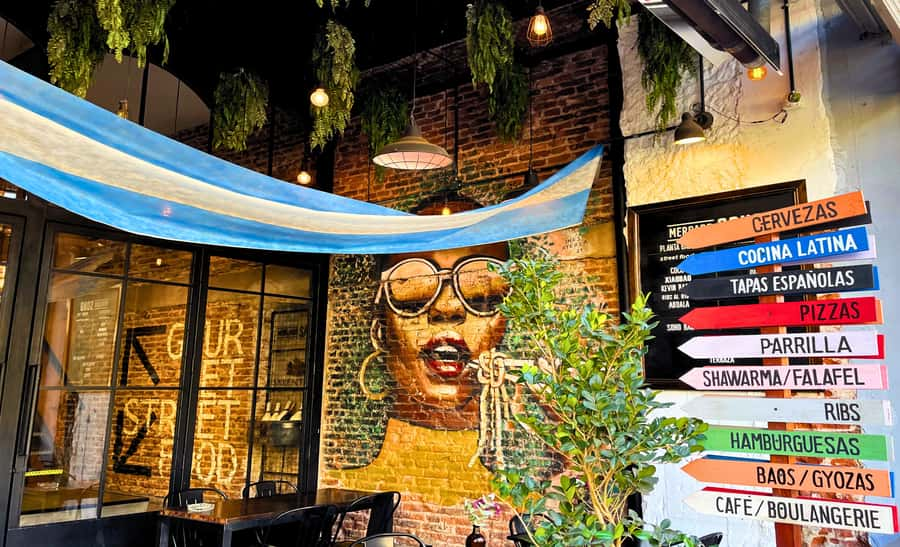
At $95 per person, this is not the cheapest way to eat in Buenos Aires. You could certainly find individual empanadas, choripán, steak, and sweets for less if you planned the stops yourself.
The value comes from the combination. You receive a local English-speaking guide, a three-hour route, food at several stops, water, Basque cider, and yerba mate. The menu includes a secret dish, cheesecake, special empanadas, steak with chimichurri, award-winning choripán, and handmade alfajores.
I would consider the price reasonable if you want an organized introduction to Argentine food and prefer not to research restaurants in advance. It is also useful at the start of a Buenos Aires stay because the guide can point you toward additional places to eat. Iago, in particular, has been praised for giving useful recommendations for the rest of a visit.
The value is weaker if you already know Palermo well, have strong dietary limits, or mainly want one long steakhouse meal. The route and menu can change, and no hotel pickup or drop-off is included. You must make your own way to Julián Álvarez 1998 and return from the same point at the end.
Who will get the most from this walk
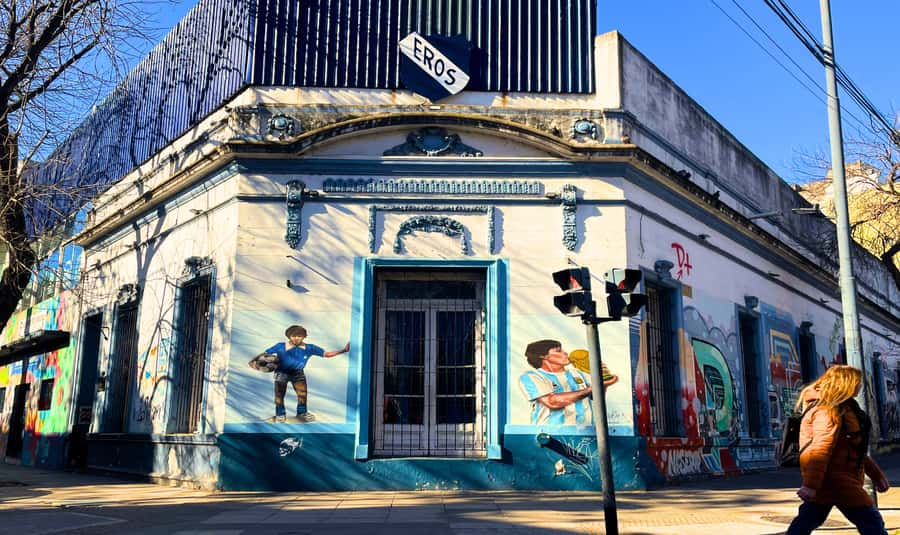
I would choose this tour for a first or early visit to Buenos Aires. You get a broad introduction to food, Palermo, immigration, public memory, and Argentine social customs without committing to a full day.
It also suits solo visitors and couples who like a small group. With a maximum of 10 participants, the format is more personal than a large bus outing, though the experience still depends on the group’s pace and the guide’s style.
Food-focused visitors will appreciate the range. You move from Indigenous traditions to Italian influence, then to parrilla, choripán, alfajores, cider, and mate. That is a useful cross-section of Argentine tastes in one afternoon or evening.
You may want to skip it if you need a guaranteed menu, a private group, or a fully scheduled route with no substitutions. Special dietary needs must be checked before booking, and the provider does not promise that every request can be accommodated.
Free cancellation is available up to 24 hours before the activity for a full refund. You can also reserve now and pay later, which is helpful if your Buenos Aires plans are still shifting.
Should you book the Secret Food Tour Buenos Aires?
Book it if you want a guided first taste of Palermo rather than a simple list of restaurant addresses. The strongest reasons are the small group, the local guide, the steak with chimichurri, the celebrated choripán, and the way food is tied to Argentina’s Indigenous, Italian, and political stories.
I would especially recommend it near the beginning of your stay. You will leave with a better sense of which foods to seek out and may get useful city suggestions from the guide.
Skip it if you want complete control over every dish or need strict dietary certainty. For most visitors who value local context as much as eating, though, the $95 fee buys a well-rounded introduction to Buenos Aires, with enough food to make the walk feel like a meal and enough history to make Palermo feel like more than a dining district.
FAQ
Where does the Secret Food Tour Buenos Aires begin?
The tour begins in front of the main entrance of 1810 Cocina Regional Palermo at Julián Álvarez 1998, C1425DHB, Ciudad Autónoma de Buenos Aires.
How do I identify the guide?
Your guide will have an orange umbrella and a big smile.
How long does the tour last?
The advertised duration is three hours. It can occasionally run 15 to 30 minutes longer.
What language is the tour conducted in?
The live tour guide speaks English.
How large is the group?
The tour is limited to 10 participants.
Which neighborhoods does the route visit?
The route takes place in Palermo and includes Palermo Soho, Old Palermo, and the area around Plaza Inmigrantes de Armenia.
What food and drinks are included?
The inclusions are Argentinean cheesecake, special empanadas, fire-grilled steak with chimichurri, award-winning choripán, handmade alfajores, a secret dish, water, Basque cider, and yerba mate.
Is hotel pickup included?
No. Hotel pickup and drop-off are not included. You need to reach the meeting point yourself.
Can the tour accommodate dietary needs?
You should contact the provider before booking to ask if your dietary needs can be accommodated. The menu and itinerary may change depending on location availability, weather, and other circumstances.
Just added in Buenos Aires
- Tango Show at El Querandi with optional Dinner★ 4.2 · 3 reviews
- Wine Tasting in Buenos Aires★ 4.2 · 4 reviews
- Walking Tour: Buenos Aires bookstores★ 4.3 · 12 reviews
- Velez Sarsfield Football Match★ 5.0 · 3 reviews
- Private Underground Tango Immersion★ 5.0 · 31 reviews
- Tour Buenos Aires in one day on Electric Scooters★ 5.0 · 33 reviews
- Experience The Essence of Buenos Aires in San Telmo★ 5.0 · 51 reviews
- Teatro Colon Guided Tour Admission Ticket★ 4.0 · 208 reviews
Argentine Food & Empanada Tours, compared.
Buenos Aires Food Tour: Local Dishes, Steak, Empanada & More
Read our review →
BA: Empanadas and Alfajores Cooking Experience in Palermo
Read our review →
Historical Guided Tour with Street Food & Drinks
Read our review →
Trapiche and Lunch The Enemy (Michelin) + Private transportation
Read our review →

BA Flavors Food Tour in San Telmo and Boca With Local Guide
Read our review →Browse the lists this tour appears in