
Reviewed · BUENOS AIRES NEIGHBOURHOOD TOURS
BA: Empanadas and Alfajores Cooking Experience in Palermo
The best part of this Palermo cooking experience is that it teaches Argentine food as a piece of family life, not just a list of ingredients. You’ll shape empanadas according to their fillings, make dulce de leche alfajores, and hear why these foods matter at the kitchen table. I especially like the small groups of up to 10 and the choice of meat or vegan empanadas.
I also like that the class suits families, solo visitors, and couples. Hosts such as Tomas, Valentino, Catalina, Carolina, and Thomas have been praised for their friendly instruction. One thing to keep in mind: the amount of hands-on cooking can vary, and some sessions use premade empanada shells rather than making every part from scratch.
Key points to know before booking
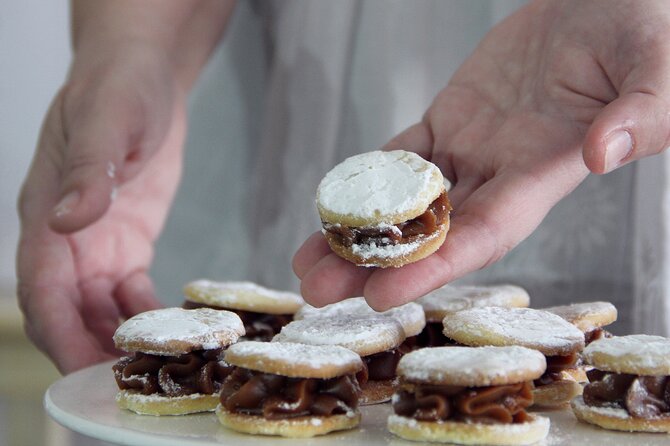
- Argentine classics on one table: Prepare savory empanadas and dulce de leche alfajores during a 2-hour-30-minute session.
- A useful vegan option: Choose a lentil-based filling instead of the meat version.
- Small enough to talk: The class accepts no more than 10 people, which helps with questions and conversation.
- Family-friendly, with one caution: Children can enjoy the shaping and decorating, but chopping may involve sharp knives.
- Mate is part of the setting: Coffee, tea, and Argentina’s famous mate infusion are included.
- Recipes help after the trip: Recipes are sent by WhatsApp, giving you a chance to recreate the food at home.
What happens at Gorriti 4882 in Palermo

You meet at Gorriti 4882 in Palermo, Buenos Aires, and finish at the same address. The location is near public transportation, so you can reach it without arranging a private transfer. Transportation is not included, but for a food class based in a central Buenos Aires neighborhood, that is rarely a serious drawback.
Allow about two and a half hours. That gives the class enough time to prepare fillings, assemble the food, bake the alfajores, and sit down to eat. It also leaves room for conversation about Argentine customs, local food, and the hosts’ own family traditions.
The room itself has been described as pleasant and clean, with cooking tools and ingredients provided. You do not need to arrive with equipment or shop for anything. Just bring an appetite and clothes that are comfortable for standing and working at a counter.
Other barrios worth walking in Buenos Aires:
- Buenos Aires: La Boca Guided Walking Tour in English
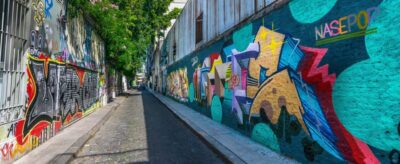
★ 4.8 · 1,587 reviews - Palermo: Graffiti and Street Art Guided Tour in English
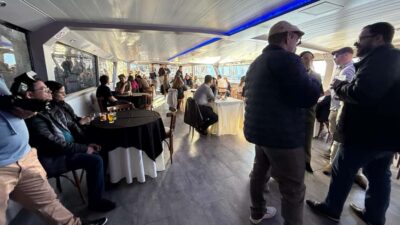
★ 4.8 · 684 reviews - Buenos Aires: Puerto Madero Sunset Cruise with Open Bar
★ 4.1 · 439 reviews
Folding empanadas the Argentine way
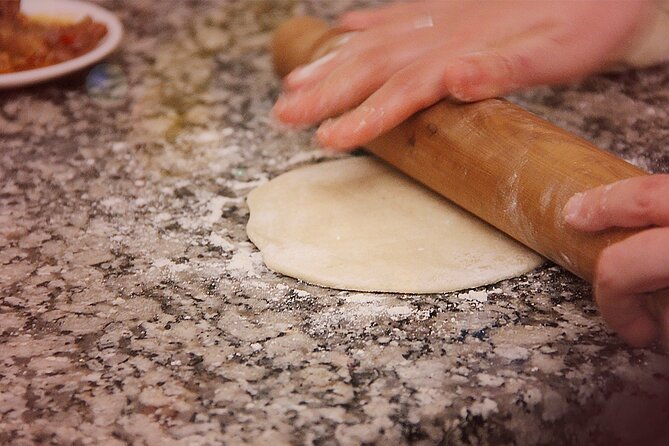
The class begins with empanadas, one of Argentina’s best-known everyday foods. The basic process may include chopping meat and vegetables, cooking the filling quickly on the stove, placing it into dough rounds, and folding the edges by hand.
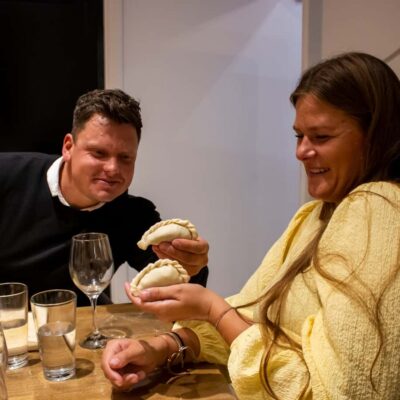
The folding is more than a bit of kitchen decoration. Different fillings can have different shapes, and the crimped edge, called a repulgue, helps identify what is inside. You may be shown a beef style and a different shape for a lentil filling. That small detail turns a simple pastry into a useful lesson in Argentine food culture.
Some sessions have used premade empanada shells, so you should not book this expecting a full pastry-making course every time. The class can still involve plenty of work, including chopping, filling, folding, and shaping, but the exact balance depends on the host and the day. If making dough from flour and fat is your main goal, ask about that before booking.
The meat option is the traditional choice offered here. The vegan option has included lentils, giving plant-based diners more than a token side dish. If your group includes different diets, that flexibility is a real advantage. You can work around the same table while preparing fillings that suit each person.
I like the way this part can teach you something useful for home cooking. You learn how much filling fits inside the dough, how firmly to seal it, and how not to overwork the pastry. Those are the details that a recipe alone does not always explain.
Dulce de leche alfajores while the filling cools
After the savory work, you turn to alfajores. These are delicate Argentine cookies joined with creamy dulce de leche. The process includes mixing, baking, filling, and finishing the cookies, often with coconut around the edges.
The cookies can be fragile, so use a light touch when adding the dulce de leche. A hard press may crack them. This is a good task for children, though younger cooks may need help with the more delicate assembly.
The timing works well because the alfajor work can continue while the empanada filling cools. You are not left watching an oven for half an hour. Instead, the class shifts from savory cooking to a sweet, hands-on project, then brings both foods together at the end.
You may shape the alfajores in different ways. That gives families and groups a little room to be creative without turning the class into a formal pastry workshop. The best result is not perfect symmetry. It is learning how a familiar Argentine treat comes together and having something fresh to eat afterward.
Mate, wine, and the cultural side of the class
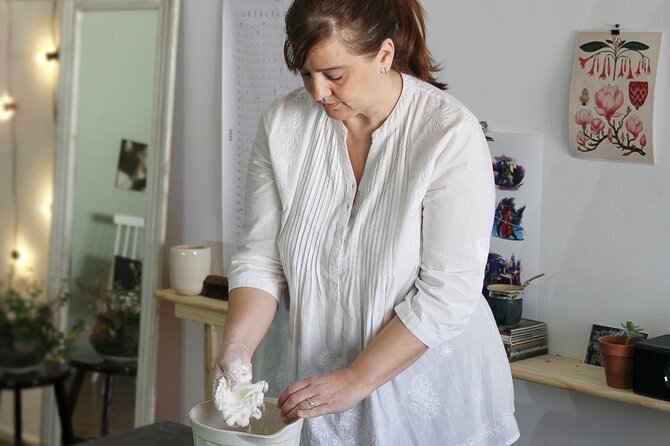
Mate is Argentina’s signature infusion, and it is included with coffee and tea. Sharing mate is a social custom, not simply a hot drink, so it adds useful context to the cooking. You get a taste of a daily Argentine ritual while working through the recipes.
Some sessions have also included wine, and several descriptions mention enjoying a glass during the cooking and meal. Wine is not listed among the standard inclusions, so do not count on it as part of every booking. One less favorable account also noted that wine was offered instead of the expected tea or coffee. If a particular drink matters to you, confirm it at the start.
The host may add stories about family kitchens, regional food, and Argentine geography. One memorable tradition connected to empanadas is the warning that children should not eat the filling while working. In some families, children were told to whistle so an adult could tell they were still busy and not sneaking bites. Details like this make the class feel personal rather than mechanical.
The hosts have varied. Tomas and Thomas have led sessions, and other visitors have worked with Valentino, Catalina, or Carolina. The strongest sessions appear to depend partly on the individual host. Some hosts offer plenty of history and practical advice, while one less successful session gave little background and few suggestions for eating around Buenos Aires.
More eating your way around Buenos Aires:
- Buenos Aires: Local Foodie Adventure with Sherpa Food Tours
★ 4.9 · 670 reviews - Buenos Aires: Empanadas and Alfajores Guided Cooking Class
★ 4.8 · 486 reviews - Buenos Aires: Empanada & Alfajor Cooking Lesson in Palermo
★ 4.6 · 186 reviews - Buenos Aires Food Tour: Local Dishes, Steak, Empanada & More
★ 5.0 · 118 reviews
How hands-on is the cooking?
This is the main point to weigh before paying. The experience is marketed as hands-on, and many sessions include chopping, stovetop cooking, rolling or handling dough, stuffing empanadas, shaping the pastries, and assembling alfajores.
Still, the class is not necessarily a professional cooking lesson where every person makes every component from the beginning. One account described the work as fairly light: chopping ingredients, quick stovetop cooking, filling premade shells, and assembling cookies from prepared biscuits. Another described making nearly everything from scratch.
That difference matters. If you want an easy cultural activity, the lighter format may be ideal. You can participate without spending the whole afternoon concentrating on knife skills and pastry technique. If you are a serious home cook, you may find the prepared components limiting.
I would treat this as a social food workshop with useful instruction, not as a demanding culinary course. You get to handle the main parts of the dishes, ask questions, eat what you make, and leave with recipes. The strongest value comes from the combination of food, stories, and people around the table.
A good choice for families, with a knife-safety note
Families with children around ages 10 and 13 have enjoyed the activity, and the format gives younger cooks several jobs. Folding empanadas and decorating alfajores are approachable tasks. Children can also try unfamiliar flavors in a relaxed setting, rather than facing a full restaurant portion with no context.
Chopping is the one part that needs attention. Sharp knives may be used for meat and vegetables, so children will need close help. Parents should expect to supervise rather than hand over every step. If your children prefer baking to savory prep, the alfajores may be their favorite section.
The small group helps here. With no more than 10 people, the host has a better chance to answer questions and guide beginners. It also gives families a way to meet other people without the pressure of a large organized tour.
Solo visitors can enjoy it for the same reason. The class creates an easy setting for conversation, and the cooking gives you something to do while you meet others. Couples also get a shared activity that is more memorable than simply ordering empanadas at dinner.
What the $49 price includes
At $49 per person, the cost covers the empanada ingredients, alfajor ingredients, cooking tools, and a professional native host. Coffee, tea, and mate are included. You also get the food you prepare, which turns the class into both an activity and a meal.
I consider that fair value if you want more than a demonstration. You are paying for instruction, a small group, ingredients, a central Buenos Aires meeting point, and cultural conversation. The recipes sent by WhatsApp add practical value after you return home.
The price is less attractive if you want a serious pastry course or a large meal with a wide range of dishes. You make two main specialties, not a full menu. Wine may appear in some sessions, but it is not a guaranteed inclusion, and tips and transportation cost extra.
The class has been booked an average of 37 days ahead, so planning early is sensible, particularly for a family or a specific date. Confirmation is provided at booking. Free cancellation is available until 24 hours before the start time. A cancellation or change made inside that window is not refundable.
What could go wrong?
The high overall rating, 4.9 from 112 ratings, and 96 percent recommendation rate suggest that most bookings go well. Still, the lower scores point to a few things you should understand before booking.
The largest concern is inconsistent instruction. One person may lead a lively, detailed class, while another may let one participant do most of the work. Some sessions have offered plain-tasting food, and one account found both the empanadas and alfajores lacking flavor. Another raised concerns about using large amounts of sunflower oil.
There was also a serious scheduling complaint involving a late time change and cancellation. The booking terms allow a full refund when you cancel at least 24 hours ahead, but an operator cancellation can still create a practical problem if you have a tight itinerary. I would avoid placing this class immediately before an important flight or timed attraction.
These issues do not erase the good reasons to go. They simply mean you should set the right expectations. This is a small, informal experience, and the host shapes much of the day. You are choosing a personal food activity, not a standardized school with identical instruction at every sitting.
Who will enjoy this Palermo food experience most?
I would recommend it to you if you want to understand Buenos Aires through food, enjoy meeting people, or need a relaxed activity after a long flight. It works especially well for families with older children, couples, solo visitors, and groups with both meat eaters and vegans.
It also suits anyone who wants to recreate the dishes at home. The folding techniques, filling ideas, and alfajor assembly are simple enough to remember, and the recipes sent by WhatsApp give you a useful reference.
You may want another type of class if you are mainly interested in making dough from scratch, learning advanced pastry work, or receiving a tightly standardized lesson. You should also ask about the current host and exact cooking format if the amount of hands-on work matters to you.
Should you book it?
Yes, if you want a friendly, food-centered look at Argentine culture rather than a formal cooking school. The best reasons to book are the small group, the vegan choice, the family-friendly tasks, the mate, and the chance to eat empanadas and alfajores that you helped prepare.
Go in expecting a guided workshop, not an advanced course. Ask how much dough preparation will be done from scratch, confirm which drinks are included, and keep children close during chopping. With those expectations, this is a practical and tasty way to spend an afternoon in Palermo, and the recipes give the experience a life beyond Buenos Aires.
FAQ
Where does the cooking experience begin?
It begins at Gorriti 4882, C1414BJN, in Buenos Aires. The activity ends back at the same meeting point.
How long does the class last?
The experience lasts approximately 2 hours and 30 minutes.
How many people can join the class?
The maximum group size is 10 people.
Are vegan empanadas available?
Yes. You can choose between meat and vegan empanada options. A lentil filling has been used for the vegan version.
What food will I prepare?
You will prepare Argentine empanadas and dulce de leche alfajores. The work can include preparing fillings, assembling and shaping empanadas, and mixing, baking, and filling the alfajores.
Are drinks included?
Coffee, tea, and mate are included. Wine has been offered during some sessions, but it is not listed as a standard inclusion.
What is the cancellation policy?
You can cancel at least 24 hours before the local start time for a full refund. Cancellations or changes made less than 24 hours before the start time are not accepted for a refund.
More Cooking Classes in Buenos Aires
- Argentinian Empanadas Cooking Experience in Palermo, Bs As
★ 4.8 · 50 reviews - Premium Empanadas Cooking Class & Wine Tasting Experience
★ 4.9 · 35 reviews - 3h Cooking Class in Mendoza with 7 Recipes & Bottomless Drinks
★ 5.0 · 125 reviews
Just added in Buenos Aires
- Premium Empanadas Cooking Class & Wine Tasting Experience★ 4.9 · 35 reviews
- Buenos Aires: Small-Group Wine Tasting★ 4.8 · 18 reviews
- Buenos Aires: Speakeasy & Mixology Bar Tour with Cocktails★ 5.0 · 5 reviews
- Buenos Aires: Rojo Tango Show with Optional Dinner★ 3.4 · 3 reviews
- Buenos Aires: Santa Susana Ranch Day Tour, BBQ & Shows★ 4.6 · 32 reviews
- Buenos Aires:Small Group Tour AM & Sunset Open Bar Cruise PM★ 4.5 · 15 reviews
- Buenos Aires: Private Photo Tour for Ammateur Photographers★ 4.9 · 5 reviews
- Buenos Aires: Private Recoleta Cemetery Walking Guided Tour★ 4.6 · 13 reviews
Buenos Aires Neighbourhood Tours, compared.
Buenos Aires Bike Tour: North Districts, Recoleta and Palermo
Read our review →
Historical Guided Tour with Street Food & Drinks
Read our review →Browse the lists this tour appears in