
Reviewed · COOKING CLASSES
Pachamama – Argentine Cooking Experience in Buenos Aires
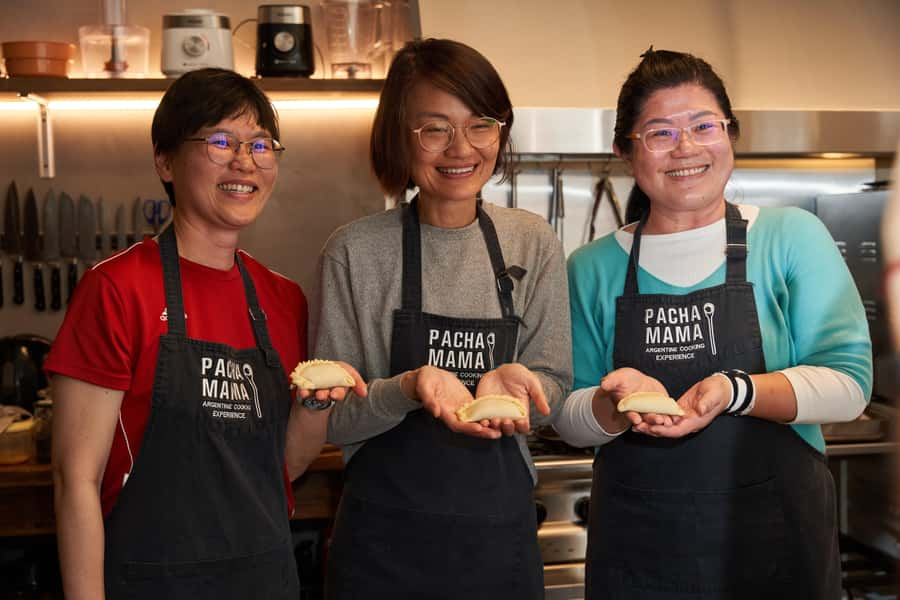
Pachamama turns Argentine cooking into a shared table rather than a demonstration. You help prepare chipá, empanadas, humita, and dulce de leche crepes, then eat the full meal with Mendoza wine in a small, homey setting. Franco and his team lead the class in English and explain the stories behind the food.
I especially like the hands-on format and the generous menu, which includes a welcome picada, five paired wine servings, vermouth, lemonade, and homemade limoncello. The main thing to consider is that you work as a group, not always by preparing every dish alone, and the advertised duration varies between three and three and a half hours.
Key points at a glance
- Cook four Argentine recipes from scratch: Help make chipá, beef empanadas, humita stew, and flamed dulce de leche crepes.
- Start with a local welcome: A homemade picada, pickles, preserves, bread, and a vermouth cocktail set the tone.
- Taste Mendoza wines with the meal: Durigutti wines from Las Compuertas accompany the food.
- Learn food culture as you cook: Mate, chimichurri, regional spices, and the origins of Argentine dishes are part of the conversation.
- Small, social setting: The experience is limited to 10 participants in the standard booking, with capacity for up to 14 people.
- Useful extras included: You receive recipes by QR code, class photos, and Buenos Aires recommendations.
Why Pachamama feels like more than a cooking class
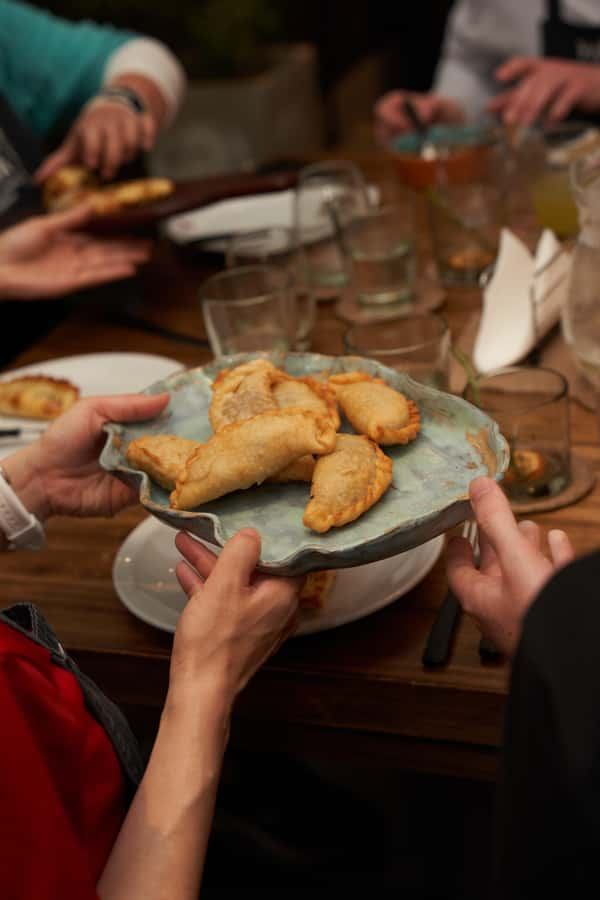
Many cooking classes give you a recipe, a quick taste, and a polite goodbye. Pachamama aims for a full Argentine meal shared around one table. That difference matters. You are not simply learning how to fold an empanada. You are learning how food fits into local customs, family meals, and long conversations over wine.
The setting is described as cozy and homey, which suits the format. This is a social experience built around participation. You roll up your sleeves, take turns with preparation, listen to the cooking explanations, and eventually sit down with the group to eat what you made.
The class is conducted in English, making it an easy choice if you want cultural context without struggling through a Spanish-language lesson. Private groups can request Spanish. Franco and the rest of the team are described as friendly, organized, and fun, so the tone should suit people who want instruction without a stiff culinary-school atmosphere.
The standard group is limited to 10 participants, though the venue can handle up to 14. That is small enough for direct contact with the instructors, but large enough to create a lively table. If you prefer a completely private lesson or want to prepare every dish independently, ask about a private booking before you reserve.
A few more things to do in Buenos Aires worth a look
- Buenos Aires: Empanadas and Alfajores Guided Cooking Class
★ 4.8 · 486 reviews - Buenos Aires: Empanada & Alfajor Cooking Lesson in Palermo
★ 4.6 · 186 reviews - BA: Empanadas and Alfajores Cooking Experience in Palermo
★ 5.0 · 112 reviews
Beginning with picada, vermouth, and Argentine food culture
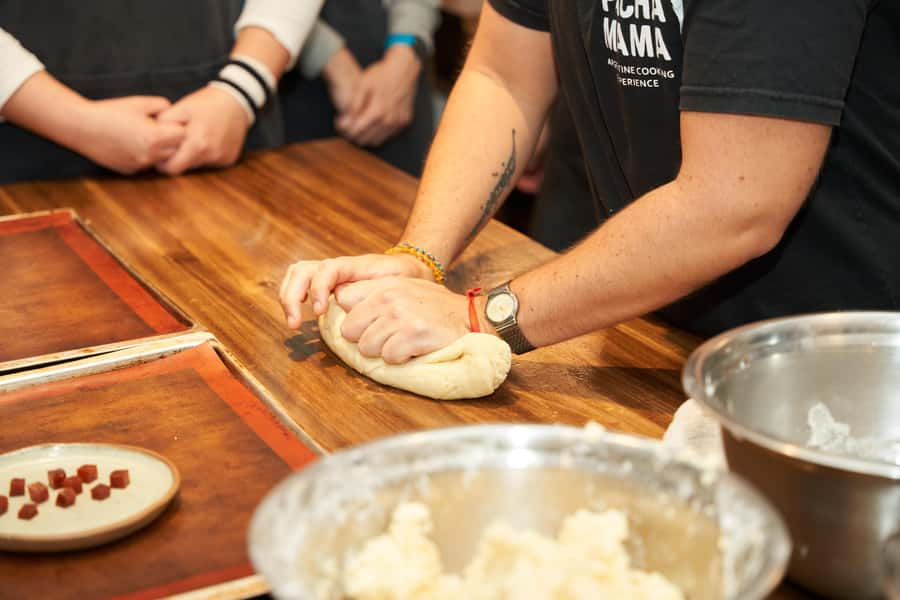
The experience opens with a homemade picada. Think of this as a relaxed Argentine spread rather than a formal first course. You can expect local bread, homemade preserves, pickles, and a vermouth cocktail while the team introduces the history and character of Argentine cuisine.
This opening is useful because it gives you a taste of the country before you begin cooking. It also places the recipes in context. The class may cover mate, chimichurri, regional spices, and the customs connected with eating together. Those details help explain why the dishes matter instead of treating them as disconnected recipes.
The vermouth is a fitting start. In Argentina, drinks and small bites often set the pace for a meal, and the class uses that relaxed rhythm well. You are eased into the evening rather than rushed straight to a cutting board.
You should arrive ready to participate from the start. The food and drink are part of the experience, but the point is not simply to be served. Pachamama works best for people who enjoy conversation, shared tasks, and trying unfamiliar flavors.
Chipá and the first taste of regional cooking
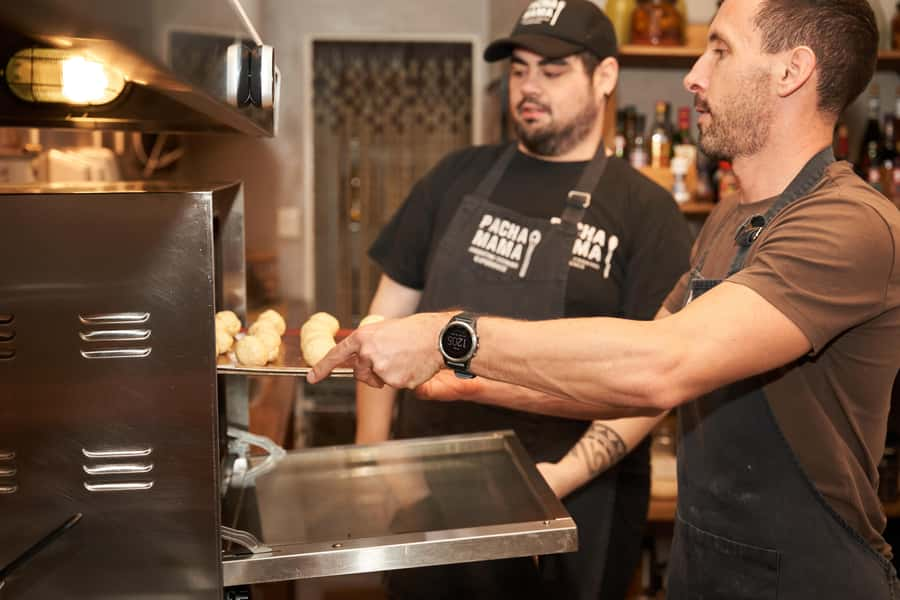
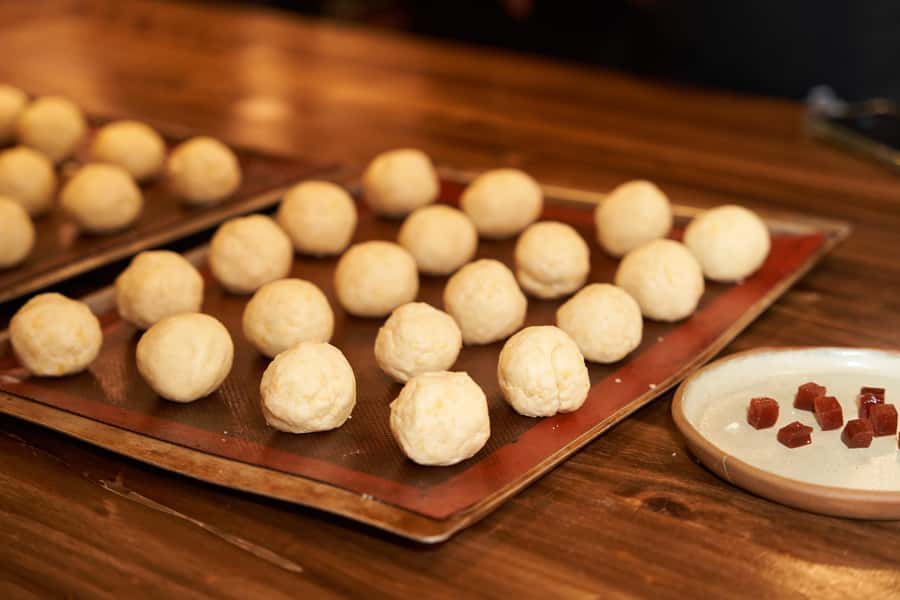
One of the first prepared dishes is chipá, a small cheese bread associated with northeastern South American cooking. At Pachamama, it comes with barbecue sauce and a fermented spicy sauce.
This is a good example of how the class mixes familiar Argentine flavors with less expected combinations. The chipá offers a warm, savory bite, while the sauces add sweetness, smoke, and heat. If you are curious about local food beyond steak and Malbec, this kind of dish broadens the picture.
The fermented spicy sauce may be especially interesting if you like condiments with a sharper edge. The supplied details do not specify its level of heat, so expect a regional accent rather than a guaranteed chili challenge.
The cooking is collaborative. You may not personally complete every step from beginning to end, but you will take part in preparing the dishes. One practical point is worth knowing: this is not a private workstation format where each participant makes an entire plate alone. The group shares the work, which makes the class more social but gives you less individual control.
Beef empanadas and the case for chimichurri
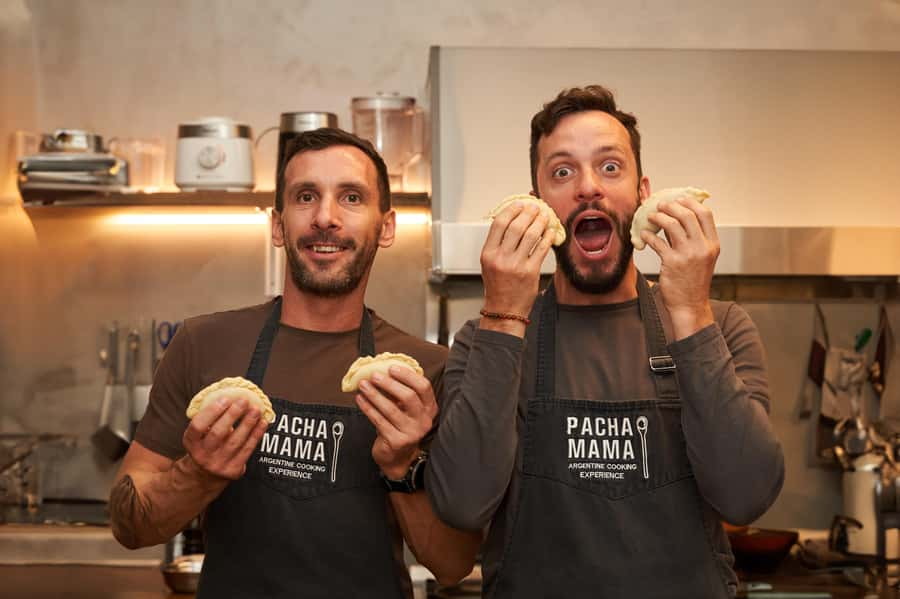
The beef empanadas are one of the clearest introductions to Argentine home cooking. You help prepare the filling and the dough, then serve the empanadas with chimichurri.
Empanadas are valuable to learn because they are both everyday food and a source of regional identity. The class discusses the origin and history of the recipes, so you get more than a folding technique. You also gain a sense of why these pastries appear so often in Argentine meals and gatherings.
Chimichurri gives the empanadas a bright, herby contrast. It is one of Argentina’s best-known sauces, often associated with grilled meat, but it also works with pastry and other savory foods. Learning its flavor profile here can help you recognize it on restaurant tables during the rest of your Buenos Aires stay.
I like that the menu includes both cooking and seasoning. A class that teaches only the main dish can leave you with a narrow idea of the cuisine. Here, the sauces, pickles, preserves, and bread help show how Argentine meals are built through contrasts.
Same base, a different kind of day out:
- Buenos Aires Hop-On Hop-Off Bus, Free Walking Tours & Discounts
★ 4.5 · 2,218 reviews - Buenos Aires: Piazzolla Tango Show with Optional Dinner
★ 4.4 · 2,122 reviews - Buenos Aires: City Highlights Guided Tour with Transfer
★ 4.7 · 1,946 reviews - Buenos Aires: Hop-On Hop-Off City Bus Tour
★ 4.2 · 1,855 reviews
Humita stew brings corn to the table
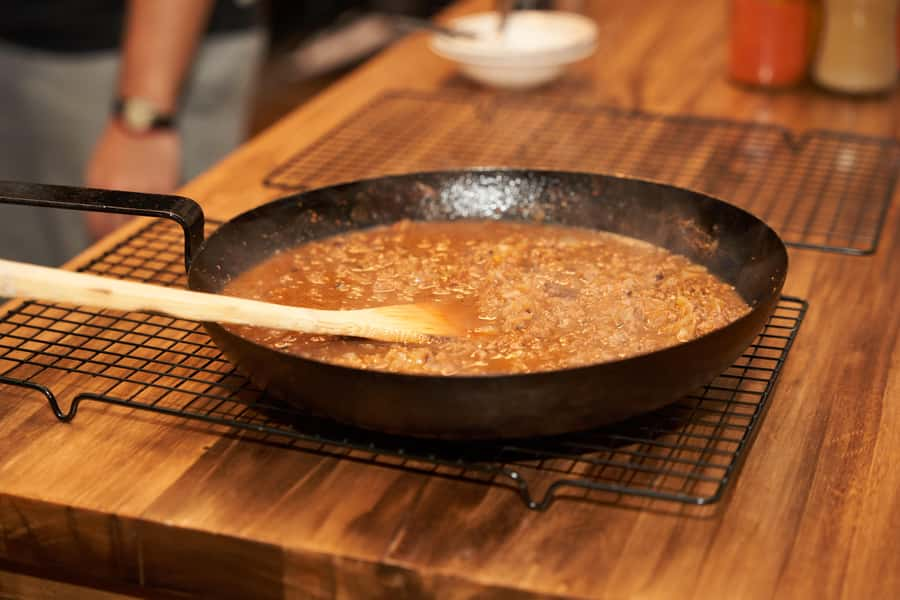
The menu continues with humita stew gratin. Humita is a corn-based dish with strong roots in the Andean region, and it adds a different texture and flavor to a meal that might otherwise be dominated by beef and pastry.
Its inclusion is one of the strongest parts of the menu. It shows that Argentine cuisine is not just grilled meat, pizza, and empanadas. Corn, regional produce, creamy textures, and baked dishes also belong to the national food story.
Because the recipes are prepared as a group, the instructors can explain the dish while several people work on it. This helps keep the class moving and gives you a chance to see how separate preparations come together into one meal.
The menu can be adapted for vegetarian, gluten-free, and lactose-free diets. You should identify your needs when booking or before the class, since the kitchen needs to plan substitutions. The available information confirms that these adaptations are possible, but it does not list the exact replacement ingredients.
Flamed dulce de leche crepes to finish
Dessert is flamed dulce de leche crepes with ice cream and homemade limoncello. Dulce de leche is central to Argentine sweets, so this is a fitting finish and a useful introduction to one of the country’s signature flavors.
The flaming step adds a bit of theater, but the real appeal is the balance of warm crepes, caramel-like dulce de leche, cold ice cream, and citrusy limoncello. You help prepare the dessert, then watch the final presentation before sitting down to eat.
The homemade limoncello is included with the dessert course rather than treated as a separate bar stop. That detail makes the menu feel carefully planned. You get a progression from snacks and savory food to a sweet ending, with drinks matched along the way.
Keep in mind that this is a substantial meal. The opening picada, chipá, empanadas, humita, crepes, wine, and other drinks add up. I would not schedule a large dinner immediately afterward.
Five steps, four recipes, and what you actually eat
The experience is described as a five-step menu, while the cooking portion focuses on four main recipes. The practical breakdown is:
- A welcome picada with bread, preserves, and pickles
- A vermouth cocktail
- Chipá with barbecue sauce and fermented spicy sauce
- Beef empanadas with chimichurri
- Humita stew gratin
- Flamed dulce de leche crepes with ice cream
- Durigutti wines, water, homemade lemonade, and limoncello
The wording can sound slightly confusing because the class is also described as a four-course local menu, including a snack, appetizer, main course, and dessert. In practice, you should expect several stages of food rather than exactly four individual plates.
The wine pairing comes from Durigutti, a Mendoza producer, with the wines identified as coming from Las Compuertas. This is a meaningful addition at a $75 price, since you are paying for instruction, a full meal, multiple drinks, recipes, photographs, and a small-group setting rather than just a two-hour lesson.
The wine is not an optional extra that quietly increases the final bill. Vermouth, water, homemade lemonade, and the listed wines are included. If you do not drink alcohol, the food and nonalcoholic options still make the class workable, though the supplied details do not specify a separate nonalcoholic pairing.
How the group format shapes the experience
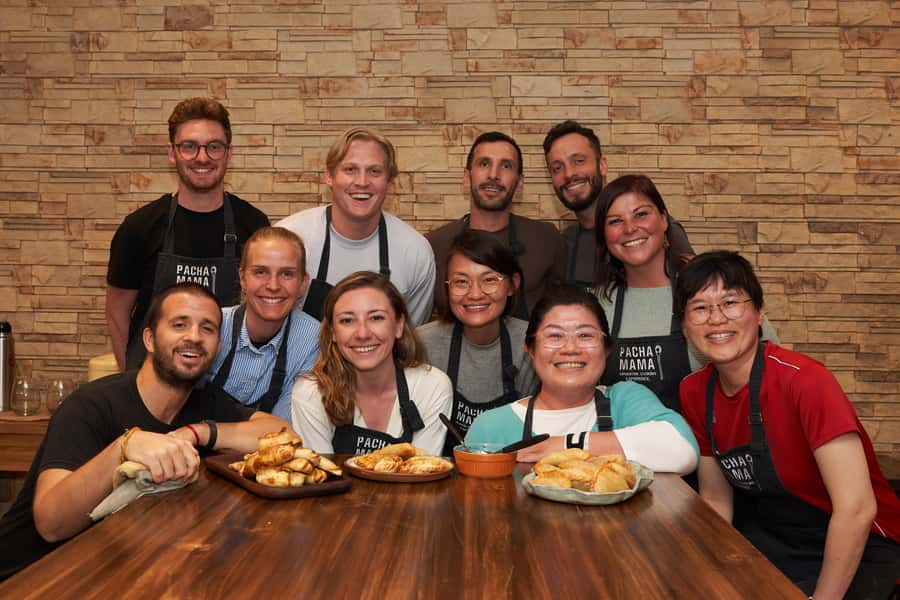
Pachamama is best understood as a collaborative cooking table. You will participate, but you may not prepare each dish entirely by yourself. One participant specifically noted that the group effort was the only minor limitation, while still finding the class highly enjoyable.
That format has clear advantages. You meet people from different countries, share jobs in the kitchen, and sit down together at the end. It also allows the instructors to keep the class organized and complete a fairly ambitious menu within a few hours.
The tradeoff is practice time. If your main goal is to master every technique independently, a private class would suit you better. If your goal is to learn Argentine food, eat well, and enjoy an easy social afternoon, the shared work is likely a plus.
The experience receives a 5 out of 5 rating based on 20 ratings, with especially strong praise for the organization, food, friendly instruction, and social atmosphere. That pattern matches the design of the class: it is carefully structured but still relaxed.
Timing, location, and practical planning
The experience takes place in Buenos Aires Province, with no hotel pickup or drop-off. You need to arrange your own transportation to the cooking location. Since the exact meeting point and starting time are not included in the supplied details, check those carefully before booking.
The listed duration is three hours, while the full description calls it a three-and-a-half-hour experience. Private groups can adapt the format to two and a half hours. I would plan for at least three hours and leave extra space afterward rather than scheduling another fixed activity immediately.
The class is wheelchair accessible. Standard sessions are conducted in English, and private groups can request Spanish. The booking information refers to a small group of up to 10 participants, while the venue capacity is listed as up to 14, so confirm the group size for your chosen date if that matters to you.
Free cancellation is available up to 24 hours before the start time for a full refund. You can also reserve now and pay later, which is useful if your Buenos Aires schedule is still changing.
Is $75 a fair price?
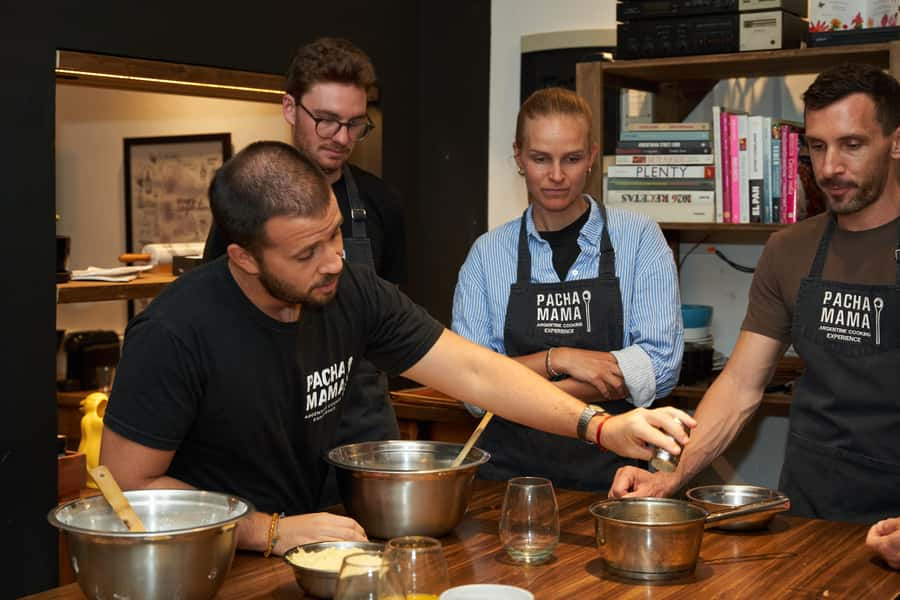
At $75 per person, Pachamama is not the cheapest way to eat in Buenos Aires. You can find a fine local meal for less, especially if you skip the instruction and wine. But the comparison is not really restaurant meal versus restaurant meal.
Your fee covers the cooking lesson, the welcome picada, a multi-course menu, Durigutti wines, vermouth, lemonade, water, limoncello, recipes, class photographs, and city recommendations. It also covers the time and organization needed to prepare four recipes in a small group.
The value is strongest if you want an activity that combines food, culture, and conversation. It is less compelling if you only want a quick meal or already have several food-focused events planned. The meal itself is generous, and the wine pairing adds real value for people who want to understand Argentine food and drink together.
I also like the practical extras. A PDF recipe book sent by QR code means you can try the dishes later, and the Buenos Aires recommendations may help you choose restaurants or neighborhoods after class. Those are small additions, but they extend the experience beyond the afternoon.
Who should book Pachamama?
I would recommend it to couples, solo visitors, and small groups who enjoy meeting people through food. It is also a good choice for anyone visiting Buenos Aires who wants an introduction to Argentine cuisine without committing to a formal fine-dining event.
Vegetarians and people with gluten or lactose restrictions can request adaptations, which makes the class more flexible than a fixed restaurant menu. You should communicate your needs in advance rather than waiting until you arrive.
Families and younger participants may enjoy the hands-on work, but the supplied information does not give a minimum age. Ask before booking if children are part of your plans.
I would hesitate only if you dislike group activities, avoid alcohol entirely, or want to cook every dish alone. The class is designed around cooperation, conversation, and a shared meal. That is its strength, but it may not match someone looking for a technical private lesson.
Should you book this Argentine cooking experience?
Book Pachamama if you want to understand Argentina through its food and spend an afternoon doing more than watching a chef work. The combination of chipá, empanadas, humita, dulce de leche, chimichurri, Mendoza wine, and local stories gives you a broad introduction in one sitting.
The main caution is simple: expect group cooking rather than four individual recipe stations, and allow three to three and a half hours. For $75, the class offers a full meal, several drinks, instruction, recipes, photos, and a friendly social setting. That makes it a solid choice for food-focused visitors who value participation over a quick sightseeing stop.
FAQ
How long does the Pachamama cooking experience last?
The booking information lists a three-hour duration, while the full experience is described as three and a half hours. Private groups can adapt the class to two and a half hours.
What food will I prepare?
You will help prepare chipá with barbecue sauce and fermented spicy sauce, beef empanadas with chimichurri, humita stew gratin, and flamed dulce de leche crepes with ice cream.
What other food and drinks are included?
The experience begins with a picada containing homemade preserves, pickles, and local bread. Vermouth, water, homemade lemonade, Durigutti wines from Las Compuertas, and homemade limoncello are also included.
Is the class taught in English?
Yes. The standard experience is given in English. Private groups can request a Spanish-language class.
Can the menu accommodate dietary restrictions?
The menu can be adapted for vegetarian, gluten-free, and lactose-free diets. Provide your requirements when booking so the team can prepare suitable adaptations.
Is hotel transportation included?
No. Hotel pickup and drop-off are not included, so you need to arrange your own transportation to and from the cooking location.
Can I cancel the booking?
You can cancel up to 24 hours in advance for a full refund. The booking option also allows you to reserve now and pay later.
Just added in Buenos Aires
- Tango Show at El Querandi with optional Dinner★ 4.2 · 3 reviews
- Wine Tasting in Buenos Aires★ 4.2 · 4 reviews
- Walking Tour: Buenos Aires bookstores★ 4.3 · 12 reviews
- Velez Sarsfield Football Match★ 5.0 · 3 reviews
- Private Underground Tango Immersion★ 5.0 · 31 reviews
- Tour Buenos Aires in one day on Electric Scooters★ 5.0 · 33 reviews
- Experience The Essence of Buenos Aires in San Telmo★ 5.0 · 51 reviews
- Teatro Colon Guided Tour Admission Ticket★ 4.0 · 208 reviews
Cooking Classes, compared.
3h Cooking Class in Mendoza with 7 Recipes & Bottomless Drinks
Read our review →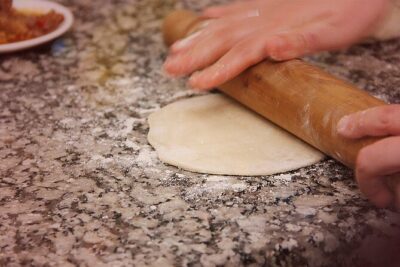
BA: Empanadas and Alfajores Cooking Experience in Palermo
Read our review →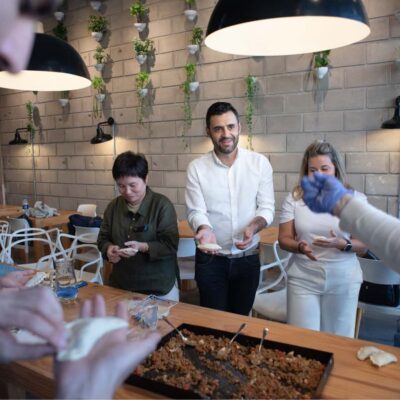
Argentinian Empanadas Cooking Experience in Palermo, Bs As
Read our review →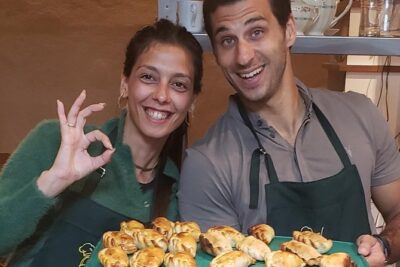
Private Argentine Cooking Class and Tango Lesson in Buenos Aires
Read our review →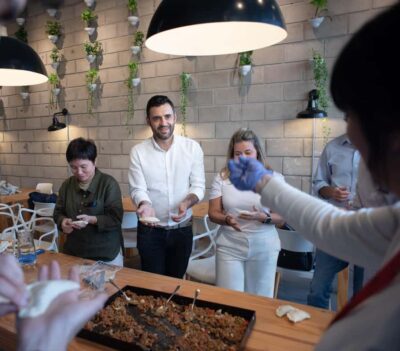
Premium Empanadas Cooking Class & Wine Tasting Experience
Read our review →Browse the lists this tour appears in