
Reviewed · TOURS IN BUENOS AIRES
Buenos Aires for curious people
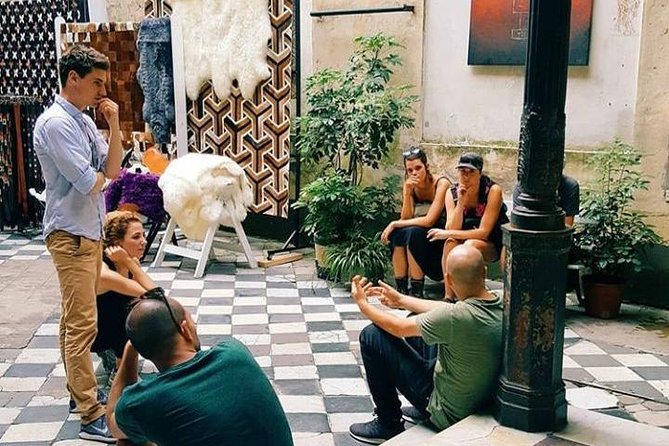
Buenos Aires reveals itself best when you ask awkward questions. This three-hour walk moves from Lezama Park to Casa Rosada while examining Indigenous roots, British ambitions, African-descendant communities, immigration, Perón, the desaparecidos, and the power of the US dollar. It is a discussion as much as a sightseeing walk.
I like the carefully chosen route, which links quiet San Telmo corners with major political landmarks. I also like the chance to ask questions instead of simply collecting dates, and guides such as Nicolás have been praised for making Argentine history clear and engaging. The main consideration is pace: with several stops, uneven city sidewalks, and a 20-minute market break, you should wear good shoes and expect a full three hours on foot.
Key points at a glance
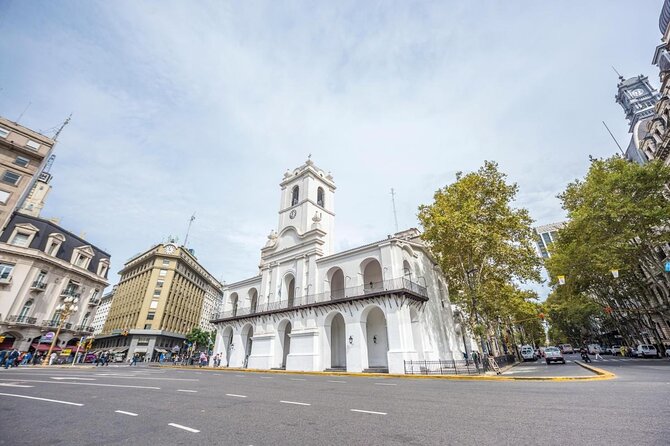
- A thoughtful route from Lezama Park to Casa Rosada: The walk connects Buenos Aires neighborhoods, memorials, churches, markets, and government buildings.
- History with room for debate: You can discuss immigration, British invasions, African-descendant communities, Perón, the disappeared, and Argentina’s currency troubles.
- Several less obvious stops: Club Atlético, the Russian Orthodox Church, Club Sueco, and the Faculty of Engineering add texture beyond the usual central sights.
- A guide-led conversation: English, Spanish, French, and Portuguese are offered, with private and small-group formats available.
- Good value at $30: For three hours of guided context and a route through some of the city’s most important districts, the price is reasonable.
- A walking tour that finishes near major sights: You end at Museo Casa Rosada, Casa Rosada, or Plaza de Mayo, making it easy to continue exploring.
Why this Buenos Aires walk feels different
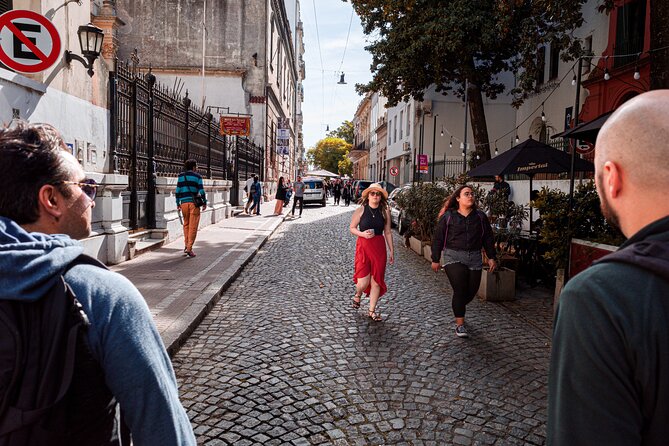
Many city walks give you a chain of buildings and dates. This one uses the streets to ask how Buenos Aires became the city you see today.
The route begins in the southern part of the historic center and works north toward Plaza de Mayo. Along the way, you examine the people who lived here first, the forces that shaped colonial Buenos Aires, the arrival of immigrants, and the political struggles that still influence daily life.
That approach matters in Argentina. A building may look elegant, but its meaning can change once you know who built it, who controlled it, and who was left out of the official story. The guide is there to connect those pieces and invite conversation.
You should not expect a formal lecture with every minute scripted. The experience is designed for questions. If you want to discuss Evita and Juan Perón, the memory of the desaparecidos, or why the dollar carries such weight in Argentina, this is the right kind of format.
A past departure led by Nicolás received especially strong praise for explaining Argentina from its basic foundations to its more unusual political and social questions. That is useful for a first visit, since Buenos Aires can otherwise feel like a collection of grand avenues, cafés, and beautiful facades without a clear explanation of how the country arrived here.
Other trips people book in Buenos Aires:
- Buenos Aires Hop-On Hop-Off Bus, Free Walking Tours & Discounts
★ 4.5 · 2,218 reviews - Buenos Aires: Piazzolla Tango Show with Optional Dinner
★ 4.4 · 2,122 reviews - Buenos Aires: City Highlights Guided Tour with Transfer
★ 4.7 · 1,946 reviews
Starting at Bar Británico and Lezama Park
You meet by Bar Británico, a well-known starting point near Parque Lezama. The bar gives the walk a natural neighborhood beginning rather than a standard meeting point beside a large monument.
At Lezama Park, the guide sets out the early story of Buenos Aires. The stop lasts about 15 minutes, enough time to discuss the first inhabitants and the city’s historical roots before moving into San Telmo.
This opening is important because it prevents the tour from treating Buenos Aires as a purely European city. The discussion begins with the people and cultures that existed before the capital took its modern form. You get a frame for understanding later Spanish influence, immigration, and changing ideas of Argentine identity.
Lezama Park is also a practical place to start. It gives you room to orient yourself before the route enters denser historic streets. Bring water, especially in warm weather, since the walk continues through several districts and open plazas.
Russian Orthodox Church and Club Sueco
The Russian Orthodox Church of the Holy Trinity is a short stop of about 10 minutes. Its presence helps show the range of communities that have shaped Buenos Aires. The guide uses the church as part of the wider discussion of immigration and the city’s changing population.
You then walk to Club Sueco Restaurante for another brief guided stop. These two locations make the route more than a parade of famous monuments. They point to the many national, religious, and cultural groups that became part of the capital.
The value here is not simply seeing an unusual church or a Scandinavian connection. It is learning to notice how migration appears in the built city. Argentina is often described as a nation of immigrants, and this part of the walk gives that idea a physical setting.
The stops are short, so you should not expect extended interior visits or a detailed architectural tour. Their purpose is to add evidence to the larger story. If your main interest is art or religious architecture, you may want more time than the schedule allows. If you want a broad social history, the pace works well.
Club Atlético and the memory of the disappeared
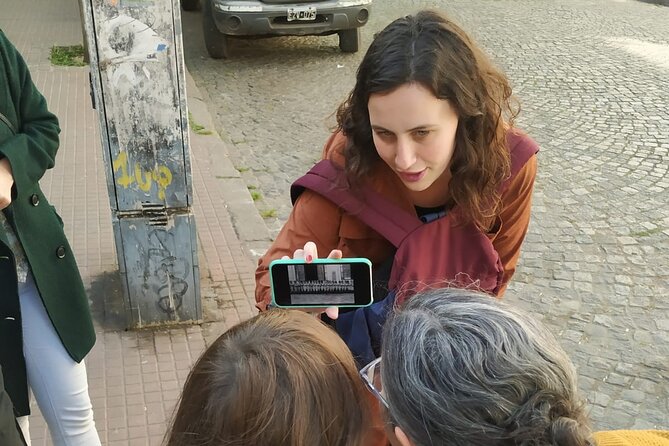
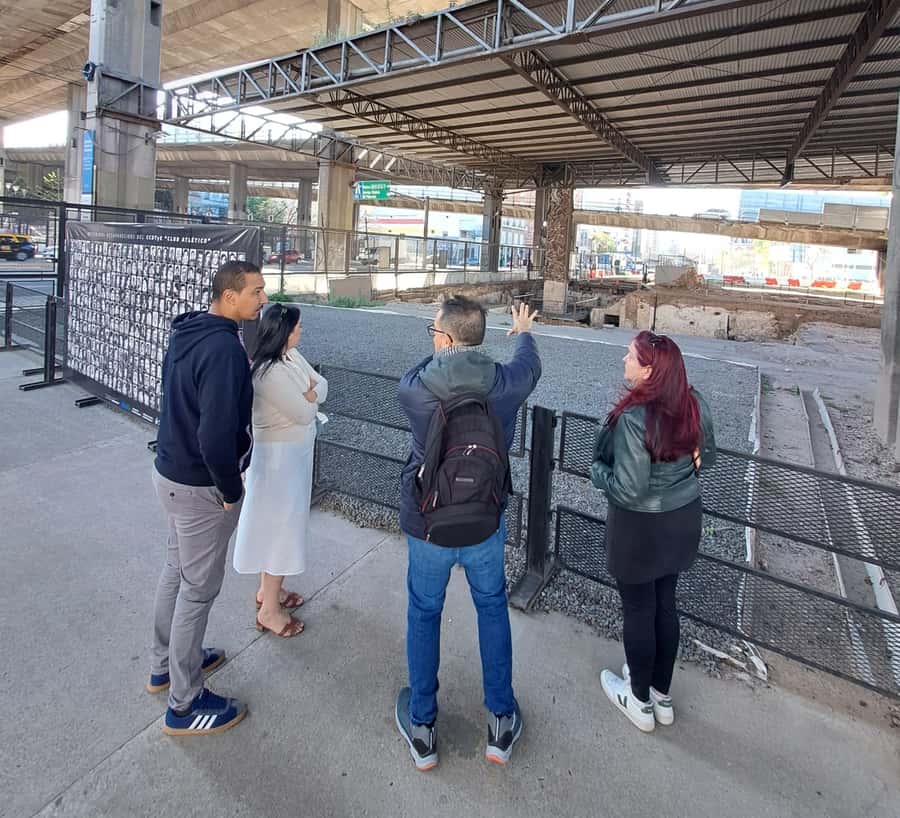
The visit to Espacio para la Memoria ex CCD Club Atlético brings the walk into Argentina’s difficult recent past. The site is connected with the memory of the desaparecidos, people who were forcibly disappeared during the country’s military dictatorship.
This is one of the most serious moments of the route. The guide discusses how that period continues to shape public memory and modern Argentina. The subject is not treated as a side note to grand buildings or famous political figures. It is part of the city’s present.
The stop lasts about 10 minutes, so expect an introduction rather than a full museum visit. Still, its inclusion is valuable. You are given a chance to think about how a city remembers state violence, and how those memories affect politics, families, and public life.
This part may feel heavy, especially early in a trip. That is not a flaw, but you should know the tone changes here. The experience is not only about picturesque streets and old churches. It asks you to consider the people and events that official city tours sometimes pass over.
Same base, a different kind of day out:
- Buenos Aires: Hop-On Hop-Off City Bus Tour
★ 4.2 · 1,855 reviews - Buenos Aires Hop-On Hop-Off Bus and Exclusive Benefits
★ 4.4 · 1,714 reviews - Buenos Aires: La Boca Guided Walking Tour in English
★ 4.8 · 1,587 reviews - Buenos Aires: La Recoleta Cemetery Guided Tour in English
★ 4.8 · 1,359 reviews
San Telmo church, Plaza Dorrego, and the market break
At the Parroquia de San Pedro González Telmo, the guide continues the walk through one of Buenos Aires’ oldest districts. The church helps anchor the conversation in San Telmo, an area closely associated with the historic center and its older urban character.
Next comes Plaza Dorrego, with about five minutes of guided discussion. This is a quick stop, so think of it as a transition rather than a long visit. The guide can connect the square to San Telmo’s public life and the neighborhood’s role in the route.
The 20-minute break at San Telmo Market is a useful change of rhythm. You can look around, take photographs, and pause before the second half. Food and drinks are not included, so budget separately if you want refreshments.
I like having this pause built into a three-hour walk. It gives you a chance to catch your breath and process the earlier discussion. The market can also be more stimulating than the quieter historical stops, with plenty to see in a limited period.
Do not assume the break is a full meal stop. Twenty minutes passes quickly, and the experience continues afterward. If you want to eat at length, plan to do so before or after the tour.
The Faculty of Engineering and the UCA
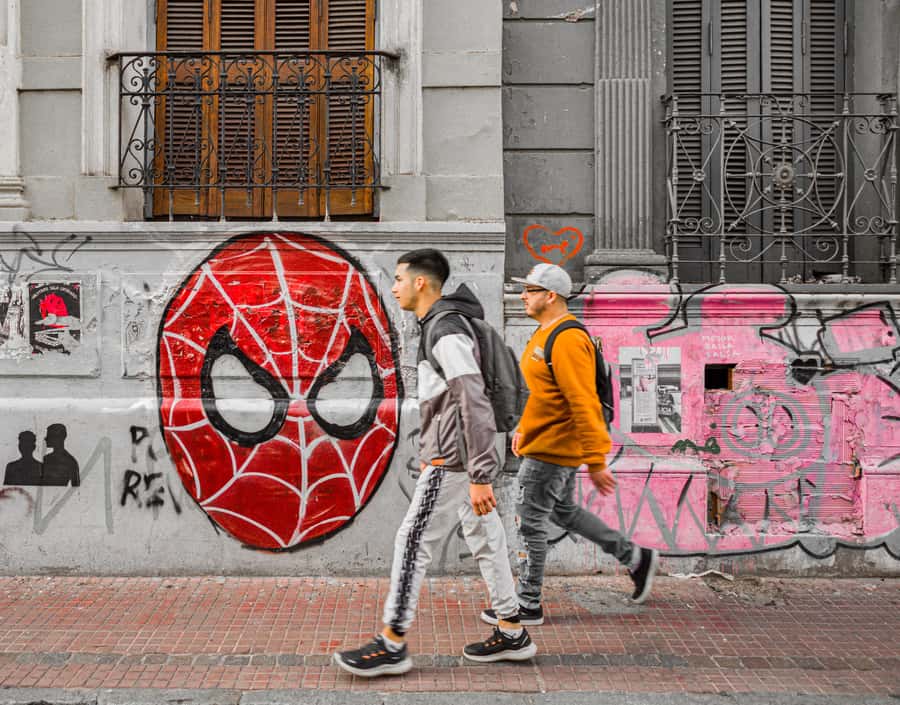
After San Telmo Market, the route continues to the Facultad de Ingeniería. The guided visit here lasts about five minutes. It is another example of how the walk uses institutions and buildings to broaden the story of Buenos Aires beyond government palaces.
The stop at UCA Santa María de los Buenos Aires lasts about 10 minutes. Together, these locations help carry the group from the historic center toward the modern political and waterfront areas.
The exact value of these shorter stops depends on your interests. Architecture fans may enjoy seeing how different institutions contribute to the city’s appearance. History-minded visitors will appreciate how the guide keeps linking buildings to Argentina’s wider social development.
You should also keep your expectations realistic. This is not a series of long indoor tours. Most of the experience happens outdoors, with the guide explaining what you are seeing and why it matters.
Puente de la Mujer and the move toward Plaza de Mayo
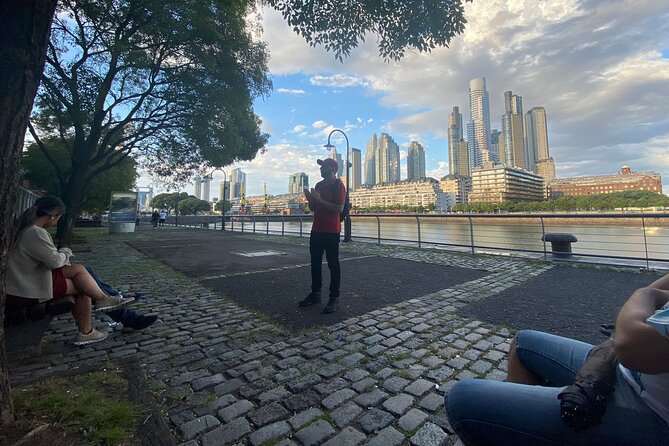
The walk reaches Puente de la Mujer for about 15 minutes of guided sightseeing. The bridge provides a strong visual change from San Telmo’s older streets and churches. Here, the route brings you into a more modern part of Buenos Aires and gives you a chance to consider how the city presents itself today.
The contrast is one of the route’s strengths. You move from early settlement and historic neighborhoods to modern public spaces, then finish among the country’s most important political landmarks. The city becomes a timeline beneath your feet.
The bridge is also a good photography stop, so have your camera ready. The tour information recommends comfortable shoes, sunscreen, and water, and those suggestions make sense. Buenos Aires weather can vary, and the route includes open areas as well as streets with frequent stops.
One practical point: a three-hour walking experience can feel longer if you are not used to city walks. The market break helps, but you should still prepare for steady movement. Wheelchair access is offered, though you may want to confirm route details in advance if specific mobility needs are important to you.
Finishing at Casa Rosada and Plaza de Mayo
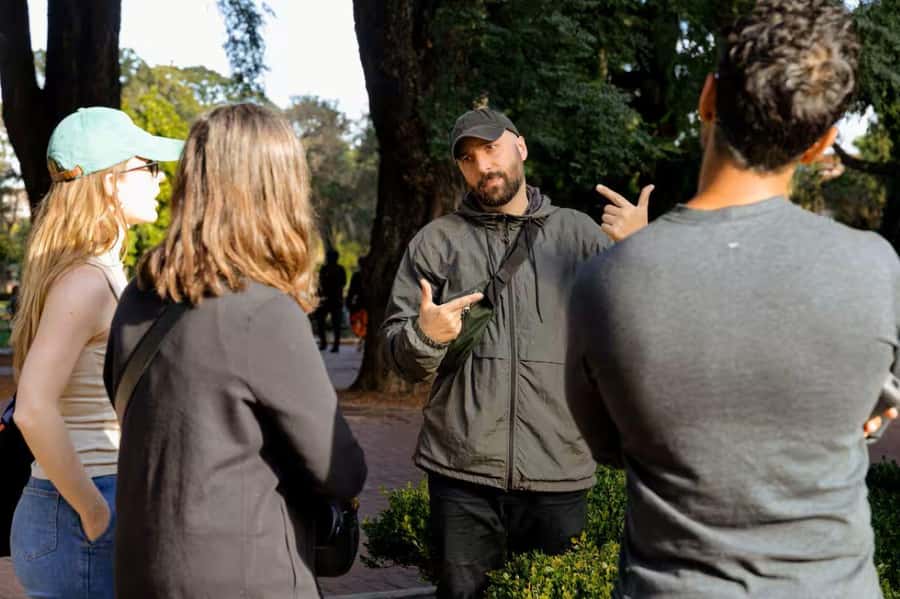
The tour concludes near Museo Casa Rosada, Casa Rosada, or Plaza de Mayo. These final points are well chosen because they put you beside the political heart of Buenos Aires.
The Casa Rosada gives the guide a natural place to discuss Argentina’s political leaders. This is where the conversation about Perón and Evita can become more concrete, since the building is closely tied to the public image of national power.
Plaza de Mayo also helps connect the past to the present. Questions about the disappeared, political memory, and the country’s changing leadership have a clear public setting here. You can continue exploring after the guide finishes, with several major sights close at hand.
The ending is especially useful if this is your first day in Buenos Aires. You finish with a better sense of how the city’s historic center fits together, rather than being dropped back at the starting point. Depending on the exact drop-off, you can visit Casa Rosada or use the square as a base for further sightseeing.
The questions that give the walk its value
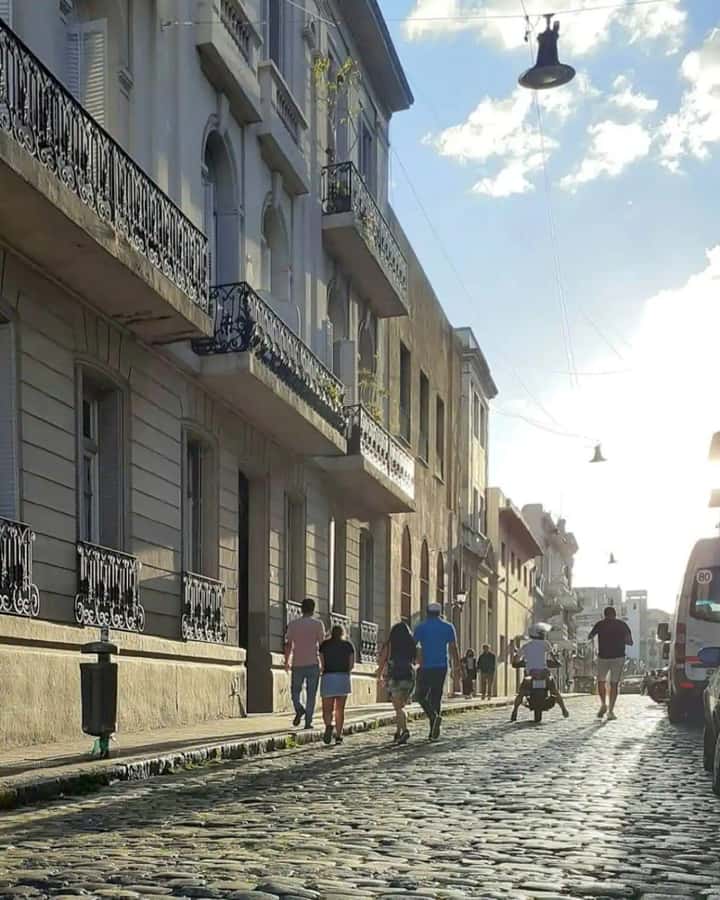
The strongest part of this experience is its range. In three hours, the discussion may move from the first inhabitants of the area to British interest in Buenos Aires, the African-descendant population, European immigration, Perón, the desaparecidos, and the role of the US dollar in Argentina’s economy.
That is a lot of ground. The benefit is breadth. You get a connected explanation of the city instead of learning isolated facts at separate monuments.
The trade-off is that no single subject receives a full academic treatment. If you want a specialist tour focused only on the military dictatorship, Peronism, architecture, or economics, this route may feel too wide. If you want a strong framework for understanding Buenos Aires and deciding what to study next, it is a better fit.
The conversational format also means you should take part. Ask what you want to know. A quiet group may move quickly through the planned route, while an active discussion can make certain stops more substantial.
Price, languages, and group size
At $30 per person, the experience offers fair value for three hours with a professional guide, historical explanation, and discussion. You are paying for interpretation and structure, not for entrance tickets, meals, or transportation.
That distinction matters. The price does not include food or drinks, and you must make your own way to Bar Británico. Still, the route covers a large section of the historic center and ends beside major landmarks, which reduces the need to organize this part of the city yourself.
Tours are offered in English, Spanish, French, and Portuguese. Private and small-group options are available, which suits people who prefer to ask plenty of questions or adjust the conversation to their interests.
The guide can make a major difference. Nicolás led at least some departures and received praise for his clear explanations and friendly approach. Another account described the experience as a private tour that finished a little early because the group was small. That can be a benefit if you value personal attention, though a smaller group may also mean less time is needed to cover every planned stop.
One review refers to a bus tour, but the stated route and timing describe a walking experience. Plan for walking, not a sightseeing bus, and confirm the departure details when booking.
Who should book this experience?
I would choose this tour if you want context before visiting Buenos Aires’ major sights. It suits first-time visitors, curious history fans, and anyone who prefers questions and conversation to a memorized script.
It is also a good choice if you want to understand Argentina’s political story. The discussion of Perón, Evita, the disappeared, and Plaza de Mayo gives you useful background for later visits to museums and government sites.
You may want another kind of tour if you mainly want food tastings, tango, nightlife, or long interior visits. This walk is serious in places, broad in subject, and focused on public history.
Wear comfortable shoes, carry water, use sunscreen, and prepare for changing weather. Bring a camera, but do not let photography distract you from the questions that give the walk its purpose.
Should you book the Buenos Aires for curious people walk?
Book it if you want a clear introduction to Buenos Aires that connects buildings with people, politics, migration, and memory. The route is well planned, the price is sensible, and the option to speak with the guide adds value that a basic audio-style walk cannot provide.
Skip it if you want a relaxed stroll with little discussion or a tour devoted to one narrow subject. For most visitors who want to understand why Buenos Aires looks and feels the way it does, this is a thoughtful three-hour starting point.
FAQ
Where does the tour begin?
The meeting point is by Bar Británico, near Parque Lezama.
Where does the tour finish?
The listed drop-off points are Museo Casa Rosada, Casa Rosada, and Plaza de Mayo.
How long does the experience last?
The walking experience lasts three hours.
How much does the tour cost?
The price is $30 per person.
Which languages are available?
Live guides are available in Spanish, French, English, and Portuguese.
Is this a private tour or a group tour?
Private and small-group options are available.
Is the tour wheelchair accessible?
Yes, the experience is listed as wheelchair accessible.
Are meals and drinks included?
No. Meals and drinks are not included, and the San Telmo Market stop includes a 20-minute break.
What should I bring?
Wear comfortable walking shoes and bring water, sunscreen, and a camera. Prepare for varying weather conditions.
Just added in Buenos Aires
- Buenos Aires: Small-Group Wine Tasting★ 4.8 · 18 reviews
- Buenos Aires: Speakeasy & Mixology Bar Tour with Cocktails★ 5.0 · 5 reviews
- Premium Empanadas Cooking Class & Wine Tasting Experience★ 4.9 · 35 reviews
- Buenos Aires: Rojo Tango Show with Optional Dinner★ 3.4 · 3 reviews
- Buenos Aires: Santa Susana Ranch Day Tour, BBQ & Shows★ 4.6 · 32 reviews
- Buenos Aires:Small Group Tour AM & Sunset Open Bar Cruise PM★ 4.5 · 15 reviews
- Buenos Aires: Private Photo Tour for Ammateur Photographers★ 4.9 · 5 reviews
- Buenos Aires: Private Recoleta Cemetery Walking Guided Tour★ 4.6 · 13 reviews
Tours in Buenos Aires, compared.


Browse the lists this tour appears in