
Reviewed · ARGENTINE FOOD & EMPANADA TOURS
Small Group Tasting to Become a Mate Expert in Buenos Aires
The most interesting part of this Buenos Aires workshop is that mate becomes more than a drink. You learn the rules of the shared ritual, how to prepare the gourd, and why the person serving it matters. Tomás, also called Tomi or Tommy, leads the session in a relaxed, friendly style.
I like two things right away: you taste several yerba blends rather than settling for one standard cup, and you get practical instruction you can use after leaving Argentina. The Argentine sweets make the tasting more welcoming, while the participation diploma gives the experience a fun finish.
The one consideration is timing. Ninety minutes is enough for a useful introduction, but not for every detail of mate’s long cultural story. If you already drink mate regularly, you may find the session most valuable for improving your brewing technique and comparing blends.
Key points to know before booking
- A hands-on mate workshop: You learn to prepare the drink, not just listen to an explanation.
- Several blends to taste: Options include traditional and flavored yerbas, with chai singled out as a favorite by one participant.
- A cultural lesson: The session covers mate’s origins, production, social meaning, and place in daily Argentine life.
- A small group setting: The maximum is 14 people, which leaves room for questions and individual help.
- Argentine sweets included: The tasting comes with typical sweets that balance mate’s strong, grassy taste.
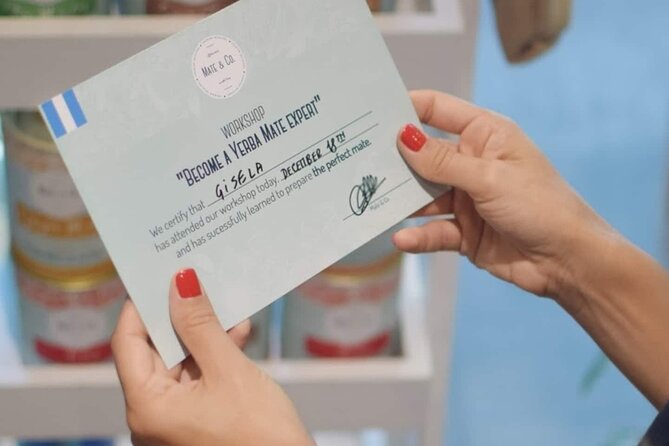
- A certificate at the end: You receive a diploma certifying your participation.
Why mate makes a smart Buenos Aires experience
You can buy mate in shops all over Argentina, but the equipment alone does not explain the ritual. The gourd, the metal straw, the loose leaves, the hot water, and the serving order all have a part to play. A short class helps you understand what you are seeing in cafés, parks, homes, and shops across Buenos Aires.
This workshop focuses on that living custom. You learn what yerba mate means, where it comes from, how it is produced, and why the drink is shared. That last point matters. Mate is not simply a local version of tea or coffee. It is also a social act, with the cebador, or person preparing and serving the mate, guiding the round.
I like this approach because it gives you a way to read the culture around you. After the class, you will recognize that passing the mate from person to person is not random. You will also understand why preparation can be treated with care, even when the setting itself is casual.
The activity is offered in a group of no more than 14 people. That is small enough for a class rather than a lecture, but it is not a private lesson. The mix can include couples, families, solo visitors, and people from several countries. That variety fits the subject well, since mate itself is built around sharing.
More eating your way around Buenos Aires:
- Buenos Aires: Local Foodie Adventure with Sherpa Food Tours
★ 4.9 · 670 reviews - Buenos Aires: Empanadas and Alfajores Guided Cooking Class
★ 4.8 · 486 reviews - Buenos Aires: Empanada & Alfajor Cooking Lesson in Palermo
★ 4.6 · 186 reviews
Starting at Matienzo 1559 in Buenos Aires
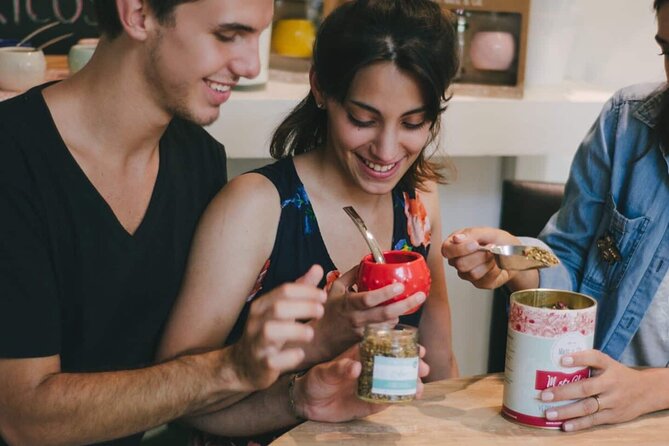
The workshop begins at Tte. Benjamín Matienzo 1559, C1426DAA, in the City of Buenos Aires. The location is near public transportation, which is useful if you are fitting the class between neighborhoods, meals, or another planned activity.
The experience ends back at the same meeting point. That makes the timing simple: you do not need to arrange a separate return transfer or guess where the class will finish. Confirmation is provided at booking, so check the meeting instructions carefully before setting out.
You should allow a little extra time to reach the address. The class itself lasts about one hour and 30 minutes, and a late arrival could mean missing the introduction to the ritual or the first tasting. Since the activity is often booked about a week ahead, it is sensible to reserve before your schedule in Buenos Aires fills up.
The service is also listed as allowing service animals. Spanish availability can be checked, which may help if you prefer instruction in Spanish or are arranging the workshop for a Spanish-speaking group.
The opening lesson: yerba mate from leaf to cup
The first section explains the drink itself. You learn the meaning and origins of yerba mate, then move through the production process and its properties. The material also covers how mate is consumed in Argentina and how its reach extends beyond the country.
That background gives the tasting some purpose. Instead of treating each blend as just another flavor, you begin to see why different yerbas can vary in character. The session introduces different types found on the market, along with the basic accessories used to prepare them.
You will hear about the mate cup, the bombilla, or metal straw, and the curing process. Curing is an important practical point for anyone who plans to buy a gourd and use it at home. It is the sort of detail that can be skipped in a casual tasting, but it affects how you look after the equipment.
The class also helps first-time drinkers get past mate’s unfamiliar appearance. The loose leaves, fine particles, and shared straw can seem strange at first. Clear instruction makes the process less intimidating, especially if you have never tasted mate or are unsure how to hold and pass the cup.
Preparing the perfect mate with Tomás
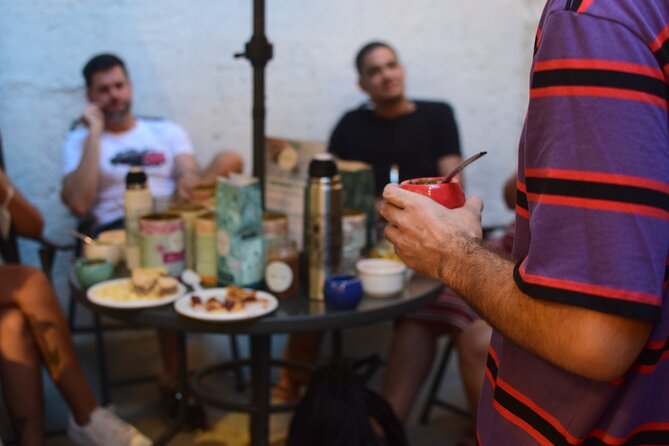
The hands-on portion is the heart of the experience. Tomás shows you how to prepare mate and explains what the cebador is doing at each stage. You are not only handed a finished drink. You learn the method and get the chance to understand why preparation matters.
The exact technique is part of the fun. Mate is not made by dumping leaves into a cup and pouring water over them without thought. The arrangement of the yerba, the position of the bombilla, and the way water is introduced all affect the result. The class gives you a foundation for repeating the process at home.
The host’s role seems especially important here. The feedback consistently describes Tomás as patient, funny, welcoming, and able to answer many questions. Different people refer to him as Tomás, Tomi, and Tommy, but these names point to the same host. He is presented as an experienced cebador with a professional background in mate.
That matters because a practical lesson works best when you can interrupt and ask why. One person may want to know about the best blend for a beginner. Another may already drink mate and want to improve technique. The small group limit gives Tomás room to involve people rather than rushing through a fixed speech.
If you already prepare mate, this section may offer more value than the basic introduction. You can compare your method with the traditional approach and pick up small corrections. If you are new to the drink, you get the confidence to try it without worrying that you will break an unwritten rule.
A few more things to do in Buenos Aires worth a look
- Buenos Aires: 9-Course Argentine Meat Tasting at Fogón Asado
★ 4.9 · 826 reviews - Buenos Aires: Wine Tasting and Lunch at Bodega Gamboa
★ 4.8 · 177 reviews - Buenos Aires Food Tour: Local Dishes, Steak, Empanada & More
★ 5.0 · 118 reviews - San Telmo: Historical Guided Tour with Street Food & Drinks
★ 5.0 · 87 reviews
Tasting traditional and flavored blends
The tasting includes several mate blends. The selection includes original and flavored options, with chai mentioned as one blend that particularly impressed a participant. The range gives you a chance to discover that mate is not one single taste.
Traditional yerba can have a strong, grassy, sometimes bitter character. That is part of its appeal, but it can surprise a first-time drinker. Flavored blends offer a gentler entry point and help you compare how added aromas change the experience.
I like the tasting format because it turns the lesson into a useful buying guide. You can identify what suits you before spending money on a large packet of yerba or taking a full mate set home. The workshop also includes information about different yerbas on the market, so the comparison has context.
The tasting is served with typical Argentine sweets. This is more than a snack. Sweet food gives your palate a break from the earthy taste of the infusion and makes the session feel social rather than technical. It also connects mate with the ordinary pleasure of sitting down, talking, and sharing food.
Do not expect a formal meal. The supplied information describes sweets, not lunch or a broad food tasting. If you need a substantial meal, eat beforehand. Think of the food as a traditional accompaniment that helps you enjoy the drink.
The mate ritual and Argentine daily life
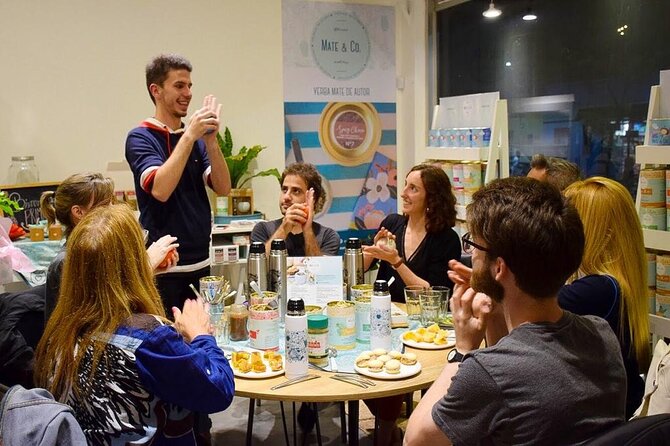
The cultural explanation is what keeps this from being a simple beverage class. You learn why mate matters in Argentine life and how the ritual works when people share it. The class places the cup and bombilla in a social setting, where preparation, serving, and conversation all belong together.
That context is useful during the rest of your stay. You may see people carrying thermoses and mate cups, sitting together in public spaces, or offering the drink to friends. Once you understand the ritual, those scenes become easier to read.
The workshop also suits people with a personal connection to Argentina. One family used the class to learn more about its heritage, and another participant planned to take the tradition home to Honduras. You do not need Argentine family ties to benefit, though. The lesson is designed for first-time drinkers as well as people who have already sampled mate.
The social side can be just as valuable as the drink itself. You meet a mixed group and take part in a shared activity that does not require advanced Spanish if the session is conducted in English. The available information confirms that Spanish can also be checked, so ask about language when booking if it is important to you.
A certificate, shop discounts, and a practical finish
At the end, you receive a diploma certifying your participation. It is not a professional qualification, but it is a cheerful reminder that you learned the basic process. For families and younger adults, the certificate adds a clear ending to the class.
The workshop also closes with discounts in the shop. This is useful if you decide to buy yerba, a mate cup, a bombilla, or another accessory after learning what each item does. The discount can improve the overall value, though the exact products and discount amount are not specified.
I would avoid arriving with the assumption that you must purchase something. The class should work as a cultural activity even if you leave with only the certificate and a better understanding of the ritual. If you do want to shop, the timing lets you make a more informed choice than you could at the start.
You may want to ask about carrying liquids, yerba, or equipment if you are flying home. The activity information does not give packing or customs advice, so check current airline and destination rules separately.
Is $29 a fair price for 90 minutes?
At $29 per person, this is a reasonable price for a small-group cultural lesson in Buenos Aires. You are paying for about 90 minutes of guided instruction, several tastings, Argentine sweets, a certificate, and access to a host who can answer questions about technique and custom.
The value is strongest if you are curious about mate but do not know where to begin. Buying a gourd and a packet of yerba without guidance can leave you unsure how to prepare them. Here, the equipment and process are explained together, and the tasting helps you decide which styles you prefer.
The value is also good for people who have already tried mate but want a better method. Several comments describe the class as useful even for someone who had been drinking yerba mate independently. You may learn about curing, serving, or the cultural rules that casual sampling never explains.
The price is less compelling if you want a long academic lecture or a full meal. The session is compact, and one person felt it could have included a little more history. That is a fair limitation. The workshop aims to make you comfortable with the ritual, not cover every chapter of mate’s past.
Who should book this workshop?
I would recommend it to first-time drinkers, couples, families, and solo visitors who want a low-pressure cultural activity. It also suits anyone who wants an experience tied closely to everyday Argentine life rather than a general sightseeing stop.
It is especially good for:
- People who want to taste several blends before buying yerba
- Visitors curious about Argentine customs and social rituals
- Families interested in sharing an activity across generations
- Mate drinkers who want to improve preparation
- Anyone looking for a short activity near public transportation
- People who enjoy relaxed classes with questions and conversation
You may want to skip it if you dislike herbal drinks, do not want to share a bombilla, or prefer a private, highly specialized lesson. The group can include up to 14 people, so the atmosphere is personal but not exclusive.
The activity also requires a minimum number of participants. If that minimum is not reached, the provider offers another date or experience, or a full refund. Free cancellation is available up to 24 hours before the start time. Cancellations or changes made within 24 hours are not refunded or accepted, based on the stated policy.
Should you book the Buenos Aires mate class?
Yes, if you want to understand why mate matters in Argentina rather than simply photograph a cup. The combination of cultural context, hands-on brewing, several blends, local sweets, and a practical host gives you something useful to carry into the rest of your visit.
I would book it early if the timing fits, since the activity is commonly reserved about seven days ahead. Choose it for the chance to learn a social custom, ask questions, and leave able to prepare your own mate. If your main goal is a long history lesson or a full food tour, choose something else. For a focused 90-minute introduction to one of Argentina’s defining rituals, this is a strong value.
FAQ
How long does the mate workshop last?
The workshop lasts approximately one hour and 30 minutes.
Where does the activity begin and end?
It begins at Tte. Benjamín Matienzo 1559, C1426DAA, in Buenos Aires, and ends back at the same meeting point.
How many people can join the group?
The maximum group size is 14 people.
What will I taste during the workshop?
You will taste several yerba mate blends, including original and flavored options, served with typical Argentine sweets.
Do I receive anything after completing the class?
Yes. You receive a diploma certifying your participation, and the workshop includes discounts in the shop at the end.
Can I cancel for a full refund?
Yes. You can cancel at least 24 hours before the experience start time for a full refund. Cancellations or changes made less than 24 hours in advance are not accepted or refunded.
Just added in Buenos Aires
- Tango Show at El Querandi with optional Dinner★ 4.2 · 3 reviews
- Wine Tasting in Buenos Aires★ 4.2 · 4 reviews
- Walking Tour: Buenos Aires bookstores★ 4.3 · 12 reviews
- Velez Sarsfield Football Match★ 5.0 · 3 reviews
- Private Underground Tango Immersion★ 5.0 · 31 reviews
- Tour Buenos Aires in one day on Electric Scooters★ 5.0 · 33 reviews
- Experience The Essence of Buenos Aires in San Telmo★ 5.0 · 51 reviews
- Teatro Colon Guided Tour Admission Ticket★ 4.0 · 208 reviews
Argentine Food & Empanada Tours, compared.
Buenos Aires Food Tour: Local Dishes, Steak, Empanada & More
Read our review →
BA: Empanadas and Alfajores Cooking Experience in Palermo
Read our review →
Historical Guided Tour with Street Food & Drinks
Read our review →
Trapiche and Lunch The Enemy (Michelin) + Private transportation
Read our review →

BA Flavors Food Tour in San Telmo and Boca With Local Guide
Read our review →Browse the lists this tour appears in