
Reviewed · BUENOS AIRES NEIGHBOURHOOD TOURS
La Boca Out off the Beaten Track
La Boca is more than brightly painted Caminito and football shirts. This 150-minute walk with Paola De Luca, who grew up in the neighborhood, takes you through immigrant quarters, old warehouses, social murals, a former conventillo, and the first volunteer fire station in Argentina. The result is a fuller picture of a neighborhood often reduced to a postcard.
I like the personal connection Paola brings to La Boca, especially when she links local artists, football, religion, and daily life. I also like the chance to step inside places you would usually pass, including a corrugated-metal tenement house now used as a cultural center. The main consideration is that this is a walking history tour, not a broad Buenos Aires sightseeing tour, and the heat can be tiring.
What makes this La Boca walk different
- Local roots: Paola was a La Boca neighbor during childhood and youth, giving the walk a personal link to the streets.
- Inside access: You enter a former conventillo and Argentina’s first volunteer firefighter station.
- Art with context: Murals are used to explain social issues and the neighborhood’s artistic identity.
- Football and faith: You see Boca Juniors Stadium from outside and visit the Salesian Church.
- A proper local finish: The tour ends with coffee in an old Notable Cafe dating from 1882.
- Small group format: No more than 10 people join, with English or Spanish guiding.
La Boca beyond its painted postcard
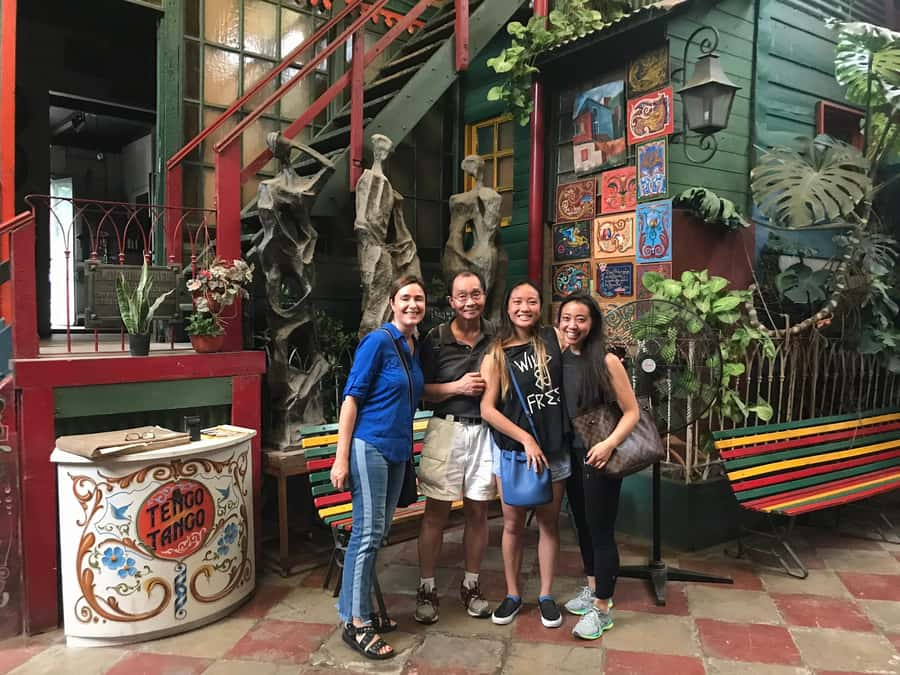
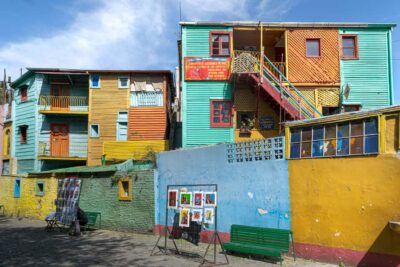
Most first visits to La Boca focus on Caminito, where brightly painted buildings, tango poses, and souvenir shops make for easy photographs. This experience begins elsewhere and builds toward that famous strip, which is a smart way to see the neighborhood.
You start at the corner of Avenida Don Pedro de Mendoza and Martín Rodríguez, near the harbor. From there, Paola connects the port, warehouses, railway, and immigrant arrivals to the streets around you. La Boca developed as a gateway for many newcomers, and the tour keeps that human story in view rather than treating the colorful facades as decoration alone.
I especially like that the route makes room for less polished parts of the neighborhood. You see streets and murals that receive less attention than Caminito, along with old buildings tied to anarchist newspapers and early twentieth-century bordellos. These details help you understand that La Boca was not simply an artists’ quarter. It was also a working port district shaped by newcomers, political movements, social aid, faith, and neighborhood loyalty.
The walk is limited to 10 people, so Paola can speak with the group rather than deliver a speech to a crowd. That matters here. La Boca’s story has many layers, and the personal questions that come up can be as useful as the planned stops.
Other barrios worth walking in Buenos Aires:
- Buenos Aires: La Boca Guided Walking Tour in English
★ 4.8 · 1,587 reviews - Palermo: Graffiti and Street Art Guided Tour in English
★ 4.8 · 684 reviews - Buenos Aires: Puerto Madero Sunset Cruise with Open Bar
★ 4.1 · 439 reviews
The harbor, warehouses, and immigrant arrivals
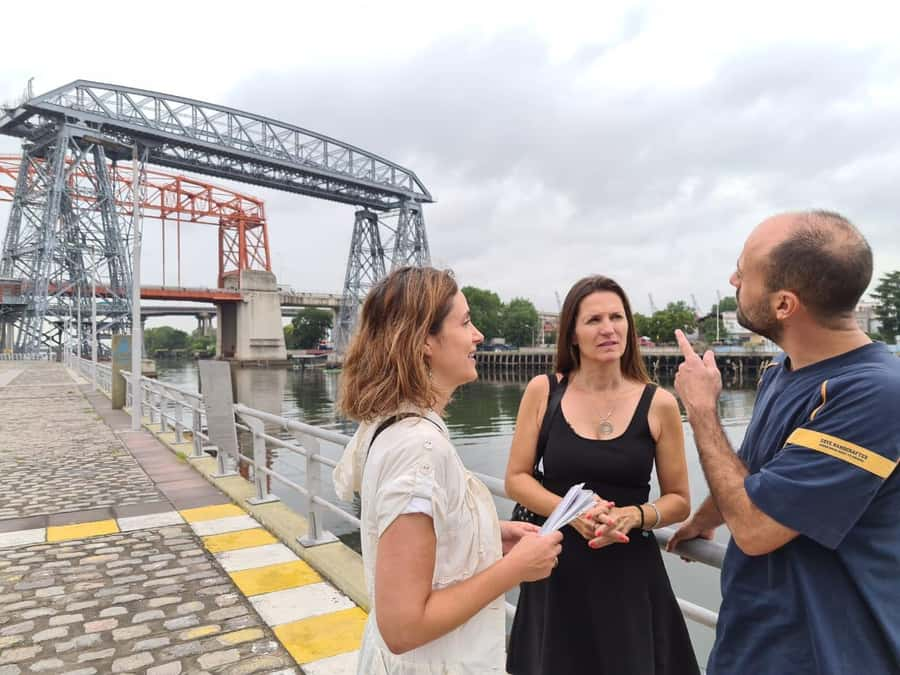
The opening section looks at La Boca as a port neighborhood. The harbor and warehouses are not just scenic starting points. They explain why this part of Buenos Aires became home to so many immigrants and why the neighborhood developed such a strong identity.
You also see the picturesque train station where large numbers of immigrants arrived. That stop gives the tour a useful sense of movement. People came through the port and railway, then needed somewhere to live, work, worship, organize, and build community.
Paola’s own connection adds weight here. She grew up in La Boca, and her explanations bring the subject closer to neighborhood life. One of the strongest aspects of the experience is the way she combines her own memories with the wider story of Buenos Aires as an immigrant city.
This part may appeal most to you if you like urban history told through ordinary buildings and public spaces. If you want nonstop photo stops, it can feel slower. The point is to understand why the streets look and feel as they do.
Inside a corrugated-metal conventillo
One of the most useful stops is inside a former conventillo, the type of tenement house that once sheltered immigrants. The building is clad in corrugated metal and now serves as a cultural center, giving you a chance to see beyond the street fronts.
Conventillos played an important role in the growth of La Boca. Several families or groups could live in one building, sharing space while establishing new lives in Buenos Aires. The design and materials tell part of that story, but entering the building makes the idea more concrete.
I like this stop because it moves the tour from general background to physical evidence. You are not only hearing about immigrant housing. You are seeing the kind of place that shaped neighborhood life.
The visit is included in the $35 price, as is the entrance to the fire station. That helps the tour’s value, since the fee is not only paying for a street walk. You get access to two places that add substance to the route.
The first volunteer fire station in Argentina
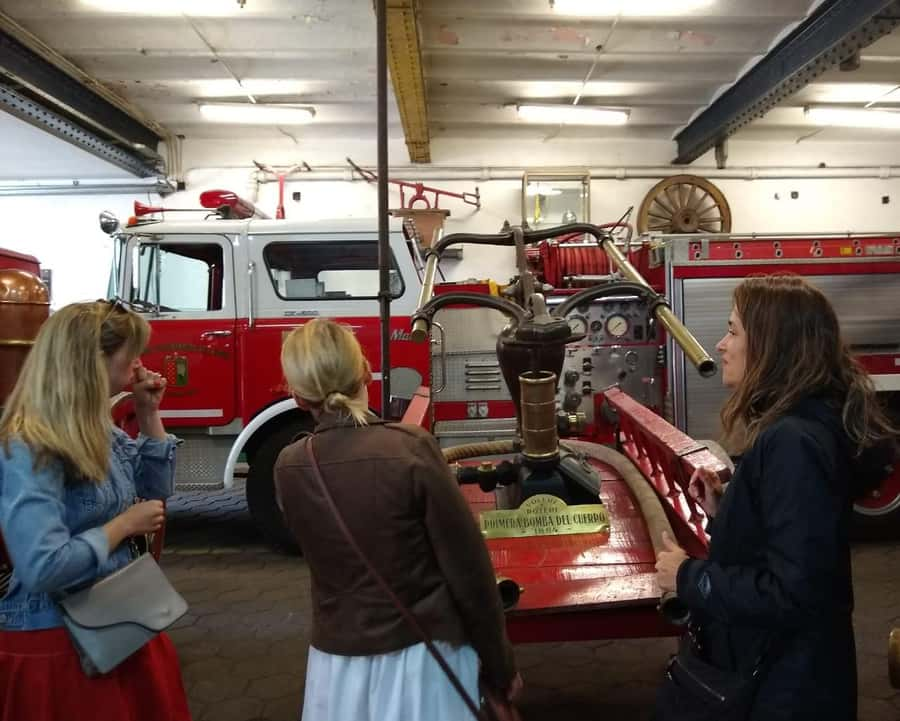
La Boca’s community story continues at the first Volunteer Firefighter Station created in Argentina. The fire department belongs to the network of mutual assistance associations that helped residents protect and support one another.
This is a revealing stop because it shows community organization in practical form. In a district built by working families and immigrants, mutual support was not an abstract idea. It helped people respond to emergencies and create a sense of shared responsibility.
The station is especially worthwhile for anyone interested in how neighborhoods functioned before modern services reached every corner. You can also ask Paola about the role of local associations and how they fit into La Boca’s development.
The entrance is included, but keep the overall nature of the visit in mind. This is part of a compact walking experience, not a long museum visit. The value comes from the connection between the building, the neighborhood, and the people who made it important.
Same base, a different kind of day out:
- Buenos Aires Hop-On Hop-Off Bus, Free Walking Tours & Discounts
★ 4.5 · 2,218 reviews - Buenos Aires: Piazzolla Tango Show with Optional Dinner
★ 4.4 · 2,122 reviews - Buenos Aires: City Highlights Guided Tour with Transfer
★ 4.7 · 1,946 reviews - Buenos Aires: Hop-On Hop-Off City Bus Tour
★ 4.2 · 1,855 reviews
Murals that explain more than color
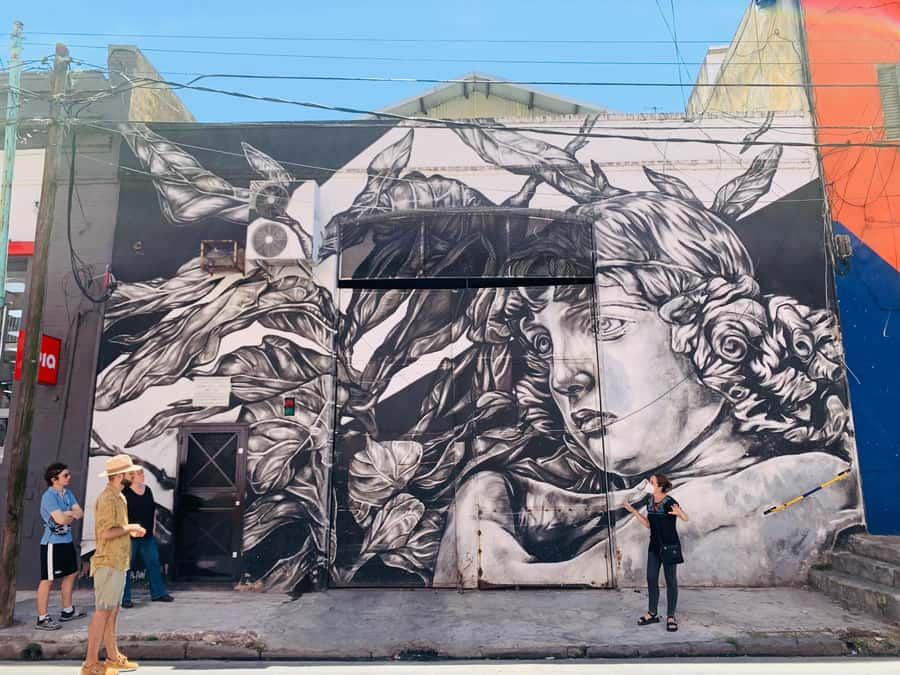
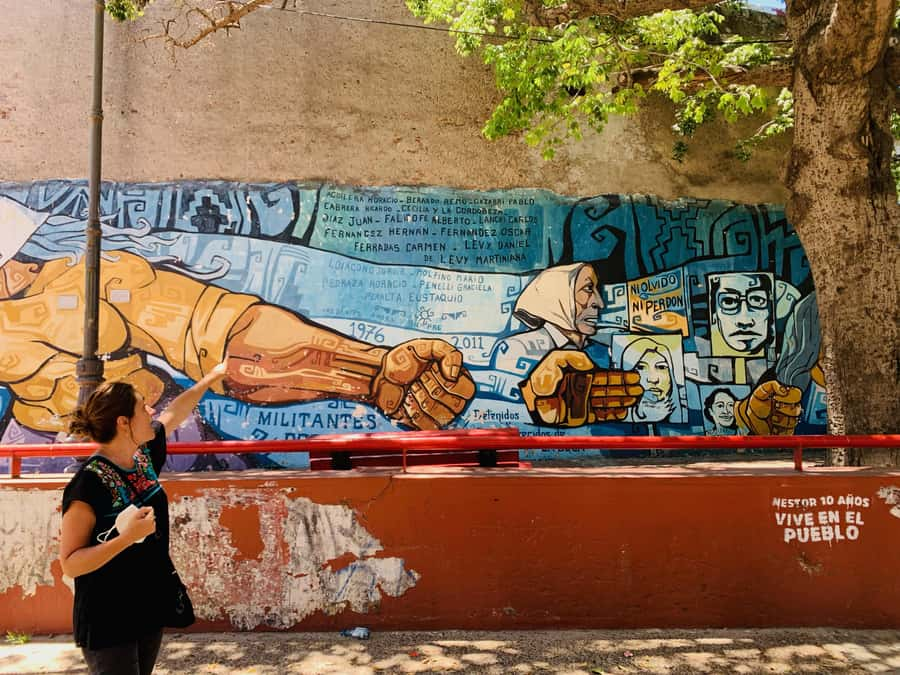
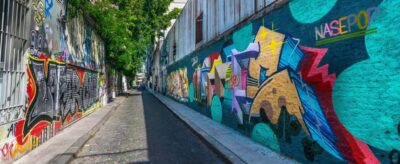
La Boca’s murals are easy to admire and easy to misunderstand. They can look like cheerful decoration if you do not know what they refer to. Paola uses them to discuss social issues and the art of Boca, helping you read the walls as public statements.
This is one of the tour’s strongest features. You get to streets that are not as heavily visited, where murals carry local meaning without the same concentration of souvenir stalls found around Caminito.
The experience also includes a possible visit to a typical Boca house belonging to friends of Paola who are important local artists. The supplied details describe this as a home visit, and it may provide an unusually direct look at the connection between neighborhood life and art. Because the tour works with a small group, this sort of personal introduction can feel more natural than a standard gallery stop.
Paola’s relationship with local artists is part of what gives the walk its character. The art is not treated as a separate attraction. It is tied to people, streets, political concerns, and the way La Boca presents itself.
Anarchist newspapers, bordellos, and everyday history
Along the route, you observe older buildings that once housed anarchist newspapers and bordellos in the early twentieth century. These are the kind of details that rarely appear in a quick photo stop at Caminito.
They also make the neighborhood’s past less tidy. La Boca was a port district with working people, immigrants, political groups, nightlife, and social problems. Hearing about those forces helps you avoid the postcard version of the area.
I appreciate this balance. The tour does not present La Boca as only colorful, artistic, or devoted to football. It gives room to the arguments, pressures, and institutions that shaped the district.
You should expect interpretation rather than formal exhibits at many of these locations. Paola’s storytelling is central. This tour suits you best if you enjoy asking questions and listening to a guide explain what a building meant to the people who used it.
Boca Juniors and the Salesian Church
Two local icons receive special attention: football and religion. You see Boca Juniors Stadium from outside, so this is not a stadium tour or a ticketed match-day experience. Still, the exterior visit matters because the club is deeply tied to the neighborhood’s identity.
Paola explains the passion surrounding Boca Juniors and the way the club helps define the soul of La Boca. Her personal knowledge of the area gives this section more feeling than a simple architectural photo stop. If you follow Argentine football, you will likely find this one of the most memorable parts.
The Salesian Church provides a different kind of local focus. It served as a refuge for communities that had arrived without secure roots, adding a religious and social dimension to the neighborhood story.
Placing football and religion in the same walk works well. One represents a modern civic passion, while the other points to institutions that offered help and belonging to earlier communities. Together, they show how La Boca created identity through both public enthusiasm and practical refuge.
Caminito, tango, and fileteado
The tour finishes at Caminito, where tango and fileteado appear around nearly every corner. Fileteado is the decorative painting style associated with Buenos Aires, and here it forms part of the visual language of La Boca.
Because you reach Caminito at the end, the famous area becomes a conclusion rather than the whole story. You arrive with a better sense of why the colors, art, football references, and tango displays matter.
Caminito is also the most tourist-focused part of the route. Expect a sharper contrast between the quieter streets earlier in the walk and this concentrated display of local imagery. That contrast is useful, but it may feel less spontaneous if you prefer completely undeveloped places.
The final location is convenient for continuing your own visit, taking photographs, or exploring nearby sights. The tour does not return to the meeting point, so plan around finishing at Caminito.
Coffee in an 1882 Notable Cafe
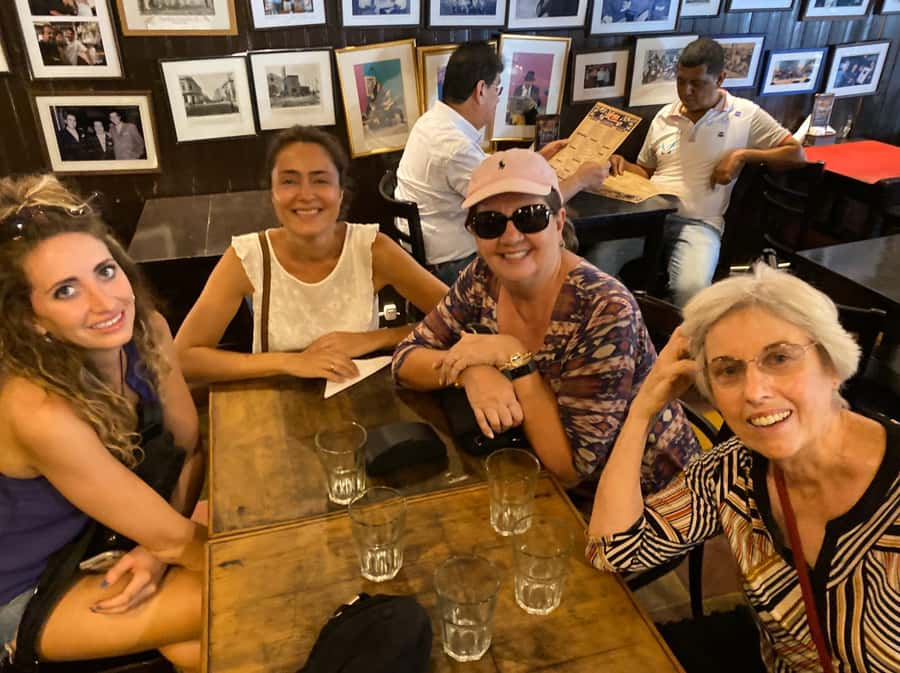
The 30-minute coffee stop is a pleasant way to close the experience. You are invited to coffee in an old Notable Cafe dating from 1882, and the drink is included in the price.
This is more than a refreshment break. Traditional cafes are part of Buenos Aires social life, and ending in one gives the tour a quieter moment after the walking and storytelling. You can use the time to ask Paola follow-up questions or sort out what you have seen.
The coffee stop also helps explain the 150-minute duration. The experience is not a hurried circuit of landmarks. It combines walking, indoor visits, conversation, and a seated finish.
Food is not included, so do not expect a meal. If you need lunch, treat the coffee as a pause rather than a full dining stop.
The Quinquela Museum option
You may also choose to visit the Museo de Bellas Artes de La Boca, associated with Benito Quinquela Martín. Part of the building was his home, which gives the museum a strong connection to the neighborhood and its artistic identity.
The museum ticket is not included, so you should budget separately if you want to add it. The tour information does not include a museum admission in the $35 price, and the route already has its own included entrances.
This optional stop makes particular sense if you want to spend more time with La Boca’s art after seeing the murals and artists’ spaces. If your priority is local history, community institutions, and outdoor streets, the main walk already offers plenty without adding the museum.
Is $35 a fair price?
At $35 per person, this is a reasonable price for a 150-minute small-group experience, especially because it includes coffee and entrance to both the Volunteer Firefighter Station and the former conventillo. You are also paying for a live guide in English or Spanish and a route built around personal local knowledge.
The value is strongest if you would otherwise see only Caminito. A standard stroll can show you the neighborhood’s colors, but it may not explain the immigrant housing, mutual aid, murals, anarchist newspapers, religious refuge, or football culture.
The price is less compelling if you want a simple photography walk or a conventional city highlights tour. This experience spends its time on context and local stories rather than checking off Buenos Aires landmarks.
You can reserve and pay later, and cancellation is free up to 24 hours before the start time. Those terms are useful if your Buenos Aires plans may change.
Practical details before you book
The meeting point is the corner of Pedro de Mendoza and Martín Rodríguez in La Boca. The walk ends at Caminito, so arrange your day with that one-way route in mind.
The activity lasts 150 minutes, including about one hour of guided touring and 30 minutes of coffee, with the rest used for the wider route and visits. Starting times depend on availability.
Paola guides in English and Spanish. Her English was described as excellent, and her approach combines careful explanations with personal stories. She also paid close attention to the group’s comfort during intense heat, but you should still prepare for outdoor walking and warm conditions.
The group is limited to 10 people. Jewelry, alcohol, and drugs are not allowed, and electric wheelchairs are not suitable for this experience. It is also not suitable for people over 95.
Who should book this La Boca experience?
I would choose this tour if you want La Boca explained by someone with genuine neighborhood ties. It is a good match for you if you enjoy murals, urban history, immigrant stories, football culture, old buildings, and conversations with a guide.
It is also a strong choice for a repeat visitor to Buenos Aires. You may already know the main sights, but this route gives you a different way to read La Boca and puts the familiar Caminito in a wider setting.
Families with older children, history-minded visitors, art lovers, and football fans should find plenty to hold their attention. The small group also makes it easier to ask about the details that interest you most.
I would think twice if you have limited mobility, dislike walking in heat, or want a tour centered on the inside of Boca Juniors Stadium. The stadium is viewed from outside, and the experience is built around neighborhood interpretation rather than major-ticket attractions.
Should you book it?
Book this experience if you want to understand La Boca instead of simply photographing it. Paola’s personal connection, the conventillo, the first Argentine volunteer fire station, the social murals, and the coffee in an 1882 cafe give the walk real substance for $35.
Skip it if your schedule allows only a short Caminito visit or if you are looking for a stadium tour. For everyone else, this is a thoughtful way to see the neighborhood’s people, institutions, art, and memories before finishing in its most famous street.
FAQ
Where does the La Boca tour begin?
It begins at the corner of Avenida Don Pedro de Mendoza and Martín Rodríguez in La Boca.
Where does the tour finish?
The experience finishes in Caminito, also in La Boca.
How long does the experience last?
The total duration is 150 minutes.
What languages does Paola speak during the tour?
The tour is available in English and Spanish.
How many people can join the group?
The group is limited to 10 participants.
Is coffee included?
Yes. Coffee is included at a Notable Cafe dating from 1882.
Are the conventillo and fire station entrances included?
Yes. Entrance to the Volunteer Firefighter Station and the former conventillo is included.
Is the Quinquela Museum ticket included?
No. If you choose to visit the Museo de Bellas Artes de La Boca, the entrance ticket is separate.
Can I cancel for a full refund?
Yes. You can cancel up to 24 hours in advance for a full refund.
Just added in Buenos Aires
- Tango Show at El Querandi with optional Dinner★ 4.2 · 3 reviews
- Wine Tasting in Buenos Aires★ 4.2 · 4 reviews
- Walking Tour: Buenos Aires bookstores★ 4.3 · 12 reviews
- Velez Sarsfield Football Match★ 5.0 · 3 reviews
- Private Underground Tango Immersion★ 5.0 · 31 reviews
- Tour Buenos Aires in one day on Electric Scooters★ 5.0 · 33 reviews
- Experience The Essence of Buenos Aires in San Telmo★ 5.0 · 51 reviews
- Teatro Colon Guided Tour Admission Ticket★ 4.0 · 208 reviews
Buenos Aires Neighbourhood Tours, compared.

BA: Empanadas and Alfajores Cooking Experience in Palermo
Read our review →
Buenos Aires Bike Tour: North Districts, Recoleta and Palermo
Read our review →Browse the lists this tour appears in