
Reviewed · BUENOS AIRES NEIGHBOURHOOD TOURS
Palermo SoHo for curious people
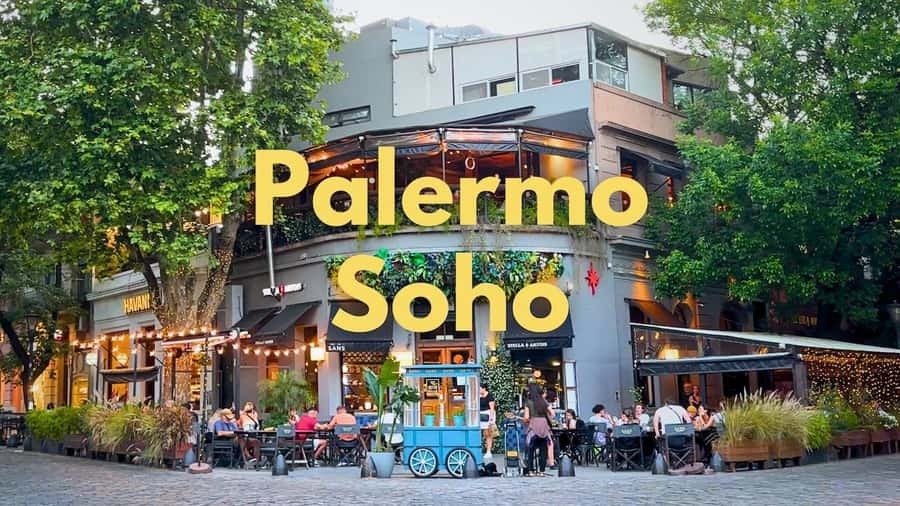
Palermo SoHo looks like a neighborhood of design shops, fashionable restaurants, sourdough bakeries, and polished storefronts. This walk with anthropologist Nico asks what lies behind that style: who lived here first, how the railway shaped it, and how Palermo became one of Buenos Aires’ most sought-after addresses. Gentrification is not a side topic here. It is the main question.
I like the route’s focus on immigration history, especially the stops connected with Ukrainian and Polish communities. I also like that the tour is built around conversation rather than a speech delivered while you trail behind a guide. You can ask about Argentina’s two exchange rates, real estate speculation, and the effect of peso devaluation as the neighborhood unfolds around you.
The main consideration is that this is not a standard sightseeing walk. If you prefer a quiet tour with a fixed script and little discussion, Nico’s question-led approach may feel demanding. The meeting point at Distrito Arcos can also take a little effort to locate, so arrive early and keep your phone map ready.
Key points to know before booking
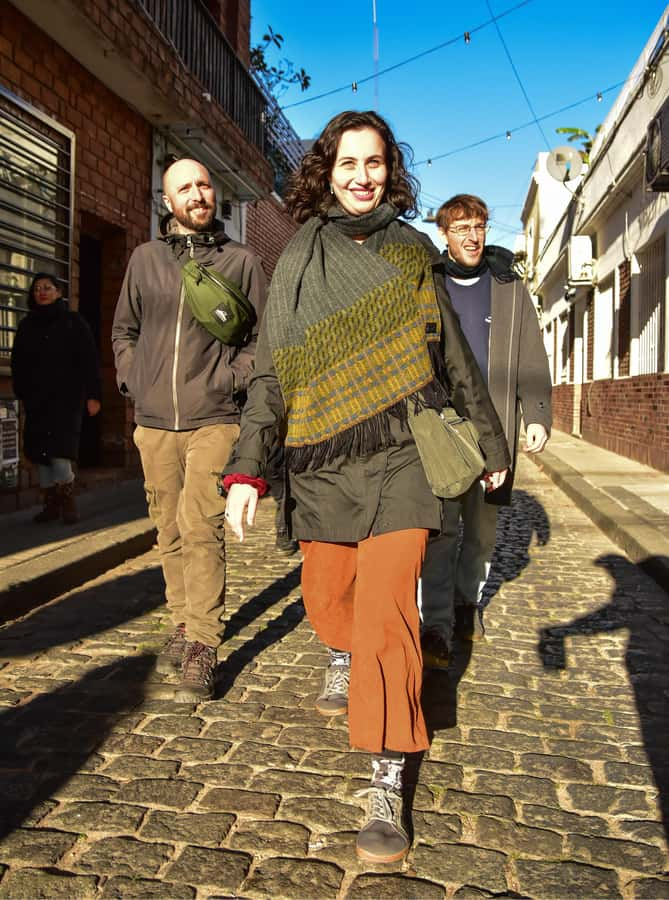
- Anthropology instead of a simple photo walk: Nico connects Palermo’s cafés and boutiques to migration, money, transport, and changing land values.
- A two-hour route with a clear arc: Start at Distrito Arcos and finish at Plaza Serrano, passing through cultural sites and well-known food addresses.
- Immigrant communities are central to the story: Ukrainian, Polish, Armenian, and other local cultural connections help explain Palermo beyond its current style.
- The tour is interactive: Expect questions, discussion, and room to shape the conversation around your interests.
- Strong value at $25 per person: You get a focused walking tour with a university-degree guide, and private or small groups are available.
- Useful planning details: The tour runs in English, Spanish, or French, is wheelchair accessible, and allows cancellation up to 24 hours before the start.
Palermo SoHo beyond the polished storefronts
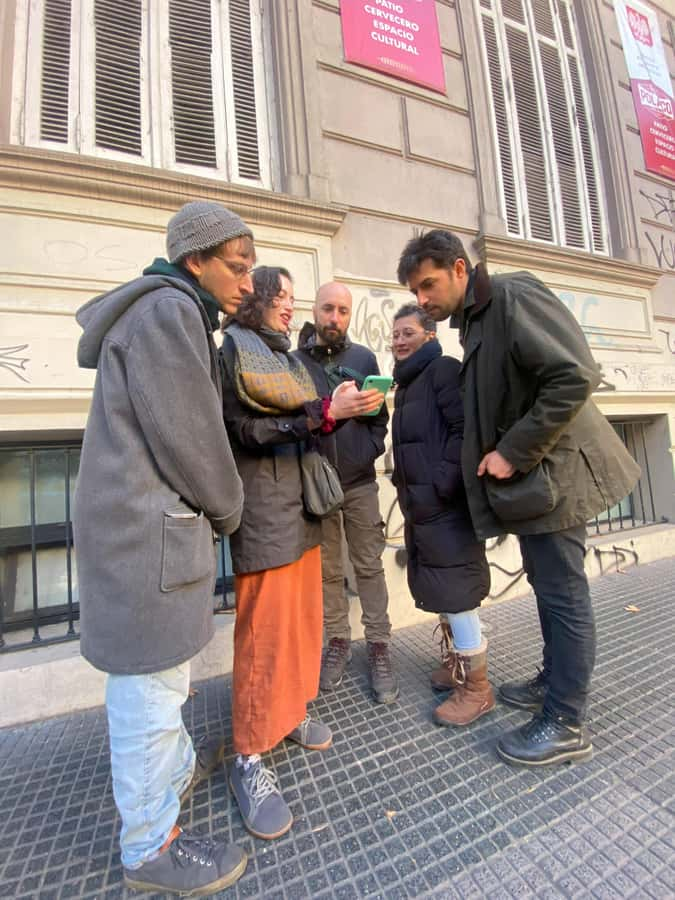
Palermo SoHo is often sold as Buenos Aires’ fashionable quarter. That description is not wrong, but it leaves out the useful part. The neighborhood’s present-day image grew from older transport links, immigrant communities, local institutions, property changes, and Argentina’s unstable economy.
This tour gives you a way to read those changes while walking. Instead of treating each café or mural as an isolated sight, Nico links the area’s current identity to larger questions. Why did this part of Palermo attract new businesses? What happens when a working neighborhood becomes a fashionable one? How do currency shifts affect rent, construction, restaurants, and foreign visitors?
You are not simply listening for two hours. The format invites you to question the story and compare what you see with what you are told. That makes the experience a good fit if you enjoy urban history, social issues, and local context more than a checklist of major sights.
It also means the experience can vary with the group. A private or small-group booking should give you more room to ask questions. In a larger group, the pace and discussion may feel less personal, though the activity is still designed around interaction.
Other barrios worth walking in Buenos Aires:
- Buenos Aires: La Boca Guided Walking Tour in English
★ 4.8 · 1,587 reviews - Palermo: Graffiti and Street Art Guided Tour in English
★ 4.8 · 684 reviews - Buenos Aires: Puerto Madero Sunset Cruise with Open Bar
★ 4.1 · 439 reviews
Starting at Distrito Arcos and Puente Pacífico
The meeting point is by the amphitheater at Distrito Arcos, beside the Montagne store. Distrito Arcos is a useful starting point because it already hints at Palermo’s changing identity. It is a premium outlet complex, while the tour itself asks you to look beyond commercial polish and think about the forces that shape neighborhoods.
The location is the one practical wrinkle at the beginning. One person had trouble finding the meeting point, and Nico helped them get oriented. I would arrive with the map open and allow extra time, especially if you do not know Palermo well.
From there, the walk reaches Puente Pacífico, where the guide spends about 15 minutes. This is where transport enters the story. The tour asks what the train and tram had to do with Palermo’s origins, so this stop helps move the discussion away from today’s restaurants and toward the systems that helped the area grow.
You should not expect a long engineering lecture or a formal museum visit. The value is in seeing a busy transport point as part of the neighborhood’s development. It gives the rest of the walk a useful question: how do connections to the wider city influence who moves in, who works nearby, and what businesses can survive?
Polo Cientifico Tecnologico and the changing economy
The next major stop is Polo Cientifico Tecnologico, with about 20 minutes of guided discussion. This is one of the longer stops, which suggests that the walk is not only about the neighborhood’s past. It also considers what Palermo is becoming.
The Polo Cientifico Tecnologico brings modern institutions and newer economic activity into the conversation. It helps you consider how a neighborhood can shift from one role to another without losing all traces of its earlier life. Nico uses the stop to connect Palermo’s current profile with questions about development and real estate.
This is also where the tour’s economic angle becomes especially useful. Argentina’s peso devaluation and the existence of two exchange rates can be confusing, even for visitors who follow the country’s finances. The walk does not treat those subjects as abstract currency trivia. It connects them to property speculation and to the prices and businesses you see in Palermo.
You will not leave with a complete course in Argentine economics, but you should have a clearer framework for asking why certain parts of Buenos Aires change so quickly. That is a strong benefit for anyone staying in the city long enough to notice price differences, new construction, or the spread of high-end businesses.
Pasaje Emilio Zola and the value of smaller streets
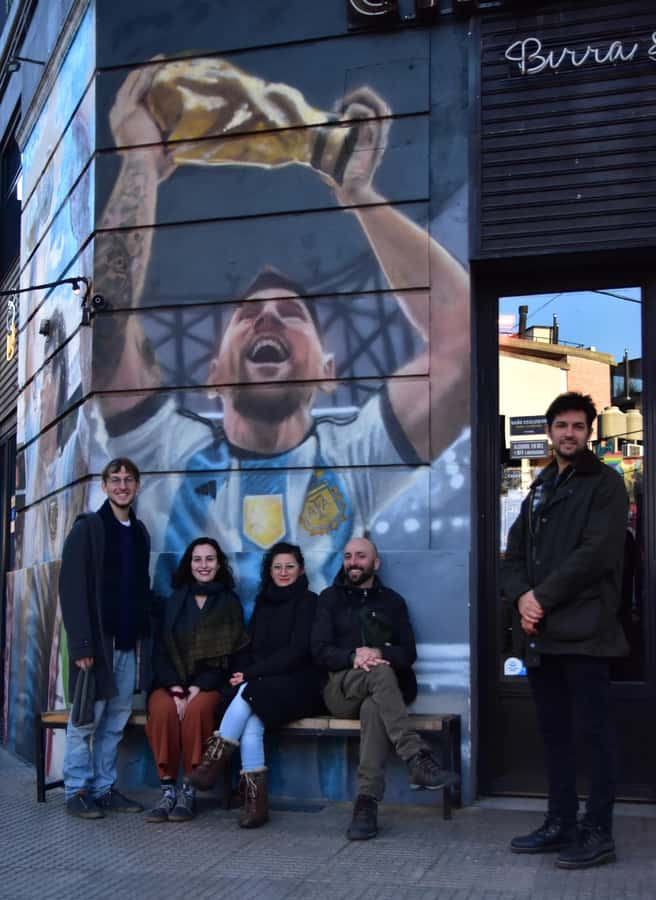
Pasaje Emilio Zola is a shorter visit, about 10 minutes. Small passages matter on a walking tour because they slow you down. Main streets tend to show a neighborhood’s public image, while side passages can reveal its scale, older layout, and quieter residential character.
The tour uses this stop to keep the route from becoming a parade of famous addresses. You get a chance to look at the built environment and consider how a place can feel different just a block away from a popular commercial strip.
Do not expect every stop to be a major attraction. Some are valuable because they support the larger story. If you want nonstop landmark viewing, this may feel understated. If you like noticing how streets connect and how local areas change from block to block, it adds texture to the walk.
Same base, a different kind of day out:
- Buenos Aires Hop-On Hop-Off Bus, Free Walking Tours & Discounts
★ 4.5 · 2,218 reviews - Buenos Aires: Piazzolla Tango Show with Optional Dinner
★ 4.4 · 2,122 reviews - Buenos Aires: City Highlights Guided Tour with Transfer
★ 4.7 · 1,946 reviews - Buenos Aires: Hop-On Hop-Off City Bus Tour
★ 4.2 · 1,855 reviews
Ukrainian and Polish connections in Palermo
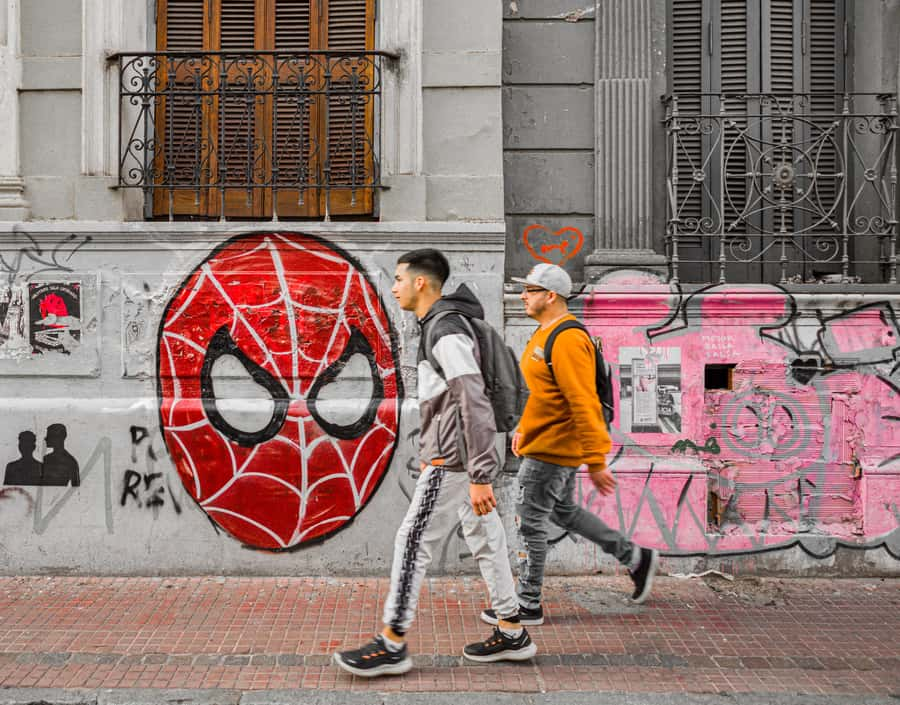
The stop at Asociación Ucrania de Cultura PROSVITA en la Republica Argentina receives about 15 minutes of guided attention. This is one of the most distinctive parts of the route because it places immigrant culture at the center of Palermo’s story.
The tour’s point is not simply to identify a cultural association. It asks who Palermo’s first inhabitants were and how different communities helped shape the area. That is an important correction to the idea that Palermo SoHo began with boutique hotels, cocktail bars, and designer shops.
Klub Polaco comes later, with about five minutes at the site. Together, these stops show that the neighborhood’s identity is layered. Ukrainian and Polish connections are not decorative footnotes. They help explain the people, institutions, and cultural ties that existed before the district acquired its current nickname and tourist appeal.
The shorter visit at Klub Polaco is best understood as part of the route’s pattern. You are collecting pieces of a social story rather than spending long periods inside each institution. The activity does not promise extensive interior tours, so keep your expectations focused on the guide’s explanation and the streets you pass through.
El Preferido, Don Julio, and the business of Palermo style
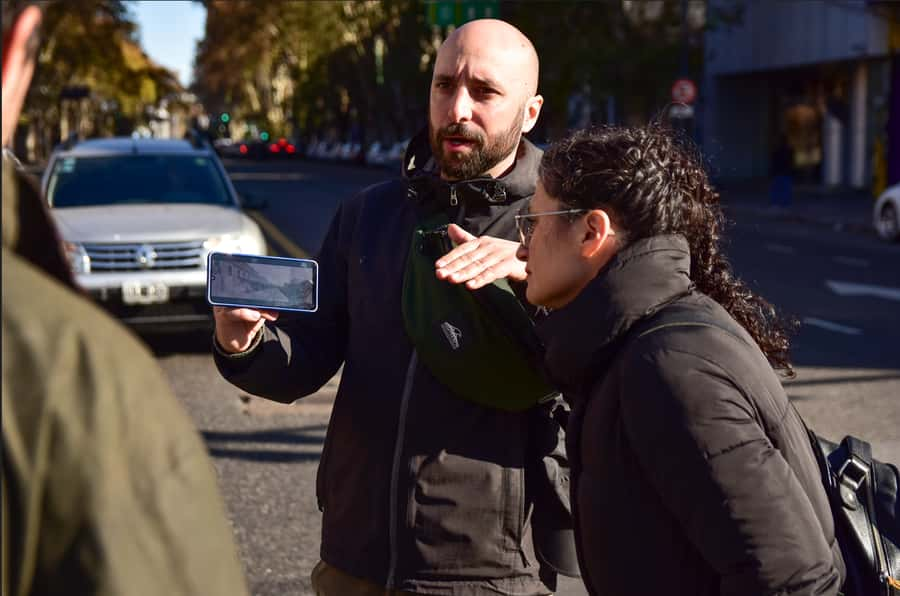
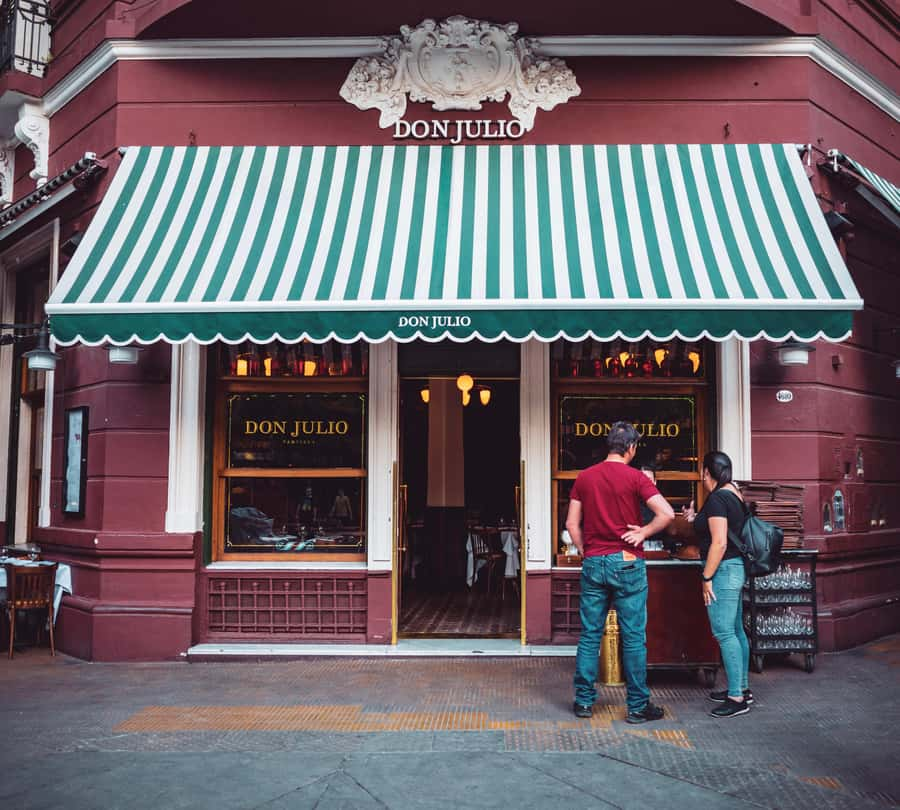
El Preferido de Palermo gets about five minutes, followed by a visit to Don Julio Parrilla. These names connect the walk to Palermo’s food culture, but the point is not to turn the activity into a restaurant tour.
Instead, the addresses help you consider what happens when local food becomes part of a neighborhood’s brand. Palermo SoHo’s restaurants are tied to its popularity, its property market, and its appeal to visitors. They also show how an area can be marketed through food, design, and a particular idea of urban cool.
The tour does not state that a meal is included, so plan this as a walking and discussion experience rather than a food tasting. If you want to eat at one of these places, make separate plans. Don Julio in particular is a famous address, but this short stop is not a reservation or dining experience.
ACILBA is passed in about three minutes. That brief pause fits the walk’s broader aim: to point out the local institutions and communities that help define the neighborhood, even when they are not conventional attractions.
Plaza Inmigrantes de Armenia and the neighborhood’s name
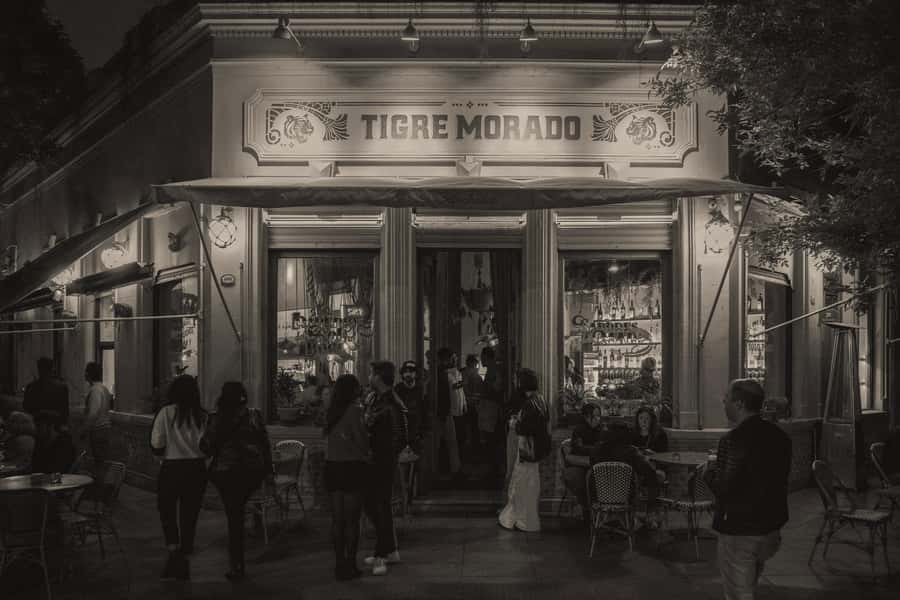
The route continues to Plaza Inmigrantes de Armenia for about 10 minutes. This is another important immigration-focused stop, and it gives the walk a direct link between public space and community identity.
The plaza helps explain why Palermo is more than a single cultural story. The route has already introduced Ukrainian and Polish connections, and this stop adds another layer to the neighborhood’s past and present. You are encouraged to think about how immigrant groups leave marks through associations, public spaces, food, names, and local networks.
This is also a good point to revisit the question of when Palermo became SoHo. The nickname suggests a fashionable district modeled on an artsy urban quarter, but the tour treats it as a later label attached to a place with a much longer life.
That distinction matters. It helps you separate the neighborhood’s actual development from the branding used to sell it. You can still enjoy the bars and shops, but you will understand that the current image is only one chapter.
Helados Italia and Pasaje Russel
Helados Italia provides a 15-minute break. The stop gives you a pause near the end of the walk and a chance to reset before the final stretch. The information provided does not say that ice cream is included in the $25 price, so bring payment if you want to buy something.
After the break, the group visits Pasaje Russel for about 10 minutes. Like Pasaje Emilio Zola, this smaller passage gives the tour room to focus on streets and neighborhood character rather than only major commercial names.
Pasaje Russel is a fitting late stop because the walk has gradually moved from broad questions about transport and development to the fine-grained details of Palermo’s streets. By this point, you can look at the buildings and businesses with a different set of questions. Who is this space serving now? What might have been here before? What pressures could shape it next?
The walk ends at Plaza Serrano, one of Palermo SoHo’s best-known gathering points. Ending there makes practical sense. You are left in an area with plenty of places to continue your evening, though the activity itself finishes with the plaza rather than including a meal or organized follow-up.
What $25 gets you
At $25 per person, this is a good value if you want interpretation rather than a simple orientation walk. The fee covers a guided route, a university-degree guide, and a focused look at issues that are hard to understand from signs or guidebooks alone.
The price becomes even more appealing if you are interested in how cities change. Gentrification, property speculation, exchange rates, and immigration are not easy subjects to explain in a few minutes. Here, they are tied to actual places along a two-hour route.
The value is less clear if you mainly want famous buildings, food samples, or entrance tickets. There are no listed tastings, admissions, or meals included. You are paying for the guide’s interpretation and the chance to discuss Palermo with someone who can connect its visible details to wider forces.
Private and small-group formats are available. Those options may be worth considering if you have specific questions or want the conversation to follow your interests. The tour is also offered in English, Spanish, and French, which makes it easier to choose the language in which you can discuss complex subjects comfortably.
Who will enjoy this walk most
I would choose this tour for someone who has already seen a few central Buenos Aires sights and wants to understand one neighborhood on a deeper level. It also works well early in a Palermo stay, since the route can help you make sense of the area before you return to its restaurants and shops on your own.
You are likely to enjoy it if you like:
- Urban change and social history
- Immigration and community institutions
- Argentine economics explained through everyday places
- Small-group conversation
- Walking routes that include ordinary streets, not only major sights
I would be more cautious about booking if you want a passive audio-style tour or a food-focused activity. The guide may ask questions and invite discussion, so your attention matters. Two hours is not a long time, but the subject matter is broad, and the experience works best when you take part.
Nico’s strengths, based on the available feedback, are his humor, professionalism, personable manner, and ability to explain the area from an unusual angle. He also helped when the meeting point caused confusion. Those details matter because a discussion-based tour depends heavily on the guide’s communication style.
Practical details for a smoother start
Meet by the amphitheater at Distrito Arcos, next to the Montagne store. Use the supplied map link before setting out, and arrive early rather than trying to locate the exact spot at the last minute.
The walk lasts two hours. The route begins at Distrito Arcos and ends at Plaza Serrano, with stops ranging from three to 20 minutes. Wear comfortable shoes, since the experience is built around walking between locations.
Wheelchair access is listed as available. If you are booking a private or small group, it is sensible to discuss any specific needs in advance, even though the activity is described as wheelchair accessible.
You can cancel up to 24 hours before the start for a full refund, and you can reserve now while paying later. Those terms are useful if your Buenos Aires schedule is still shifting.
Should you book Palermo SoHo for curious people?
Book it if you want Palermo explained rather than simply photographed. At $25, the tour gives you a focused route, a strong guide-led discussion, and a useful look at immigration, gentrification, property speculation, transport, and Argentina’s currency problems.
Skip it if you want a food tasting, a long list of grand sights, or a quiet walk with little participation. For curious visitors who want to ask why Palermo SoHo looks the way it does, this is one of the better uses of two hours in the neighborhood.
FAQ
How long does the Palermo SoHo tour last?
The walking experience lasts two hours.
What is the price?
The activity costs $25 per person.
Where does the tour begin?
You meet by the amphitheater at Distrito Arcos, next to the Montagne store.
Where does the tour finish?
The route ends at Plaza Serrano.
Which languages are available?
The tour is offered in English, Spanish, and French.
Who leads the walking tour?
The experience includes a university-degree guide. The guide identified in the available information is Nico.
Is the tour wheelchair accessible?
Yes, the activity is listed as wheelchair accessible.
Is this a private tour or a group tour?
Private and small-group options are available.
Can I cancel the booking?
Yes. You can cancel up to 24 hours in advance for a full refund. You can also reserve now and pay later.
Just added in Buenos Aires
- Tango Show at El Querandi with optional Dinner★ 4.2 · 3 reviews
- Wine Tasting in Buenos Aires★ 4.2 · 4 reviews
- Walking Tour: Buenos Aires bookstores★ 4.3 · 12 reviews
- Velez Sarsfield Football Match★ 5.0 · 3 reviews
- Private Underground Tango Immersion★ 5.0 · 31 reviews
- Tour Buenos Aires in one day on Electric Scooters★ 5.0 · 33 reviews
- Experience The Essence of Buenos Aires in San Telmo★ 5.0 · 51 reviews
- Teatro Colon Guided Tour Admission Ticket★ 4.0 · 208 reviews
Buenos Aires Neighbourhood Tours, compared.
BA: Empanadas and Alfajores Cooking Experience in Palermo
Read our review →
Buenos Aires Bike Tour: North Districts, Recoleta and Palermo
Read our review →Browse the lists this tour appears in