
Reviewed · WALKING TOURS
La Docta Free Walking Tour “Córdoba La Antigua”.
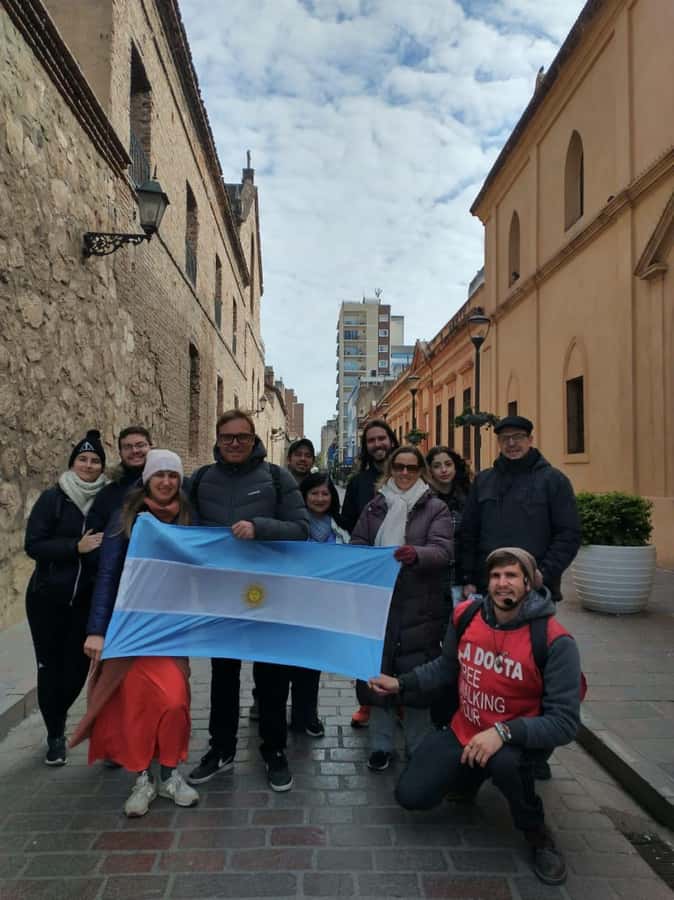
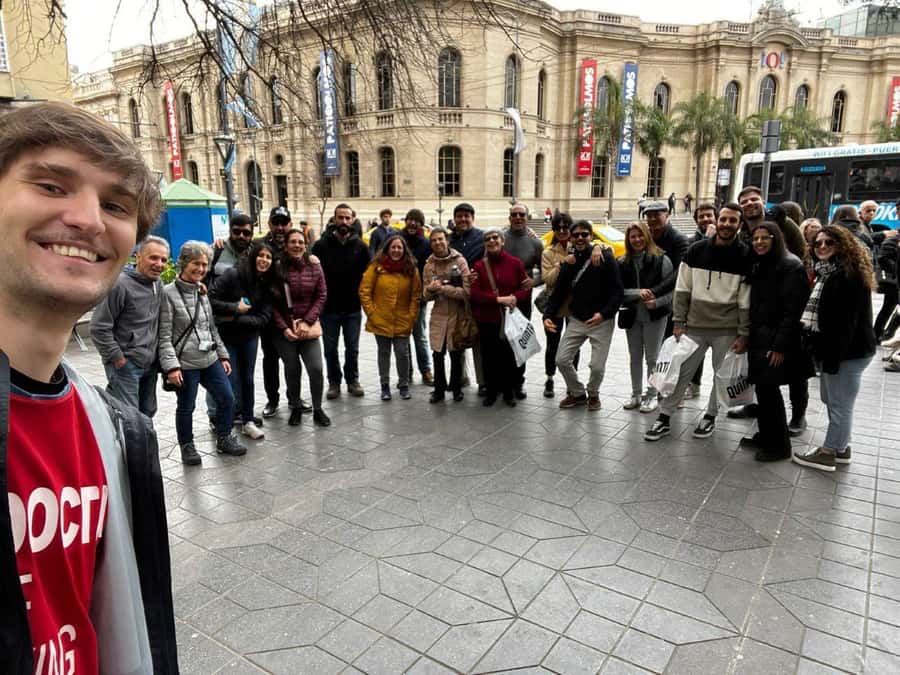
Córdoba’s old center is compact, layered, and easy to miss if you simply wander from church to church. This 150-minute walking tour connects the main colonial sights, from Plaza San Martín and the Cathedral to the Jesuit block, while explaining how the city developed from its founding to modern times. You meet beside the statue in the plaza and look for a guide in a red shirt.
I like the pay-what-you-wish setup, which keeps the upfront cost very low, and I like the social side of the walk. Guides such as Tomás, Valeria, and Aldy are described as lively, funny, and good at helping the group mix. The main drawback is that museum admission is not included, and the tour can feel long if you are not comfortable walking for two and a half hours in poor weather.
Key points
- A clear first look at Córdoba: The route links the city’s most important historic buildings in one walk.
- Seven main historic stops: Expect the Jesuit block, Cabildo, Cathedral, Jesuit Crypt, Sobremonte museum, Jesuit church, and Monserrat school.
- English and Spanish guiding: Guides explain the city in both languages, with some content presented in its original language.
- A lively group atmosphere: Games, humor, local sounds, tastes, and chances to meet other visitors are part of the experience.
- A symbolic booking price: You pay a US$0.50 deposit when reserving, then decide the final amount at the end.
- A useful finish downtown: The walk ends at Patio Olmos shopping mall, a practical place to continue exploring or take a break.
Why this is a smart first walk in Córdoba
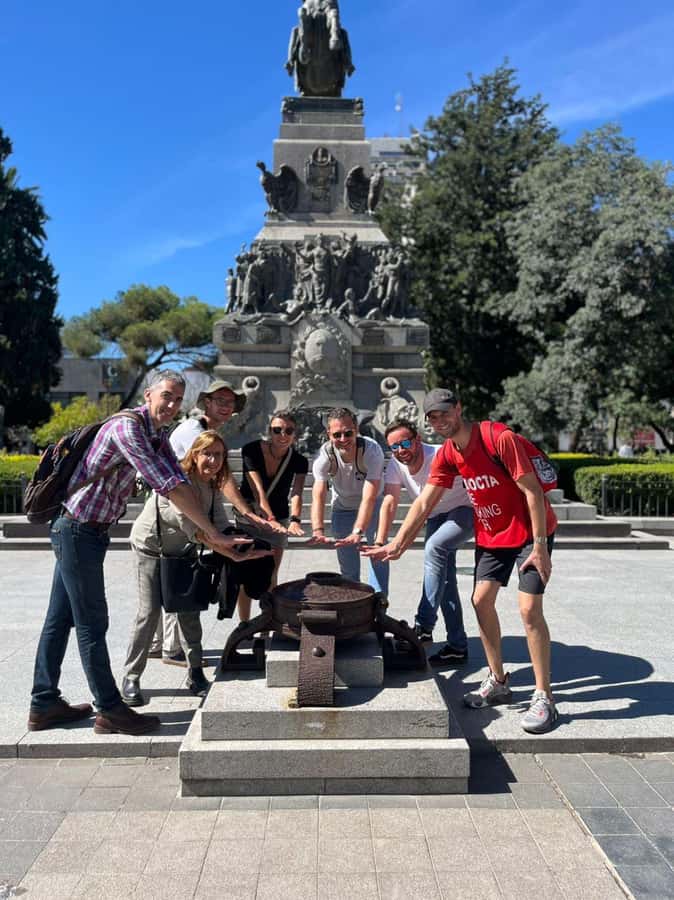
I would put this tour near the start of a Córdoba visit because it gives you a working map of the historic center. Instead of seeing isolated façades, you get a basic story that ties the main buildings together: the city’s founding, its colonial period, the influence of the Jesuits, and the place of Córdoba’s people and institutions today.
The route also keeps the walking practical. It begins in Plaza San Martín and finishes at Patio Olmos, so you do not need a bus or taxi between the main sights. The experience lasts 150 minutes, which is long enough for useful context but short enough to fit into a morning or afternoon of sightseeing.
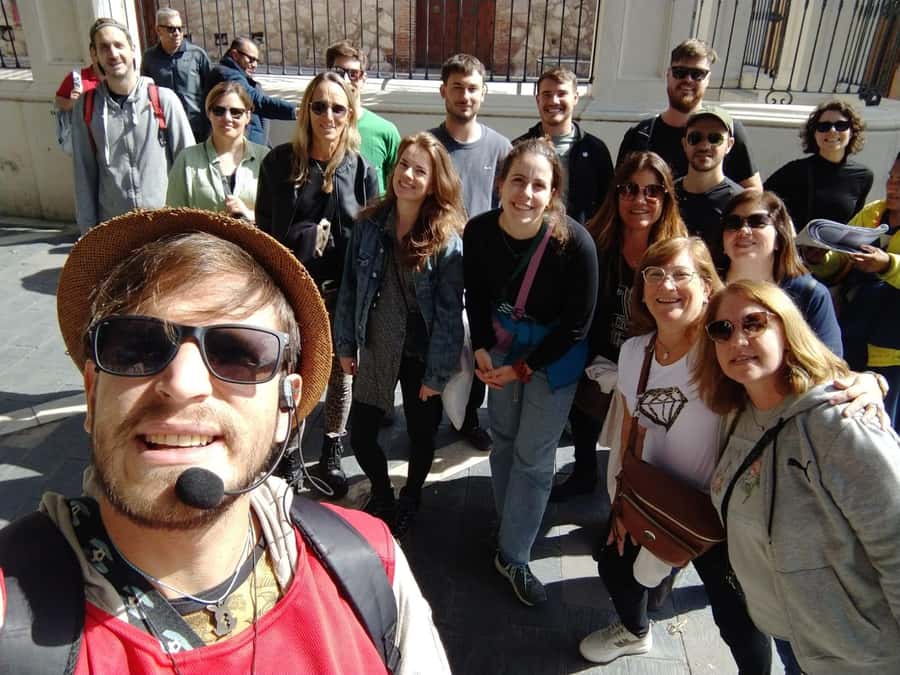
You should expect a social tour rather than a quiet private lesson. You walk with other visitors, listen to explanations, and may take part in games or small activities designed to help the group get to know one another. That is useful if you have just arrived in town and want both orientation and company.
The guide makes a real difference here. Tomás, also referred to as Tommy or Thomas, is repeatedly praised for humor, energy, clear English, and his ability to speak with people in their own languages. Valeria is described as warm, expressive, and especially good at adding games and helping the group socialize. Aldy is also noted for her enthusiasm. Your guide will depend on the departure, but the experience is built around a personable local host rather than a recorded script.
Other guided walks in Argentina:
- Buenos Aires Hop-On Hop-Off Bus, Free Walking Tours & Discounts
★ 4.5 · 2,218 reviews - Buenos Aires: La Boca Guided Walking Tour in English
★ 4.8 · 1,587 reviews - Nazis in Buenos Aires: a historical walking tour
★ 4.9 · 193 reviews
Plaza San Martín and Córdoba’s central story
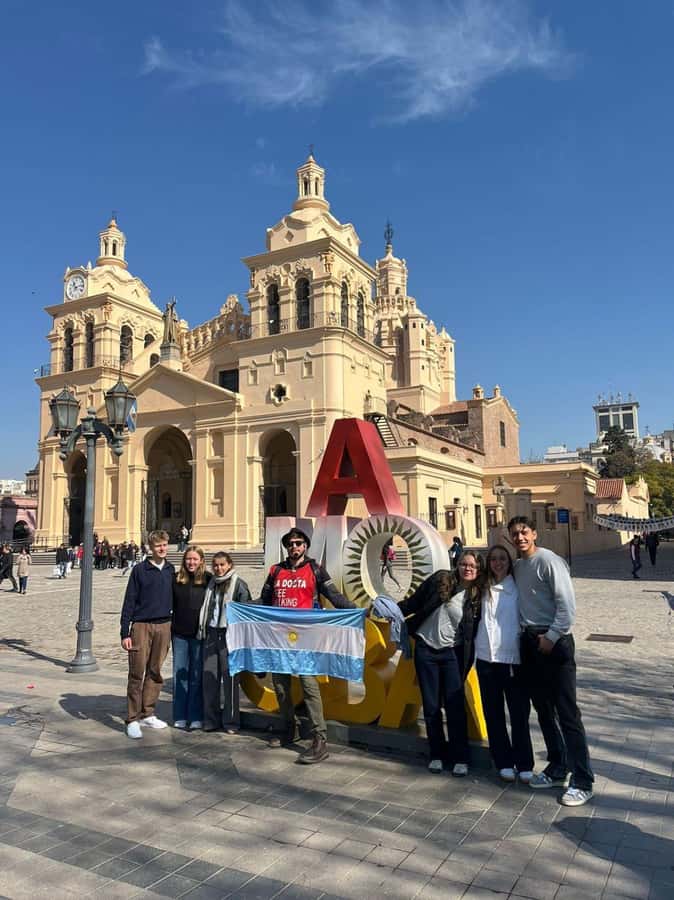
The meeting point is beside the statue in Plaza San Martín. Look for the red T-shirt. This is an easy place to find in the center, and beginning here gives the guide room to explain how Córdoba’s central district developed.
The plaza is also a good place to settle into the pace of the tour. You will be on foot for two and a half hours, so wear comfortable shoes and bring a drink. The route is not presented as a difficult hike, but the time on your feet matters, especially during hot weather or after rain.
From the first explanation, you can expect the guide to frame Córdoba as a living city rather than a set of old buildings. The walk covers colonial foundations, religious institutions, civic power, education, memory, and present-day city life. That broad approach makes the tour useful even if you have little background in Argentine history.
The Jesuit block and the UNC Historical Museum
The first major stop is the UNC Historical Museum in the Manzana Jesuítica, or Jesuit block. The visit includes a guided explanation and about 15 minutes for a photo stop and orientation.
This area is central to understanding Córdoba. The Jesuit presence shaped religion, education, architecture, and daily life in the colonial city. The museum and surrounding buildings give you more than a single church visit because they show how several institutions worked together in one historic complex.
I would pay close attention here, since this is one of the places where the tour’s larger story comes into focus. You are not just looking at old stone and brick. You are learning why the Jesuit block matters to Córdoba’s identity and how the city’s early institutions helped shape its later development.
The limitation is straightforward: museum entry is not included. The tour can explain the setting from the outside or guide you through the included portion, but you may need to pay separately if you want to enter museums on your own. Ask the guide what is open and what can be visited during your departure.
Cabildo and the Cathedral of Córdoba
The next stops bring you to the civic and religious heart of the city. At the Cabildo, you have about 10 minutes to visit. This historic building represents municipal power and gives you a useful contrast with the religious institutions of the Jesuit block.
The guide’s job here is to connect the building to Córdoba’s public life. You should expect a concise explanation rather than a long museum session. Ten minutes is enough to understand why the Cabildo belongs on the route, but it will not provide an exhaustive study of every room or display.
The Cathedral of Córdoba, Nuestra Señora de la Asunción, follows with another 10-minute stop. Its position near Plaza San Martín makes it one of the easiest landmarks to include in a central walking route. The Cathedral also helps you read the city through its religious architecture and the role of Catholic institutions in colonial Córdoba.
Because the stop is short, take a moment to look up and notice the proportions, details, and relationship between the church and the square. You may want to return later if you prefer a slower visit or find the interior open during your free time.
Same base, a different kind of day out:
- El Calafate: Perito Moreno Glacier & Optional Boat Cruise
★ 4.7 · 2,586 reviews - Buenos Aires: Piazzolla Tango Show with Optional Dinner
★ 4.4 · 2,122 reviews - Buenos Aires: City Highlights Guided Tour with Transfer
★ 4.7 · 1,946 reviews - Buenos Aires: Hop-On Hop-Off City Bus Tour
★ 4.2 · 1,855 reviews
The Jesuit Crypt and the city’s narrow spaces
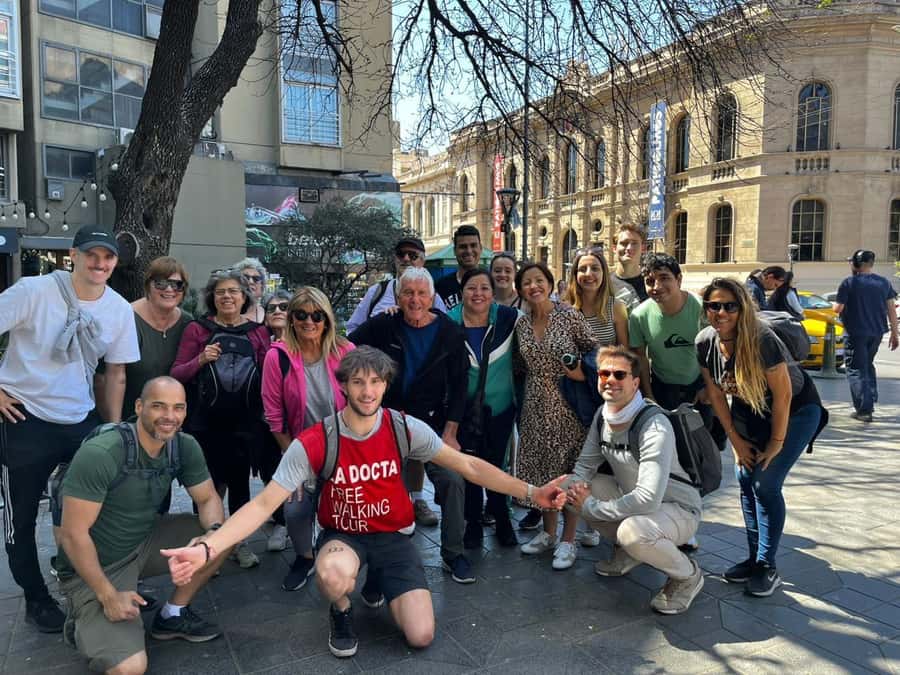
The Jesuit Crypt adds a more unusual piece to the route. It is one of the historic sites connected with the city’s religious past, but its underground setting gives the walk a change of mood after the open plaza and larger public buildings.
The itinerary allows about 10 minutes here. That makes this a quick historical stop rather than a long underground tour. Still, it helps show that Córdoba’s past is not visible only in grand façades. Some of its most interesting traces are tucked below the modern street level.
The tour also points out Córdoba’s narrowest building. This detail may sound small beside the Cathedral and Jesuit church, but it is exactly the sort of urban oddity that makes a walking route memorable. You get a reminder that a city is built not only from monuments, but also from unusual properties, tight spaces, and layers of adaptation over time.
I like this contrast. The major sights give you the official story, while small details such as the narrow building make the old center feel more personal and easier to remember.
The Marquis of Sobremonte museum
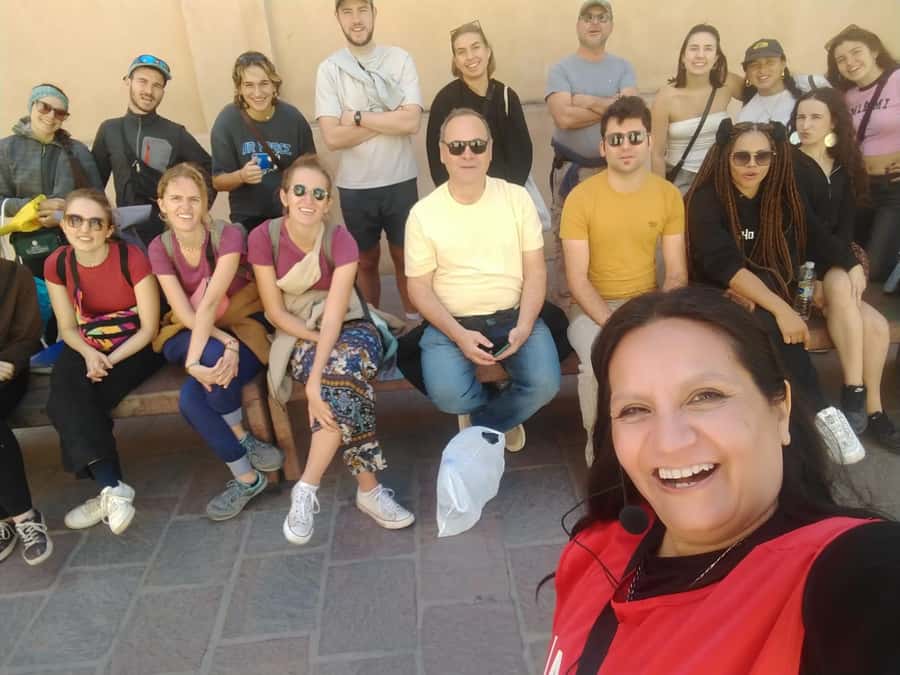
The Marquis of Sobremonte Provincial Historical Museum receives about 10 minutes on the route. The building adds a domestic and political angle to the tour, helping you see how prominent residents lived and how the city’s leadership developed.
As with the other museums, admission is not included. The walking tour gives you the setting and historical explanation, but you should not expect a full museum visit within the timed route. If this museum interests you, note its location and return later with more time.
That arrangement works well for a first visit. You gain the context needed to decide which places deserve a longer return visit. It also keeps the group moving, which matters when seven or more important sites are included in one afternoon or morning.
The Church of the Company of Jesus
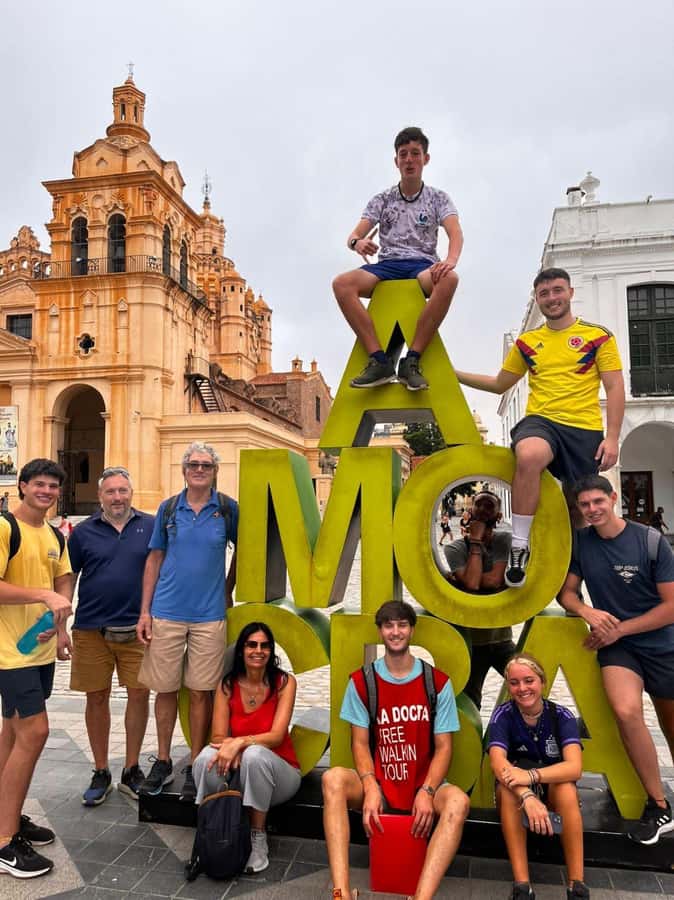
The Church of the Company of Jesus receives about 15 minutes, making it one of the longer stops. This is part of the Jesuit block and one of the route’s major architectural points.
Here you can expect the guide to discuss the Jesuit role in Córdoba and to draw attention to the building’s design and religious importance. The stop is not only about taking a quick photograph. It is a chance to understand how faith, education, craftsmanship, and colonial power were joined together in the city.
The extra time is helpful. A church can be hard to appreciate if you are rushed through it with only a name and a date. Fifteen minutes gives you space to listen, look around, and ask a question. If architecture interests you, this may be one of the strongest parts of the tour. One participant with an interest in masonry particularly appreciated the old brickwork and arches around Córdoba, so look closely at the construction details rather than focusing only on the main façade.
Monserrat school and Córdoba’s education tradition
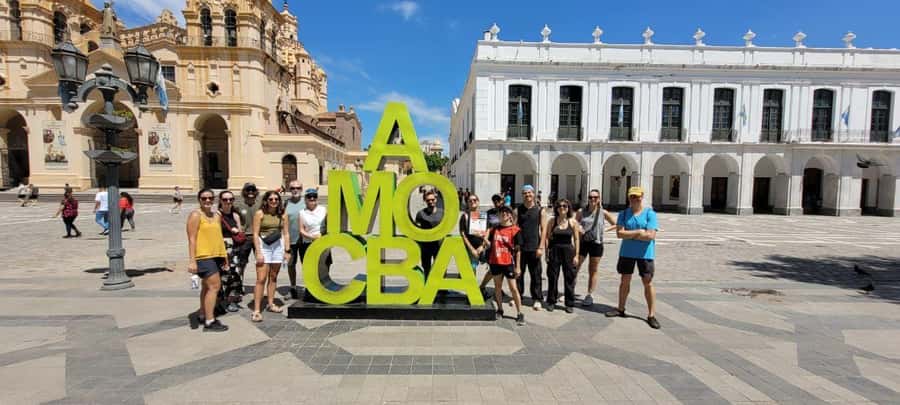
The National College of Monserrat is the final historic stop before the walk heads toward Patio Olmos. The visit lasts about 10 minutes.
This school belongs to the same wider story as the Jesuit block and the University of Córdoba. Its place on the route shows that education is not a side note in Córdoba’s past. It is part of the city’s identity and one reason the historic center contains so many important institutions close together.
The stop also rounds out the tour. You have seen civic power at the Cabildo, religious influence at the Cathedral and Jesuit church, domestic history at the Sobremonte museum, and education at Monserrat. That mix is more useful than a route made only of churches.
Local sounds, tastes, and a group-friendly pace
The tour promises surprises involving local sounds and tastes. The exact details are not fixed in the information provided, so you should treat these as planned additions rather than guaranteed food stops or a full tasting session.
That uncertainty is not necessarily a problem. Small sensory touches can break up a history-heavy walk and help you connect Córdoba’s past with its present. Just have a drink with you and do not book this as your main meal or culinary tour.
The social design may be the bigger benefit. The guides are described as funny, energetic, and willing to speak with people in different languages. Valeria is noted for using games and helping the group socialize, while Tomás is praised for keeping the walk entertaining as well as informative.
If you like a guide who tells jokes and encourages questions, you will probably enjoy the tone. If you prefer a silent, highly academic tour with no group activities, this may feel too lively.
The US$0.50 deposit and the value question
The advertised price requires a little explanation. You pay a US$0.50 deposit to reserve your place, then decide what the tour is worth at the end. The final payment is not fixed in advance.
That model offers strong value for anyone testing out a new city or watching a tight budget. You get a two-and-a-half-hour introduction to major historic sites without committing to a high prepaid tour price. It also lets you judge the guide’s service before deciding what to pay.
You should still budget for possible museum admissions, since those are not included. The low deposit is not the same as an entirely cost-free experience, and the pay-what-you-wish format works best when you plan to make a fair payment for the guide’s time.
The booking terms are flexible: you can cancel up to 24 hours in advance for a full refund, and you can reserve now and pay later. These details are useful if your Córdoba plans are still shifting.
Who will enjoy this Córdoba walking tour
I would recommend this walk to first-time visitors who want a quick historical framework before exploring alone. It suits solo visitors and small groups who enjoy meeting other people, as well as anyone who wants help deciding which museums deserve a second visit.
It is also a good match for English- or Spanish-speaking visitors. The guides speak both languages, although some content may be presented in its original language. If you have very specific historical interests, ask questions as you go, since the guides are described as willing to respond and provide wider context.
You should think twice if you dislike walking for 150 minutes, need every museum entrance included, or want a private pace. Weather can affect comfort too. One recent departure took place in unusually poor weather, so bring suitable clothing and remember that much of the experience takes place outdoors.
Should you book Córdoba La Antigua?
Book this tour if you want a lively introduction to Córdoba’s center, especially during your first day or two. The route covers the Cathedral, Cabildo, Jesuit Crypt, Jesuit block, Sobremonte museum, Jesuit church, Monserrat school, and several smaller details in one manageable outing.
The best reason to choose it is the combination of broad historical coverage and personable guiding. Tomás, Valeria, Aldy, and other La Docta guides are known for humor, energy, clear explanations, and group interaction. The main tradeoff is that you will need comfortable shoes, extra time for any museum interiors, and a fair payment at the end.
For most visitors, the US$0.50 reservation deposit makes this an easy yes. Use it to get your bearings, then return to the places that deserve a slower look.
FAQ
How long does the Córdoba La Antigua tour last?
The tour lasts 150 minutes, or two and a half hours.
Where does the tour begin?
It begins beside the statue in Plaza San Martín, in central Córdoba. Look for the guide wearing a red T-shirt.
Where does the tour finish?
The walk finishes at Patio Olmos shopping mall.
Which languages are available?
The tour is available in English and Spanish. Some content may be presented in its original language.
What historic places are included?
The route includes the UNC Historical Museum and Jesuit block, Cabildo, Cathedral of Córdoba, Jesuit Crypt, Marquis of Sobremonte Provincial Historical Museum, Church of the Company of Jesus, and National College of Monserrat. It also points out Córdoba’s narrowest building.
Are museum admission fees included?
No. Admission to museums is not included in the tour price.
What does the tour cost?
A US$0.50 deposit is required to reserve the tour. The tour does not have a fixed final cost, since you decide what to pay at the end.
What should I bring?
Wear comfortable shoes and bring drinks.
Can I cancel the booking?
Yes. You can cancel up to 24 hours in advance for a full refund. You can also reserve now and pay later.
Just added in Argentina
- Buenos Aires: Speakeasy & Mixology Bar Tour with Cocktails★ 5.0 · 5 reviews
- Premium Empanadas Cooking Class & Wine Tasting Experience★ 4.9 · 35 reviews
- Buenos Aires: Small-Group Wine Tasting★ 4.8 · 18 reviews
- Buenos Aires: Rojo Tango Show with Optional Dinner★ 3.4 · 3 reviews
- Buenos Aires: Santa Susana Ranch Day Tour, BBQ & Shows★ 4.6 · 32 reviews
- Buenos Aires:Small Group Tour AM & Sunset Open Bar Cruise PM★ 4.5 · 15 reviews
- Buenos Aires: Private Photo Tour for Ammateur Photographers★ 4.9 · 5 reviews
- Buenos Aires: Private Recoleta Cemetery Walking Guided Tour★ 4.6 · 13 reviews
Walking Tours, compared.

Nazis in Buenos Aires: a historical walking tour
Read our review →
Buenos Aires Walking Tour with Local Guide and Optional Rooftop
Read our review →
Browse the lists this tour appears in