
Reviewed · WALKING TOURS
Jewish Sites Buenos Aires Private Walking and Car Tour
Buenos Aires’ Jewish story is told through places of worship, museums, memorials, and one deeply painful act of terrorism. This private tour connects Templo Libertad, the Holocaust Museum, and AMIA with clear historical background and room for personal questions. The AMIA memorial and the Israeli Embassy Memorial give the tour its emotional weight.
I like two things here. First, you get a guide focused on Jewish life in Argentina rather than a general city tour. Second, the options are sensible: walk for two hours, add the Salvador Kibrick Museum for three, or use a private car for a broader four-hour route. Guides such as Richard Shpuntoff have also brought warm, personal family stories to the subject.
The main drawback is that the shortest tour is more of an exterior walking visit. Entry to Templo Libertad is not included, and the Salvador Kibrick Museum appears only on the longer options. Plan your time carefully if the museum matters to you.
Key points before you book
- Templo Libertad marks an early chapter of Jewish Buenos Aires: You see Argentina’s first synagogue and hear how Jewish immigrants built community in the city.
- AMIA brings the modern story into focus: The 1994 bombing and its effect on Argentine Jewish life are central to the tour.
- The Kibrick Museum requires at least three hours: Ritual objects, photographs, and historical documents add useful detail that street viewing cannot provide.
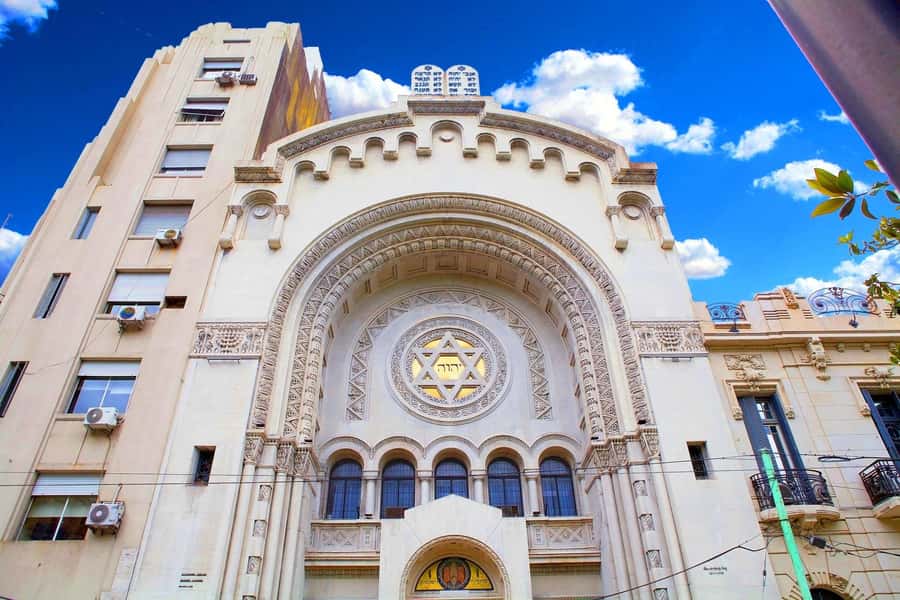
- The four-hour option covers more ground: A private car links the Jewish quarter with Plaza Libertad, 9 de Julio Avenue, the Israeli Embassy Memorial, and Plaza General San Martín.
- The guide makes the difference: Commentary is available in five languages, with private-group attention and a pace adjusted to your needs.
- Walking is modest but not effortless: Expect about 25 to 30 minutes on foot on the two-hour and three-hour choices, with some uneven surfaces or steps.
Why this Jewish heritage tour matters
Buenos Aires has one of Latin America’s major Jewish communities, and this experience gives you a focused way to understand its public landmarks. You are not simply looking at old façades. You are following a story of immigration, religious life, cultural identity, persecution, mourning, and continued community life.
That focus is useful because Buenos Aires can otherwise feel too large to read easily. Grand avenues and formal squares tell one story, while a synagogue, a museum, or a memorial tells another. A private guide helps connect those pieces without asking you to sort through the city on your own.
The tone is serious, but the subject is not presented only as tragedy. The route also shows how Jewish residents created institutions, preserved traditions, and rebuilt after periods of violence and uncertainty. I would choose this tour for historical context, not for a light sightseeing stroll.
Other guided walks through the barrios:
- Buenos Aires Hop-On Hop-Off Bus, Free Walking Tours & Discounts
★ 4.5 · 2,218 reviews - Buenos Aires: La Boca Guided Walking Tour in English
★ 4.8 · 1,587 reviews - Nazis in Buenos Aires: a historical walking tour
★ 4.9 · 193 reviews
Starting at Hotel Presidente on Cerrito Street
The two-hour and three-hour walking tours begin in front of Hotel Presidente at Cerrito 850. The hotel is only a meeting point, so do not go inside expecting the staff to direct you. Check the tour operator’s message the day before for final instructions.
This central starting point works well for a walking route through the old Jewish quarter. It also puts you close to some of the city’s best-known civic spaces, which become part of the four-hour itinerary.
The walking pace is described as moderate, with roughly 25 to 30 minutes of walking overall. That does not mean the full experience lasts only half an hour. Much of the time is spent stopping, looking, and listening. You should still wear comfortable shoes because the route can include uneven ground and steps.
The tour runs in rain or shine. Buenos Aires weather can change, so bring suitable clothing rather than counting on perfect conditions. If you have specific mobility needs, tell customer support ahead of time so the guide can adjust the pace.
Templo Libertad and the foundations of community life
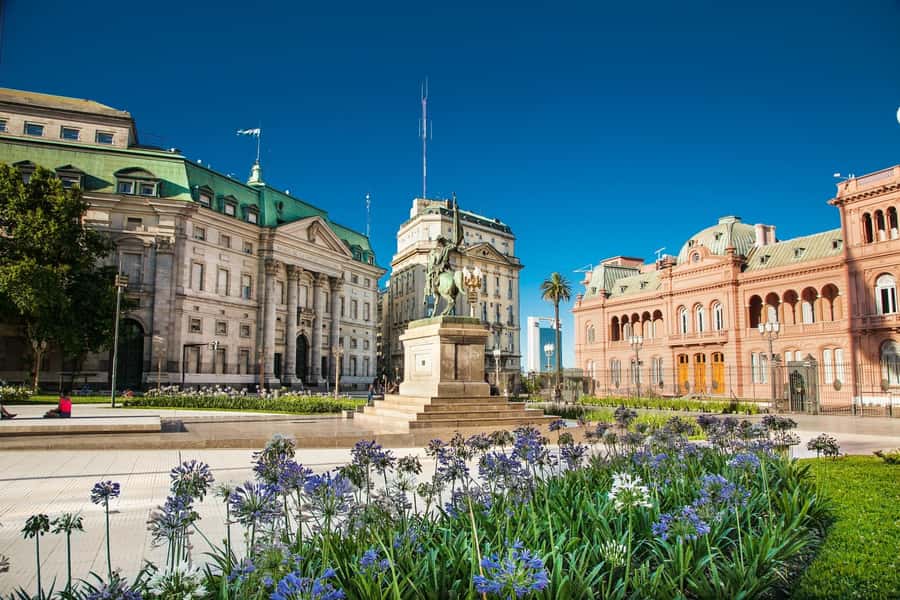
Templo Libertad is the natural historical anchor for the tour. It is described as Argentina’s first synagogue, and its façade gives you a visible starting point for the story of Jewish settlement and communal life in the country.
You will learn about the early Jewish diaspora in Argentina and the role religious institutions played in helping immigrants establish a shared identity. Even if you have little prior knowledge of Argentine Jewish history, this first stop gives the rest of the tour a clear frame.
One important limitation is that entry to synagogues is not included. The tour centers on the exterior of Templo Libertad, so you should not book the two-hour option expecting an indoor synagogue visit. The façade and the guide’s explanation still make the stop worthwhile, but the experience is more architectural and historical than ceremonial.
Nearby, the Museo Judío de Buenos Aires adds another layer. On the two-hour route, you pass the museum and hear about Jewish immigration and integration. On the three-hour and four-hour choices, you receive entry to the Salvador Kibrick Jewish Museum, giving you time to examine the collection properly.
The Salvador Kibrick Museum adds the objects
If you want more than street-level context, choose at least the three-hour option. Museum entry is included only on the three-hour and four-hour tours, and foreign visitors must present an original passport. Argentine citizens need their national identity card.
The museum contains ritual objects, photographs, and historical documents. These are the kinds of items that turn broad ideas about migration and religious practice into something easier to understand. A synagogue façade tells you where a community worshipped. A ritual object or family document can show how that community lived.
The three-hour option is a good middle ground. You keep the walking route and add the museum without committing to the full car-based itinerary. I would choose it if you are staying centrally, prefer walking, and care most about Jewish history rather than seeing a larger slice of central Buenos Aires.
Allow time for the museum to be more than a quick stop. The tour includes a guide, so you can ask about what you are seeing instead of reading every detail alone. The precise time spent at each point can vary because the guide adjusts the pace to the group.
Other guided walks in Buenos Aires:
- Buenos Aires: Personalized 2 to 8-Hour Private Walking Tour
★ 4.7 · 149 reviews - Buenos Aires: San Telmo and Market Guided Walking Tour
★ 4.8 · 102 reviews - Buenos Aires Walking Tour with Local Guide and Optional Rooftop
★ 4.5 · 87 reviews - Best of Buenos Aires Private Walking Tour
★ 4.5 · 73 reviews
The Holocaust Museum and the work of remembrance
The Buenos Aires Holocaust Museum shifts the focus from local community building to the wider experience of Jewish persecution during and after World War II. Your guide explains Argentina’s role in that period and discusses survivors who rebuilt their lives in the city.
This part of the route needs attention and patience. It is not a decorative museum visit or a simple list of dates. The value comes from connecting the international story of the Holocaust with the people and institutions of Buenos Aires.
The guide’s role matters especially here. A strong explanation can help you understand how world events affected Argentina and how survivors shaped new lives after unimaginable loss. Feedback about this tour has repeatedly emphasized clear historical explanations and personal stories. Richard Shpuntoff, named in one booking, was praised for connecting history with family experience and the political climate of Argentina today.
You should expect a thoughtful visit rather than a fast sightseeing stop. If your main goal is architecture or photographs, this tour may feel heavy. If you want a better grasp of Jewish life in Argentina, the museum provides some of the most important context on the route.
AMIA and the 1994 bombing

AMIA, the Asociación Mutual Israelita Argentina, is the emotional center of the shorter tours. It represents Jewish cultural and communal life, but it is also tied to the 1994 bombing, one of the darkest events in Argentine Jewish history.
Your guide discusses the attack, its victims, and the lasting effect on the community and the wider country. The stop is powerful because it links an active community institution with a painful national memory. You are not looking at distant history. You are considering how violence changed daily life, public memory, and the sense of security around Jewish institutions.
The experience does not treat AMIA as a final dramatic prop. It places the bombing within a longer story of community, loss, and resilience. That balance is important. You learn about tragedy, but you also see the continued importance of communal identity.
The two-hour tour ends with this concentrated route, making it the most efficient choice if you have limited time. It offers the central story without a museum visit or extended city drive.
The four-hour route and its citywide connections
The four-hour option includes the museum and private transportation from your Buenos Aires accommodation. This is the most comfortable and geographically broad version of the experience.
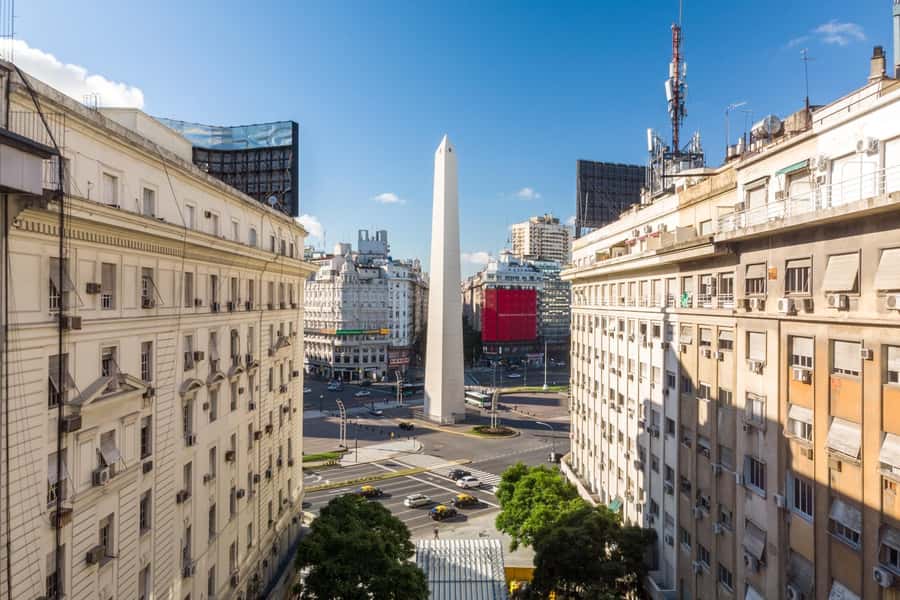
A private car helps when you want to connect sites that are not best handled as one compact walk. You visit Plaza Libertad, see the wide sweep of 9 de Julio Avenue, and stop at the Israeli Embassy Memorial, which commemorates the 1992 attack. The route also includes Plaza General San Martín, a formal public space linked to Argentina’s military and immigrant history.
These additions place Jewish memory within the larger civic setting of Buenos Aires. You see how memorials sit beside grand avenues and public squares, rather than treating Jewish heritage as a separate subject hidden away from the rest of the city.
The car is also practical in poor weather or if walking for several hours is not appealing. Pickup and drop-off at your accommodation are included only with the four-hour option. The two-hour and three-hour tours do not include private transportation, so you make your own way to the starting point and back afterward.
I would not choose four hours only for the vehicle. Choose it because you want the museum, the additional memorials, and a wider view of the city. The car makes that itinerary easier and less tiring, but the content is the real reason to pay for the longer version.
Which duration gives you the best value
The listed price is $129 per person. The value depends less on the number of hours than on what you want included and how much individual guidance matters to you.
The two-hour option suits a first introduction. You visit the main outdoor landmarks, hear about Templo Libertad and the Jewish Museum, learn about the Holocaust Museum, and finish at AMIA. It is the most time-efficient choice, but museum entry and transport are not included.
The three-hour option is probably the best balance for many people. You add the Salvador Kibrick Museum and receive more time for questions, while still keeping the tour manageable on foot. If museum objects and documents matter to you, the extra hour is worthwhile.
The four-hour option has the strongest practical value for visitors who want a fuller route. It includes museum entry, private car service, accommodation pickup and drop-off, and several additional city landmarks. It costs more in time, but it reduces the effort of arranging transport and gives the guide room to explain how Jewish history fits into Buenos Aires as a whole.
The private format also affects value. You are not placed in a large, anonymous group. The normal group size can range from one to 25 people per guide, with extra guides arranged for larger groups. That is a broad range, so ask about the expected group size if personal conversation is important to you.
The guide is the heart of the experience
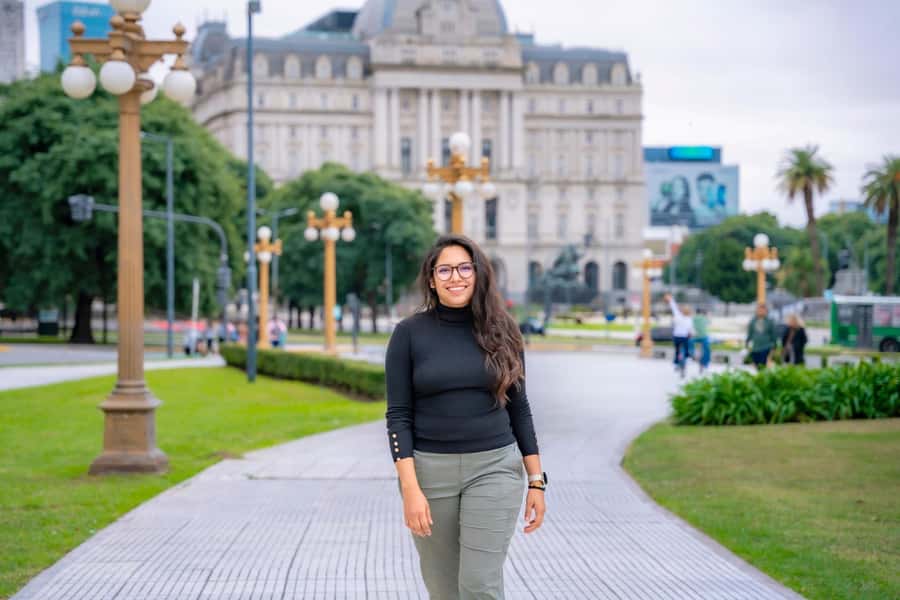
The guide is the main reason to consider a private tour rather than following a printed route. You can ask about immigration, religion, memory, current politics, or family stories as they arise. The guide can also slow down when a subject needs more care or move on when you already understand the background.
Tours are offered in English, Spanish, French, Italian, and Portuguese. Choose the language in which you can discuss serious historical subjects comfortably. A private guide is most useful when you feel free to ask questions, not when you are simply listening to a memorized speech.
The strongest feedback about this experience has focused on the guide’s warmth, clarity, and ability to connect Argentine Jewish history with present-day life. One guide, Richard Shpuntoff, was specifically described as open, generous, and able to add personal and family stories. That kind of human context can make the difference between recognizing a memorial and understanding why it matters.
Still, the quality of any private tour depends on the person leading it. The booking provides a licensed guide and a chosen language, but it does not promise one specific guide for every date. Go in with two or three questions you particularly want answered. That helps you make the most of the private format.
Practical details that affect your day
You can cancel up to 24 hours before the tour for a full refund, and you can reserve now and pay later. Starting times depend on availability, so check the schedule before building the rest of your day around the tour.
Food and drinks are not included. The tour lasts two to four hours, but you should allow extra time around it if you have a fixed reservation afterward. The four-hour tour includes transport, while the walking options require you to reach the meeting point independently.
Bring the required identification for the museum. Foreign visitors need an original passport, not simply a photocopy or another form of identification. This is an easy detail to miss, and arriving without it could affect your museum visit.
The route operates in all weather. Comfortable shoes are sensible for the walking choices, and you should be ready for uneven surfaces or steps. If someone in your group needs a slower pace, contact support before the tour rather than waiting until the meeting point.
Who should book this Buenos Aires tour
I would recommend this experience to anyone with a personal, religious, or historical interest in Jewish life in Argentina. It also suits visitors who want to understand the AMIA bombing and the Israeli Embassy attack within the larger story of Buenos Aires.
The tour works especially well for families, since a private guide can adapt explanations for different ages. It is also useful for first-time visitors who want an organized introduction to a part of the city they might otherwise miss.
Choose the two-hour tour if your schedule is tight and you want the principal landmarks. Choose three hours if the Kibrick Museum is important. Choose four hours if you want the most complete route, need hotel pickup, or prefer not to manage transport between sites.
I would skip it only if you are looking for a casual city walk with little discussion of difficult history. This is a serious, reflective experience. Its rewards come from listening, asking questions, and giving the subject the attention it deserves.
Should you book it?
Book this tour if you want a clear, personal introduction to Buenos Aires’ Jewish heritage rather than a quick pass by notable buildings. The two-hour route covers the essential story, but the three-hour option gives better value if you care about objects and documents. The four-hour choice is best for a fuller itinerary with private transport and additional memorials.
For most visitors, I would lean toward three hours. It adds the Salvador Kibrick Museum without making the day as long as the car-based route. If convenience and broader city context matter more than keeping the tour compact, spend the extra time on the four-hour option.
FAQ
Where does the walking tour begin?
The meeting point is in front of Hotel Presidente at Cerrito 850 in Buenos Aires. Do not enter the hotel, as its staff are not informed about the tour.
Is Templo Libertad open for an included visit?
No. Entry to synagogues is not included. The tour includes viewing Templo Libertad from outside and learning about its place in Argentine Jewish history.
Is the Salvador Kibrick Museum included?
Museum entry is included with the three-hour and four-hour tours. It is not included with the two-hour option.
Do I need identification for the museum?
Yes. Foreign visitors must present an original passport. Argentine citizens must show their national identity card.
Does every tour include private transportation?
No. Private pickup and drop-off are included only with the four-hour option. The two-hour and three-hour tours are walking experiences without included private transfers.
Which languages are available?
The live guide can conduct the tour in English, Spanish, French, Italian, or Portuguese.
Just added in Buenos Aires
- Buenos Aires: Speakeasy & Mixology Bar Tour with Cocktails★ 5.0 · 5 reviews
- Premium Empanadas Cooking Class & Wine Tasting Experience★ 4.9 · 35 reviews
- Buenos Aires: Small-Group Wine Tasting★ 4.8 · 18 reviews
- Buenos Aires: Rojo Tango Show with Optional Dinner★ 3.4 · 3 reviews
- Buenos Aires: Santa Susana Ranch Day Tour, BBQ & Shows★ 4.6 · 32 reviews
- Buenos Aires:Small Group Tour AM & Sunset Open Bar Cruise PM★ 4.5 · 15 reviews
- Buenos Aires: Private Photo Tour for Ammateur Photographers★ 4.9 · 5 reviews
- Buenos Aires: Private Recoleta Cemetery Walking Guided Tour★ 4.6 · 13 reviews
Walking Tours, compared.
Nazis in Buenos Aires: a historical walking tour
Read our review →
La Docta Free Walking Tour “Córdoba La Antigua”.
Read our review →
Buenos Aires Walking Tour with Local Guide and Optional Rooftop
Read our review →
Browse the lists this tour appears in