
Reviewed · WALKING TOURS
Nazis in Buenos Aires: a historical walking tour
Buenos Aires carries its World War II story in plain sight. On this 2.5-hour walk, you move from a Nazi gathering in a working theater to the place Adolf Eichmann once sat for coffee, then finish at the memorial for the former Israeli Embassy. The subject is serious, but the route gives it shape and place.
I like the tour’s evidence-first approach and the way guide Max connects Nazi fugitives with Perón, Argentina’s Jewish community, and later attacks. I also like that the walk does not flatten a disputed subject into a simple answer. The main drawback is that this is a demanding history lesson on foot, not a light sightseeing stroll, and it is not suitable for children under 10 or wheelchair users.
What makes this walk worth your time
- Eichmann’s Buenos Aires stop: Learn the spy-like story behind the identification and capture of one of the Holocaust’s most notorious criminals.
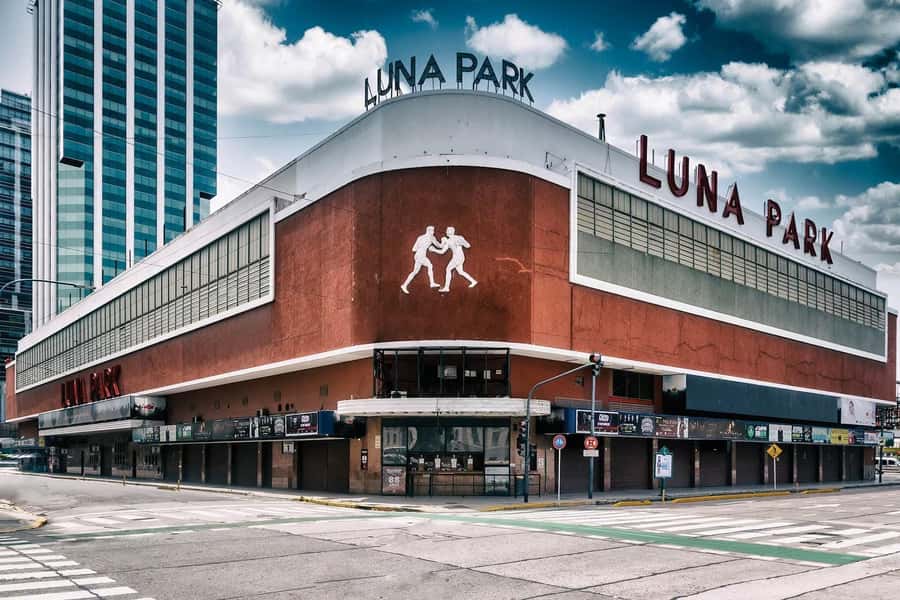
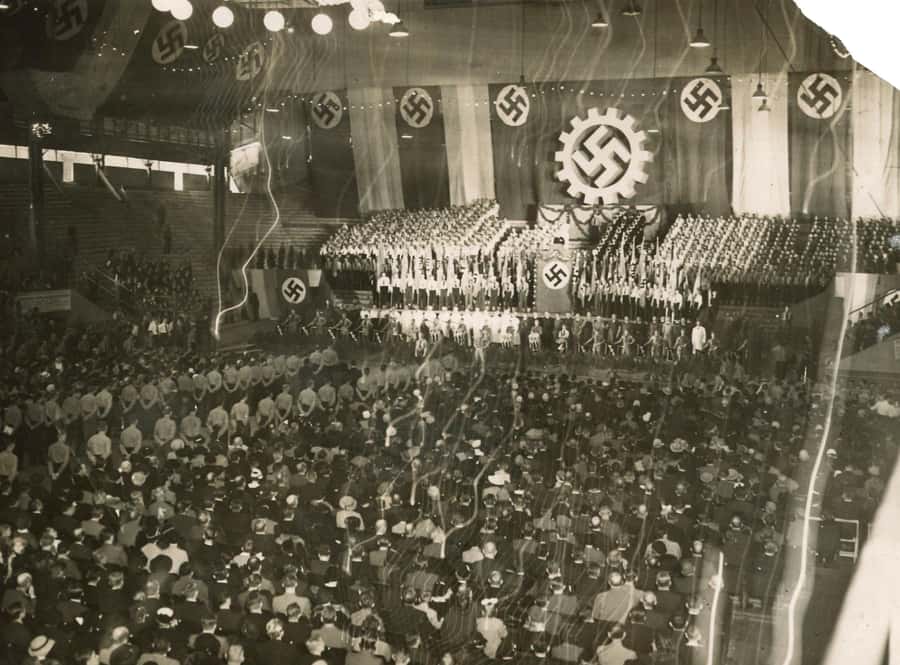
- A 15,000-seat political setting: See Luna Park, a still-operating theater linked to a major Nazi meeting.
- History in working city streets: Recoleta, Retiro, and Microcentro become the backdrop for events that are otherwise easy to miss.
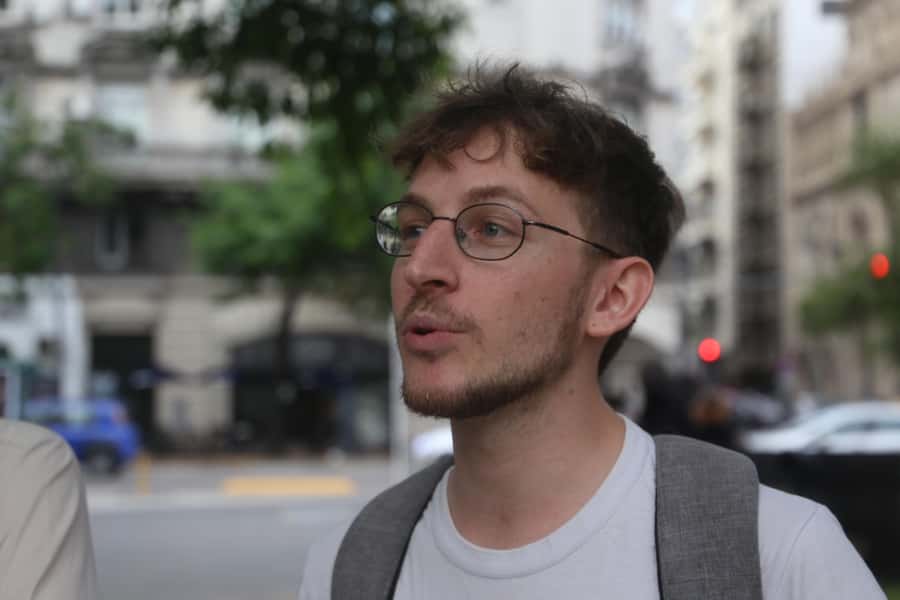
- A careful guide: Max, a history teacher from the University of Buenos Aires, uses photographs and other visual material to support the discussion.
- The Jewish community’s story: Put Argentina’s second-largest Jewish community in the Americas into the wider story of war, migration, terrorism, and memory.
- A $25 price point: For a long English-language walk led by a specialist, the cost is strong, provided you want serious historical content.
Starting beside Palacio Libertad
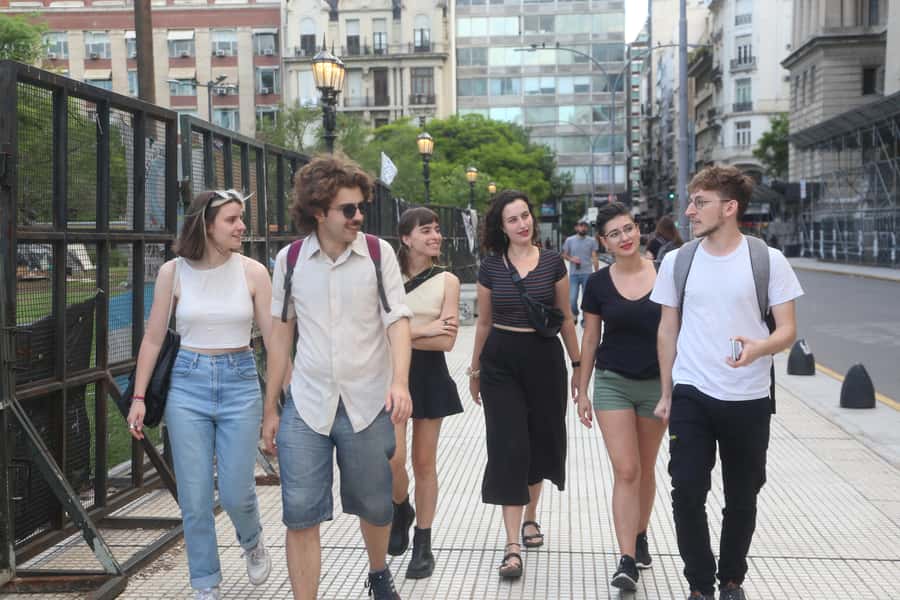
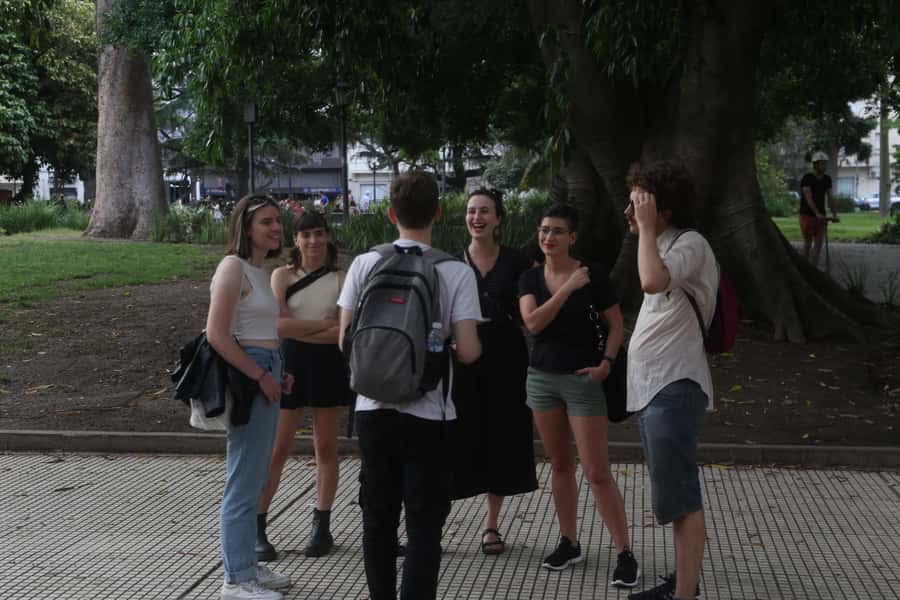
The walk begins a few meters from the Monument to Juana Azurduy, beside the benches facing Palacio Libertad, formerly known as the CCK. Max wears a black cap, which should make the meeting point easier to spot.
This opening location is useful because it places you in central Buenos Aires before the tour begins moving through Recoleta, Retiro, and Microcentro. You are not being taken to a single museum and handed a fixed story. Instead, the city itself supplies the setting, and each stop adds another piece to the argument about Argentina after 1945.
Max sets out the basic questions early: Did Argentina knowingly provide a refuge for Nazi war criminals? Did parts of the government promote or tolerate their arrival? What did the Argentine Jewish community face? Where does firm evidence end and political debate begin?
You will get more from the walk if you already know the broad outline of World War II and the Holocaust. You do not need specialist training, though. Max is described as willing to answer questions about Nazism, Judaism, the war, and Argentine history, and his teaching background helps him explain the subject to people with different levels of prior knowledge.
Other guided walks through the barrios:
- Buenos Aires Hop-On Hop-Off Bus, Free Walking Tours & Discounts
★ 4.5 · 2,218 reviews - Buenos Aires: La Boca Guided Walking Tour in English
★ 4.8 · 1,587 reviews - Buenos Aires: Personalized 2 to 8-Hour Private Walking Tour
★ 4.7 · 149 reviews
Luna Park and the scale of Nazi organizing
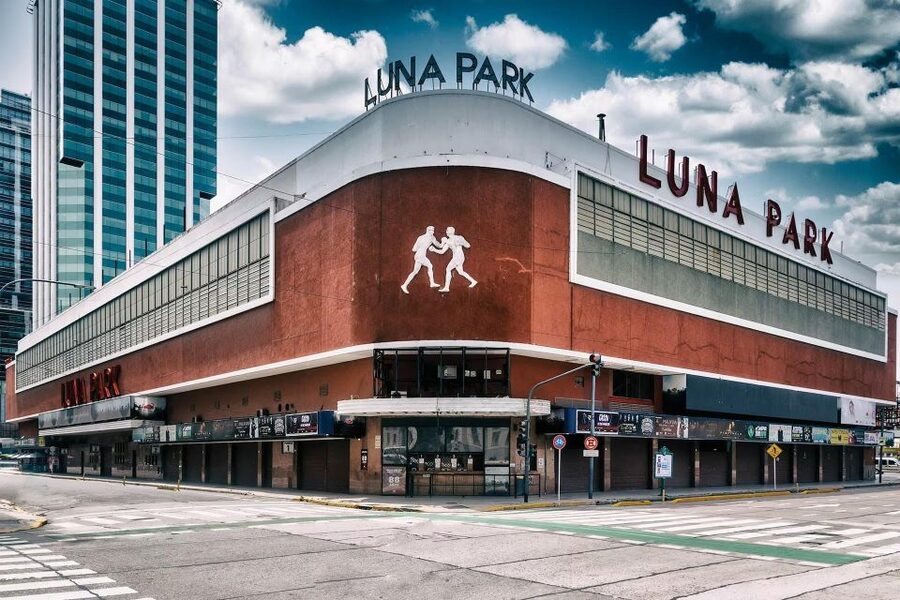
The first major stop is Luna Park Stadium, where the group spends about 20 minutes. This is one of the tour’s most striking settings because it is not an obscure ruin or a vanished address. It remains an operating theater with room for 15,000 people.
That scale matters. A political meeting held in a venue of this size forces you to think beyond the idea of a few secretive extremists meeting in private. The stop lets Max discuss organized Nazi activity in Buenos Aires and the public setting in which it took place.
You should not expect entry to the stadium. Admission to Luna Park is not included, so the experience is primarily an outdoor explanation and visual connection to the site. Still, the building works as a powerful backdrop. A photograph or archive image can tell you what happened, but standing in front of a large venue gives the event a physical scale.
This stop also shows why the tour is more than a standard city walk. The point is not simply to identify a building. It is to ask what the building reveals about politics, public support, and the way ideology appeared in Argentine life.
ABC Restaurant and the Eichmann story
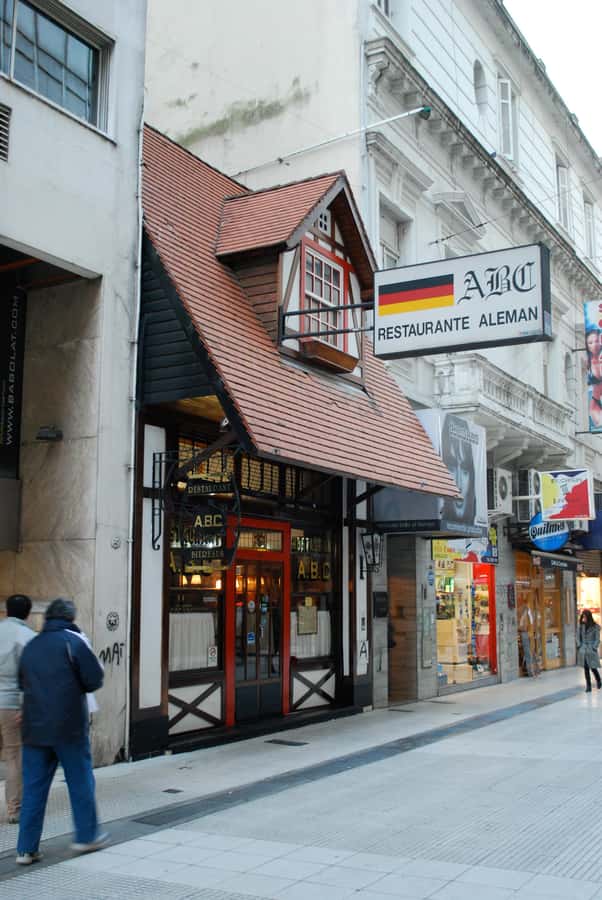
The stop at ABC Restaurant lasts about 20 minutes and connects with one of the tour’s most memorable details: Adolf Eichmann sitting down for a cup of coffee in Buenos Aires.
The coffee detail brings a frighteningly large subject down to street level. Eichmann was not only a name in a textbook or a figure in a courtroom. He was a fugitive living an ordinary-looking life in an ordinary-looking city, at least on the surface.
Here Max explains the spy-like process through which Eichmann was identified and captured. The value of this section lies in the chain of questions behind the event: How was he recognized? What information was trusted? Who was watching? What did his presence say about Argentina’s postwar environment?
This is also a good place to pay attention to the difference between a documented event and a popular story that may have been polished over time. Max’s method, as described throughout the tour, is to separate firm evidence from claims that remain disputed. He is also comfortable saying when something is not certain, a useful habit on a subject crowded with myth and political agendas.
The National Arms Museum and the mechanics of power
The Museo de Armas de La Nación Tte. Gral. Pablo Riccheri is the next stop, with roughly 20 minutes devoted to it. The tour data does not include museum admission, so you should treat this as a stop connected to the surrounding historical discussion rather than a guaranteed museum visit.
Its presence on the route widens the story. The tour is not only about fugitives arriving after 1945. It also asks how state power, military institutions, political movements, and international events shaped Argentina during the period.
For you, this part may be especially useful if your interest extends beyond the title subject. Several reviews of the experience point to the broader Argentine political context as one of its strengths. Max does not use the Nazi question as an isolated curiosity. He places it alongside the debates surrounding Juan Domingo Perón, arguably the key Argentine political figure of the 20th century.
That wider frame can be a benefit or a limitation. If you want only a fast list of Nazi escape routes, some of the political material may feel like a detour. If you want to understand why Argentina’s postwar choices remain controversial, the added context is essential.
Other guided walks in Buenos Aires:
- Buenos Aires: San Telmo and Market Guided Walking Tour
★ 4.8 · 102 reviews - Buenos Aires Walking Tour with Local Guide and Optional Rooftop
★ 4.5 · 87 reviews - Best of Buenos Aires Private Walking Tour
★ 4.5 · 73 reviews - Full Day Private Walking Tour of Buenos Aires Neighborhoods
★ 5.0 · 55 reviews
Palacio San Martin and the government question
At Palacio San Martin, another 20-minute stop, the discussion turns toward institutions, diplomacy, and the Argentine government’s possible role in postwar migration.
The central question is not simply whether Nazi war criminals reached Argentina. It is whether officials knew about their arrival, permitted it, or actively helped make it possible. This distinction is crucial. It separates individual escape stories from the larger question of state policy.
The tour presents the issue as disputed rather than settled by a dramatic claim. That balance is one of its strongest features. Max uses the sites to lay out the evidence and the competing interpretations, then gives you room to consider the political consequences.
This is where the tour’s format pays off. A lecture can explain policy, but a walk keeps the question tied to real addresses and public institutions. You are not just memorizing a position. You are seeing where the discussion belongs in the city.
The Italian Circle and a neo-Nazi attack
The Italian Circle of Buenos Aires brings the walk into the 1960s, with a focus on a neo-Nazi attack. This stop helps show that the story did not end when the immediate postwar period ended.
That later event connects the earlier discussion to the persistence of antisemitism and extremist violence. It also prevents the tour from treating Nazi history as something safely sealed in Europe or confined to the years between 1939 and 1945.
The stop is likely to work best if you listen for the links between ideology, public life, and memory. The tour does not present a neat timeline in which one era ends and another begins. Instead, it follows how ideas and political wounds can continue to affect a city decades later.
By this stage, the route has moved well beyond the question of where fugitives went. You are considering how Argentina remembered, denied, debated, or confronted this past.
Ending at the former Israeli Embassy memorial
The tour finishes at Plaza Embajada de Israel, the memorial site of the former Embassy of Israel. The location is tied to one of the worst terrorist attacks in Latin American history, making it a sober endpoint.
The final stop connects the Nazi and Holocaust-era material with the later history of Argentina’s Jewish community. Buenos Aires has the second-largest Jewish community in the Americas, and the memorial gives that community’s story a local, human setting rather than leaving it as background information.
This ending also makes the tour feel current without turning it into a political speech. The history reaches into the present through questions of terrorism, antisemitism, public memory, and the duty to remember.
The ending point is described as Plaza Embajada de Israel. The meeting information also says the activity ends back at the meeting point, so check the exact arrangement and current details when you reserve.
Why Max’s teaching style matters
The guide can make or break a tour about a disputed subject. Max is a history teacher from the University of Buenos Aires, and the strongest feature of his approach is the care he brings to sources and uncertainty.
He uses photographs and other visual material at the stops, which helps when a building looks ordinary or when the historical event is difficult to picture. He also encourages questions and discussion rather than treating the group as a silent audience.
That does not mean the tour is casual. You will hear about war criminals, the Holocaust, terrorism, antisemitism, and political responsibility. The tone is serious, but the presentation is described as friendly, clear, and engaging.
The best fit is someone who enjoys asking how we know something, not only what happened. If you prefer a brisk route with a few dates and photo stops, this may feel dense. If you like history presented with competing interpretations and supporting evidence, Max’s style should suit you.
Price, pace, and practical comfort
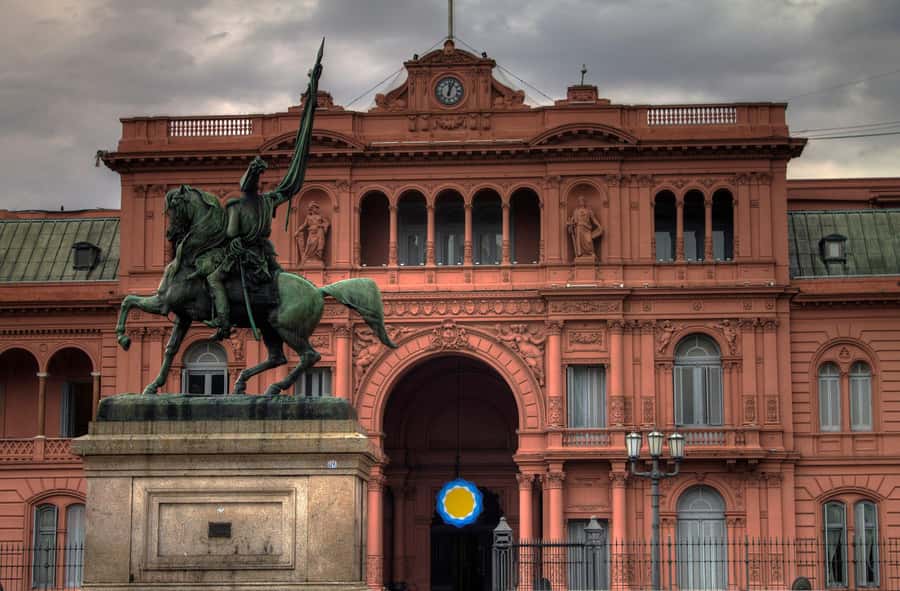
At $25 per person, the walk offers good value for an English-language experience lasting about two and a half hours. The price includes the guide and walking tour, but not entry to Casa Rosada, the Libertad Synagogue, or Luna Park Stadium.
The cost makes particular sense if you want a specialist subject rather than a general introduction to Buenos Aires. You are paying for a carefully built route, a guide with an academic teaching background, visual material, and discussion across several historical periods.
Wear comfortable shoes and bring water. There is a 10-minute pause for a restroom break, but you should still plan for sustained walking and standing. The route is not suitable for wheelchair users, and children under 10 cannot join.
The tour is offered in English. Free cancellation is available up to 24 hours before the activity for a full refund, and you can reserve now and pay later. Those policies are useful if your Buenos Aires schedule is still shifting.
Who should book this Buenos Aires history walk
I would choose this tour if you want to understand how World War II, Nazi fugitives, Perón-era politics, the Jewish community, and later attacks fit together in Buenos Aires.
It is especially suited to:
- Adults and older teenagers with an interest in history or politics
- People who already know the basic events of the Holocaust
- Visitors who prefer evidence and discussion over simple sightseeing
- Anyone curious about Argentina’s modern political past
- English speakers looking for a focused walking experience
I would think twice if you want a relaxed introduction to the city, dislike difficult historical subjects, or have limited mobility. The walk covers a lot in 2.5 hours, and the subject remains emotionally heavy.
Should you book it?
Book it if the question of Nazi fugitives in Argentina interests you and you want more than a sensational story. The best reason to go is the combination of real locations, careful source-based discussion, and Max’s ability to connect one subject to the country’s wider political and Jewish history.
Do not book it expecting a museum visit at every stop or a simple verdict on Argentina’s wartime and postwar conduct. You will get a serious, sometimes uncomfortable examination of disputed history. At $25, that is strong value for the right audience, particularly if you want one of your Buenos Aires walks to leave you thinking after it ends.
FAQ
Where does the tour begin?
It begins a few meters from the Monument to Juana Azurduy, by the benches facing Palacio Libertad, formerly known as the CCK.
How will I recognize the guide?
Max wears a black cap and waits by the benches facing Palacio Libertad.
Where does the tour end?
The activity ends at Plaza Embajada de Israel, the memorial site of the former Israeli Embassy. The meeting information also describes the activity as ending back at the meeting point, so check the current details when booking.
How long does the walking tour last?
The tour lasts about two and a half hours. There is a 10-minute pause for restroom use.
What language is the tour offered in?
The live tour guide provides the experience in English.
What locations are included?
The route includes the Monument to Juana Azurduy, Luna Park Stadium, ABC Restaurant, the Museo de Armas de La Nación Tte. Gral. Pablo Riccheri, Palacio San Martin, the Italian Circle of Buenos Aires, and Plaza Embajada de Israel.
Is admission to the sites included?
The guide and walking tour are included. Entry to Casa Rosada, the Libertad Synagogue, and Luna Park Stadium is not included.
What should I bring?
Bring comfortable shoes and water.
Can children or wheelchair users join?
The tour is not suitable for children under 10 or wheelchair users.
More Historical Tours in Buenos Aires
- San Telmo: Historical Guided Tour with Street Food & Drinks
★ 5.0 · 87 reviews - Buenos Aires: La Boca Art and History Walking Tour
★ 4.8 · 55 reviews - Recoleta Cemetery – Small Group Tour of History & Secrets
★ 5.0 · 53 reviews - Buenos Aires: Historic Buenos Aires Landmarks & Icons Tour
★ 4.9 · 37 reviews
Just added in Buenos Aires
- Buenos Aires: Speakeasy & Mixology Bar Tour with Cocktails★ 5.0 · 5 reviews
- Premium Empanadas Cooking Class & Wine Tasting Experience★ 4.9 · 35 reviews
- Buenos Aires: Small-Group Wine Tasting★ 4.8 · 18 reviews
- Buenos Aires:Small Group Tour AM & Sunset Open Bar Cruise PM★ 4.5 · 15 reviews
- Buenos Aires: Rojo Tango Show with Optional Dinner★ 3.4 · 3 reviews
- Buenos Aires: Santa Susana Ranch Day Tour, BBQ & Shows★ 4.6 · 32 reviews
- Buenos Aires: Private Photo Tour for Ammateur Photographers★ 4.9 · 5 reviews
- Buenos Aires: Private Recoleta Cemetery Walking Guided Tour★ 4.6 · 13 reviews
Walking Tours, compared.
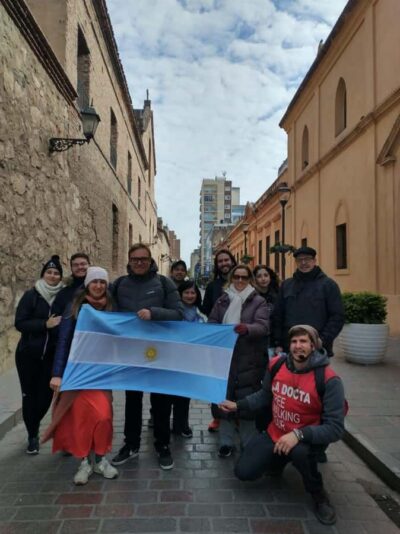
La Docta Free Walking Tour “Córdoba La Antigua”.
Read our review →
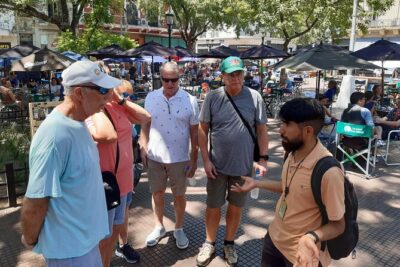
Buenos Aires Walking Tour with Local Guide and Optional Rooftop
Read our review →
Browse the lists this tour appears in