
Reviewed · WALKING TOURS
Buenos Aires: 7 Hour Small Group “BA 101” Walk
Buenos Aires reveals itself in layers on this seven-hour small-group walk. You begin among elegant Barrio Norte streets, pass through Recoleta and the city center, then finish among San Telmo’s cobbles, antiques, food stalls, and old iron market halls. Along the way, you get history, architecture, food, local transport, and a useful first look at the city’s layout.
I like the limited group of seven, which gives you room to ask questions and keeps the day more personal. I also like the practical mix of walking, coffee, a metro or bus ride, and a local lunch. The main drawback is the pace: seven hours on foot is a lot, and the tour is not designed for children under 10, wheelchair users, or anyone who needs a slower route.
Key points at a glance
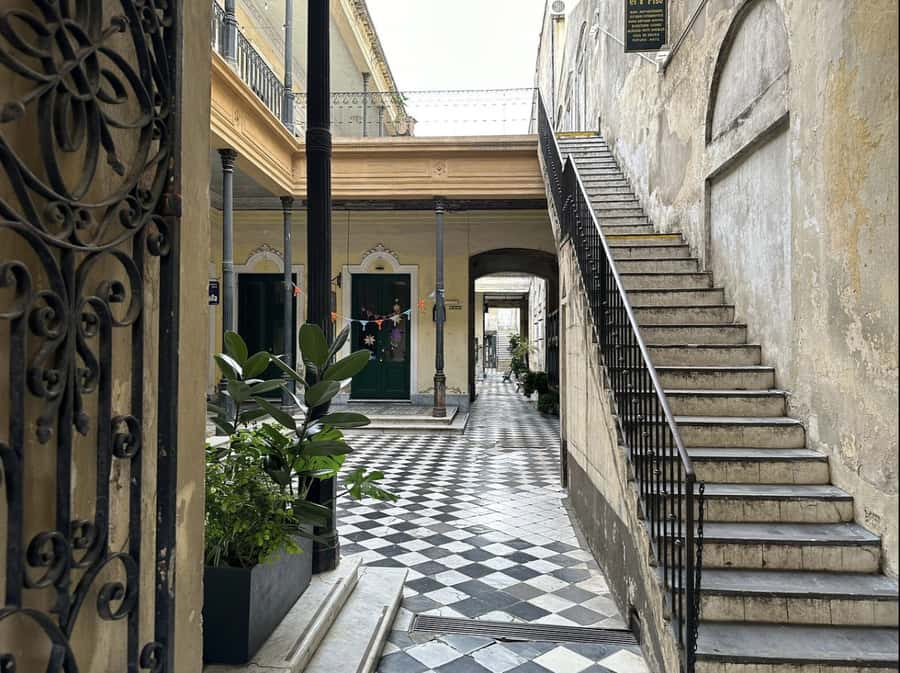
- Evita’s tomb in Recoleta Cemetery: See the elaborate cemetery and the Duarte family mausoleum, where Eva Perón is buried.
- A full cross-section of Buenos Aires: Walk through Barrio Norte, Recoleta, San Nicolás, Monserrat, and San Telmo in one day.
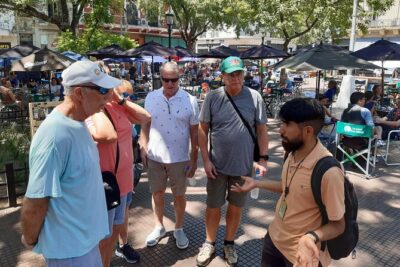
- Small group access: The group is limited to seven people, with English-language guidance from guides such as Chris and Tracy.
- Useful extras included: Coffee, local lunch with a main course and drink, public transport, water, and historical-site entrance fees are covered.
- A strong first-day choice: The route helps you decide which neighborhoods deserve more of your time later.
- A demanding walking day: Wear comfortable shoes and expect a long, active outing from 10 a.m. to 5 p.m.
Why this seven-hour route works
Buenos Aires can feel scattered at first. Its major sights are spread across districts with different moods and architectural styles. This tour gives you a clear north-to-south introduction, beginning near Av. Santa Fe and Av. Callao and ending in San Telmo.
That direction matters. You start in the refined streets of Barrio Norte and Recoleta, move through the grand central avenues, then finish in one of the city’s oldest areas. The day feels like a gradual change in tone rather than a string of unrelated stops.
You also get more than a checklist of monuments. The guide explains food, customs, local stories, language, and the small details that are easy to miss when you walk alone. Chris and Tracy are named guides associated with the experience, and strong feedback specifically points to their ability to answer questions, explain local history, and add lively stories.
This is not a quiet museum tour. You spend much of the day outside, crossing avenues, entering public spaces, riding local transport, and walking between sights. The reward is a better sense of how Buenos Aires actually works.
Other guided walks through the barrios:
- Buenos Aires Hop-On Hop-Off Bus, Free Walking Tours & Discounts
★ 4.5 · 2,218 reviews - Buenos Aires: La Boca Guided Walking Tour in English
★ 4.8 · 1,587 reviews - Nazis in Buenos Aires: a historical walking tour
★ 4.9 · 193 reviews
Barrio Norte begins with books and grand façades
The meeting point is in the Recoleta or Barrio Norte area, close to Av. Santa Fe and Av. Callao. The exact spot arrives with your confirmation, but the general location is easy to reach within this central part of the city.
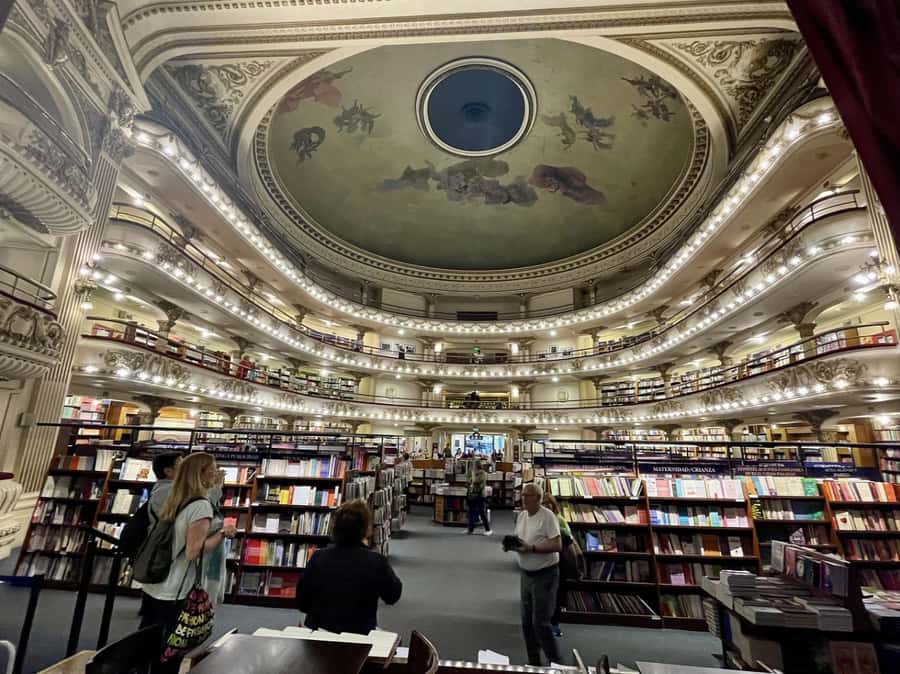
The first major stop is El Ateneo Grand Splendid. This former theater now houses one of the world’s most admired bookstores. The building’s original stage, balconies, and decorative details give it far more character than an ordinary shop. Even if you are not looking for books in Spanish, it is a worthwhile architectural stop.
From there, you walk to leafy Plaza Rodríguez Peña. The square sits beside Palacio Sarmiento, home to Argentina’s Ministry of Education. This opening section gives you an early look at the city’s habit of placing formal public buildings beside everyday cafés, shops, and green spaces.
The Palacio de Aguas Corrientes is another surprise. Its elaborate exterior hides a practical public-works story, and the guide explains why this unusual building exists. That kind of stop is one reason a guide adds value: on your own, you might photograph the façade and keep walking without knowing what you are seeing.
Recoleta Cemetery and the story of Evita
Recoleta Cemetery is the emotional center of the morning. It is not a conventional cemetery with simple rows of graves. Inside its walls, narrow passages lead between elaborate tombs belonging to Argentina’s wealthy and famous families.
The entrance fee is included, with a stated value of more than US$15 per person. That helps justify part of the $160 price, especially when combined with lunch, coffee, water, and public transport.
The most famous stop inside is the resting place of Eva Perón, known as Evita. Her family mausoleum is more modest than some of the grand structures around it, which makes the location especially interesting. Evita remains one of Argentina’s most important political and cultural figures, and the guide places her life in the wider story of the country.
You should allow yourself time to look upward and around. The cemetery’s appeal lies in its details: sculpture, stonework, iron gates, family names, and the contrast between solemn memorials and the city streets just outside. The setting can be busy, so the small group is useful here. You can stay close to the guide without being swallowed by a large crowd.
Next comes Plaza Francia and the Church of Our Lady of Pilar. The church is one of the city’s best-preserved examples of colonial architecture. After the dense cemetery, the open square offers a welcome change of pace.
Teatro Colón, Plaza Lavalle, and the big city center
The route then heads toward San Nicolás, the central district associated with some of Buenos Aires’ most important cultural and civic buildings. Teatro Colón is the headline stop. It is one of the best-known opera houses in the world, and even an exterior view gives you a sense of the city’s grand European-influenced style.
At Plaza Lavalle, you see the Palacio de Justicia de la Nación, home to Argentina’s Supreme Court. This part of the route shifts the focus from private wealth and family memorials to national institutions.
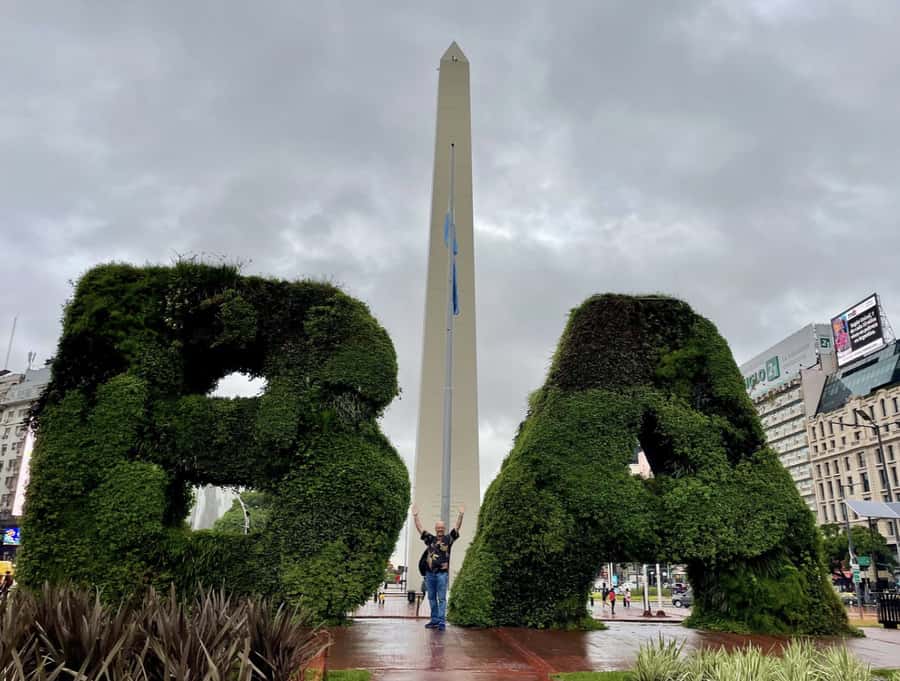
The next section opens onto Avenida 9 de Julio, one of the city’s most famous thoroughfares. The Buenos Aires Obelisk rises at its center, making this one of the tour’s clearest photo stops. You also get a picture with the green BA sign, a simple but useful souvenir of your day.
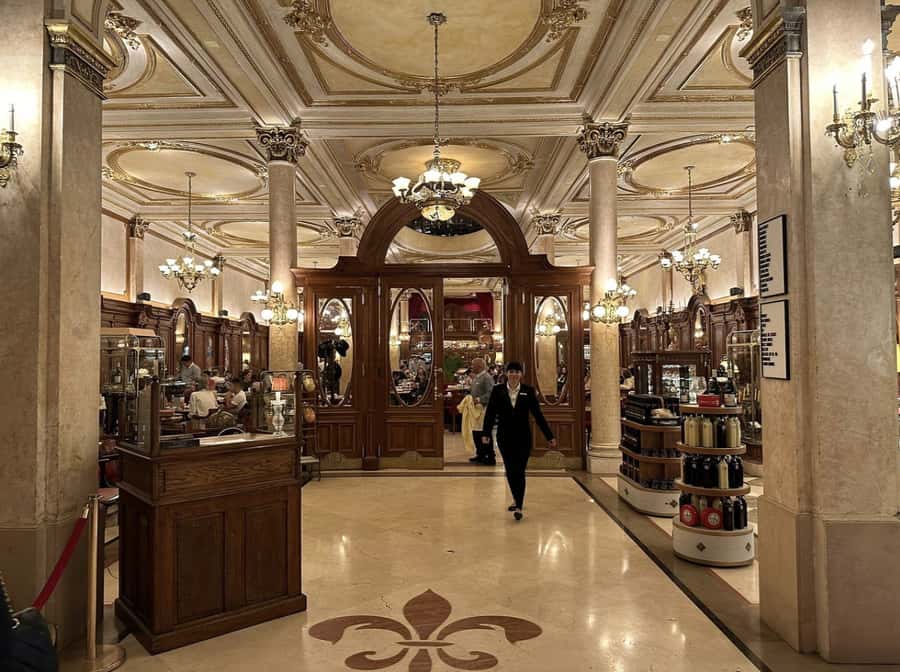
Avenida Corrientes follows. It is known as the street that never sleeps, and the walk introduces the city’s theater, café, and nightlife identity. Confitería La Ideal adds another layer. This old café has been restored, and its historic interiors make it more than a place to grab a drink.
The guide’s commentary matters here because the streets can feel visually overwhelming. Buenos Aires gives you broad avenues, ornate buildings, traffic, signs, and people moving in every direction. A good explanation turns that activity into a readable city story.
Other guided walks in Buenos Aires:
- Buenos Aires: Personalized 2 to 8-Hour Private Walking Tour
★ 4.7 · 149 reviews - Buenos Aires: San Telmo and Market Guided Walking Tour
★ 4.8 · 102 reviews - Buenos Aires Walking Tour with Local Guide and Optional Rooftop
★ 4.5 · 87 reviews - Best of Buenos Aires Private Walking Tour
★ 4.5 · 73 reviews
Florida Street and the oldest center
Florida Street is Buenos Aires’ main pedestrian shopping area. It is a practical place to see the city in motion, with shops and people passing through a long central corridor.
Galería Güemes is one of the architectural highlights along the way. The building’s interior and design reward a slower look than the street itself usually allows. This is also a useful area for understanding the contrast between Buenos Aires’ historic commercial buildings and its modern retail life.
From here, you continue into the historic center of Monserrat. Plaza de Mayo is the key civic space of the city and one of the most important stops on the route. Buenos Aires was successfully founded here in 1580, and the city grew outward from this area.
The square brings together several major symbols. Casa Rosada, the Pink House, is the seat of Argentina’s executive government. Its balcony is closely associated with Juan Perón and Eva Perón, who addressed crowds from it. The guide can connect the building and square to the country’s political story rather than leaving you with only a photo opportunity.
You also see the Buenos Aires Cathedral, where Pope Francis once gave mass and where Argentina’s independence hero is buried. The cathedral adds religious and national history to a square already filled with political meaning.
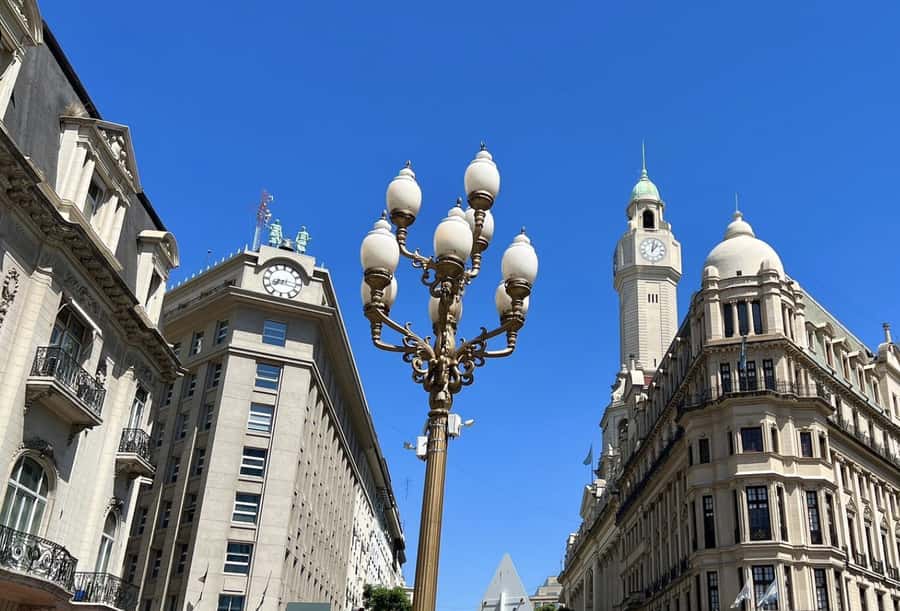
The route includes some of the oldest sites in Buenos Aires, including the first church, first street, and first business in the city. You also hear about the oldest subway line in the Southern Hemisphere. These details give the center a stronger sense of time. You are not simply looking at old buildings; you are following the city’s early growth and later modernization.
Public transport makes the city feel real
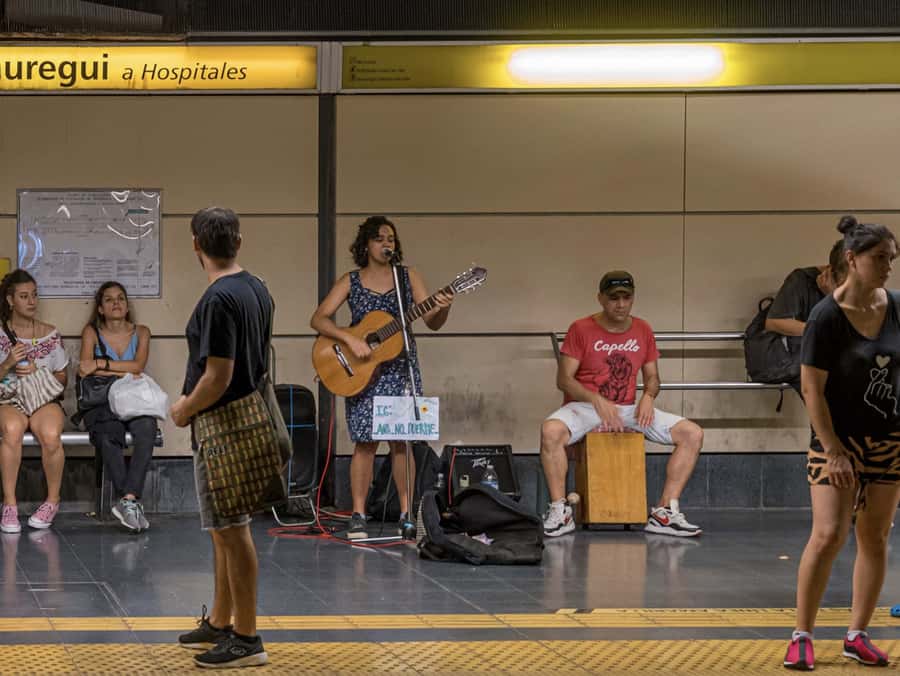
A local bus or subway ride is included in the day. That small detail improves the experience. You are not sealed inside a tour vehicle, watching Buenos Aires through glass. You use the same public transport system that connects the neighborhoods.
The ride also breaks up the walking. Seven hours is a substantial commitment, so moving underground or by bus gives your feet a short rest while keeping the route moving. It also helps you understand the distances between Recoleta, the center, and San Telmo.
Public transport can be less predictable than a private vehicle, and the tour may feel active rather than leisurely. Still, for a first orientation, I prefer this approach. It keeps the day connected to ordinary city life and avoids turning Buenos Aires into a series of isolated sights.
Lunch, coffee, and the value of the inclusions
Coffee, or a drink of equal value, is included during the tour. That morning pause gives you a chance to ask questions and reset before the central-city portion.
A local lunch is also included, with a main course and beverage. The exact restaurant and menu are not specified, so you should not book this expecting a particular dish or dining style. The useful point is that you do not have to stop the group to arrange your own meal during a tightly timed day.
At $160 per person, the price is not low for a walking tour. The value depends on how much structure you want. Entrance to Recoleta Cemetery, coffee, lunch, water, and public transport are included, as is an English-speaking guide for seven hours. You are also paying for a very small group rather than a large crowd.
If you would rather wander independently, choose your own restaurants, and spend an hour or two at every stop, the price may feel high. If you have one day in Buenos Aires and want the major districts explained in a logical order, the package is easier to justify.
San Telmo finishes the day with cobblestones and market life
The final neighborhood is San Telmo, one of the oldest and most atmospheric parts of Buenos Aires. The route reaches Plaza Dorrego, a historic square lined with bars and restaurants and known for craft sellers.
This is a good place to finish because the mood is less formal than in Recoleta or the central civic district. You see people sitting outside, browsing handmade goods, and moving between small businesses. The square gives you options after the tour ends at 5 p.m., since the surrounding area has plenty of places to eat, drink, and shop.
The San Telmo Indoor Market is housed in an impressive iron structure built in 1897. Inside, you find antiques, souvenirs, restaurants, and stalls selling fresh food and produce. The mix is important. San Telmo is not only preserved architecture or antique shopping. It is also a working market where daily commerce continues beside older businesses.
Defensa Street completes the walk. Its cobblestones cut through the heart of San Telmo, with antique dealers and original Spanish and Italian architecture along the way. The street can be uneven, so comfortable shoes are essential. This is one of the places where the walking format pays off: you notice doorways, façades, and shop fronts that would blur past from a vehicle.
Who should book this walk
I would choose this tour for a first full day in Buenos Aires, especially if you want a broad introduction before exploring more deeply on your own. It is also useful if your schedule is short and you want Recoleta Cemetery, Plaza de Mayo, the Obelisk, and San Telmo in one organized day.
The tour suits adults and older children who can walk for long periods. It is not suitable for children under 10, wheelchair users, people with a cold, or people over 95. The route includes streets, public transport, uneven cobblestones, and extended time on your feet.
The small group is a real advantage if you enjoy asking questions. Dale from Australia specifically valued the personal nature of the experience and said Tracy’s command of local history and language helped him see more than he would have alone. Dinah from the United States especially appreciated the history lessons, lively stories, architecture, and Chris’s answers to questions.
Those details tell you what kind of guide makes the day work. You are not just being led from monument to monument. You are getting explanations, local context, and help deciding what deserves a return visit.
Practical details before you reserve
The tour runs from 10 a.m. to 5 p.m. and is conducted in English. It is limited to seven participants, which is small enough for direct conversation without requiring a private booking.
Wear comfortable shoes. Bring your interest in food, architecture, politics, and city stories, since the day covers all four. A bottle of water is provided, but you should still plan for a full day outside.
Transport to the meeting point and away from the ending point is not included. The tour begins near Av. Santa Fe and Av. Callao and ends in San Telmo, so plan your onward route from the southern part of the city.
You can cancel up to 24 hours ahead for a full refund, and you can reserve now while paying later. Those terms are useful if your Buenos Aires schedule is still taking shape.
Should you book the BuenosTours BA 101 walk?
Book it if you want a high-information first day with a personal guide, a compact group, and most of the city’s essential districts in one route. The combination of Recoleta Cemetery, Evita’s tomb, Teatro Colón, Avenida 9 de Julio, Plaza de Mayo, and San Telmo is strong.
Skip it if you dislike long walks, prefer a slower pace, or want to choose every meal and stop yourself. At $160, this is a structured orientation rather than a bargain stroll.
For most first-time visitors with only a day or two, I think the strongest reason to book is the range. You finish knowing which areas you want to revisit, and you have enough context to make those later visits more rewarding.
FAQ
How long does the BuenosTours BA 101 walk last?
The tour lasts seven hours, from 10 a.m. to 5 p.m.
Where does the tour begin?
It begins in the Recoleta or Barrio Norte neighborhood, near the corner of Av. Santa Fe and Av. Callao. Exact meeting instructions are sent in the confirmation email.
Where does the tour end?
The tour ends in San Telmo, near places to eat, drink, and shop.
What language is the tour conducted in?
The live tour guide speaks English.
How many people are in the group?
The group is limited to seven participants.
Is lunch included?
Yes. A local lunch with a main course and beverage is included.
Is the Recoleta Cemetery entrance fee included?
Yes. Entrance fees to historical sites, including Recoleta Cemetery, are included.
What should I bring?
Bring comfortable shoes. A bottle of water is provided, and public transport used during the tour is included.
Just added in Buenos Aires
- Buenos Aires: Speakeasy & Mixology Bar Tour with Cocktails★ 5.0 · 5 reviews
- Premium Empanadas Cooking Class & Wine Tasting Experience★ 4.9 · 35 reviews
- Buenos Aires: Small-Group Wine Tasting★ 4.8 · 18 reviews
- Buenos Aires:Small Group Tour AM & Sunset Open Bar Cruise PM★ 4.5 · 15 reviews
- Buenos Aires: Rojo Tango Show with Optional Dinner★ 3.4 · 3 reviews
- Buenos Aires: Santa Susana Ranch Day Tour, BBQ & Shows★ 4.6 · 32 reviews
- Buenos Aires: Private Photo Tour for Ammateur Photographers★ 4.9 · 5 reviews
- Buenos Aires: Private Recoleta Cemetery Walking Guided Tour★ 4.6 · 13 reviews
Walking Tours, compared.
Nazis in Buenos Aires: a historical walking tour
Read our review →
La Docta Free Walking Tour “Córdoba La Antigua”.
Read our review →
Buenos Aires Walking Tour with Local Guide and Optional Rooftop
Read our review →
Browse the lists this tour appears in